
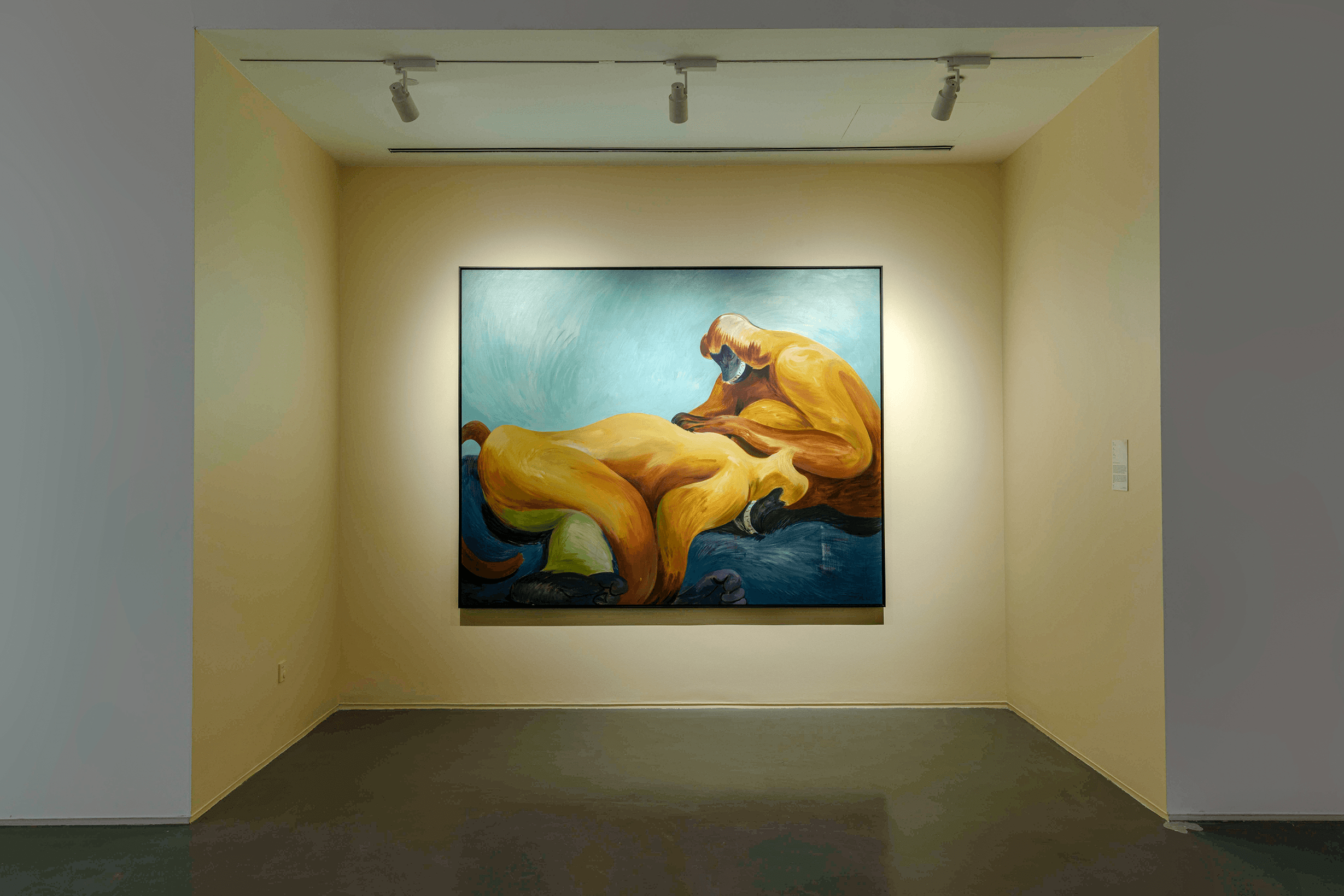
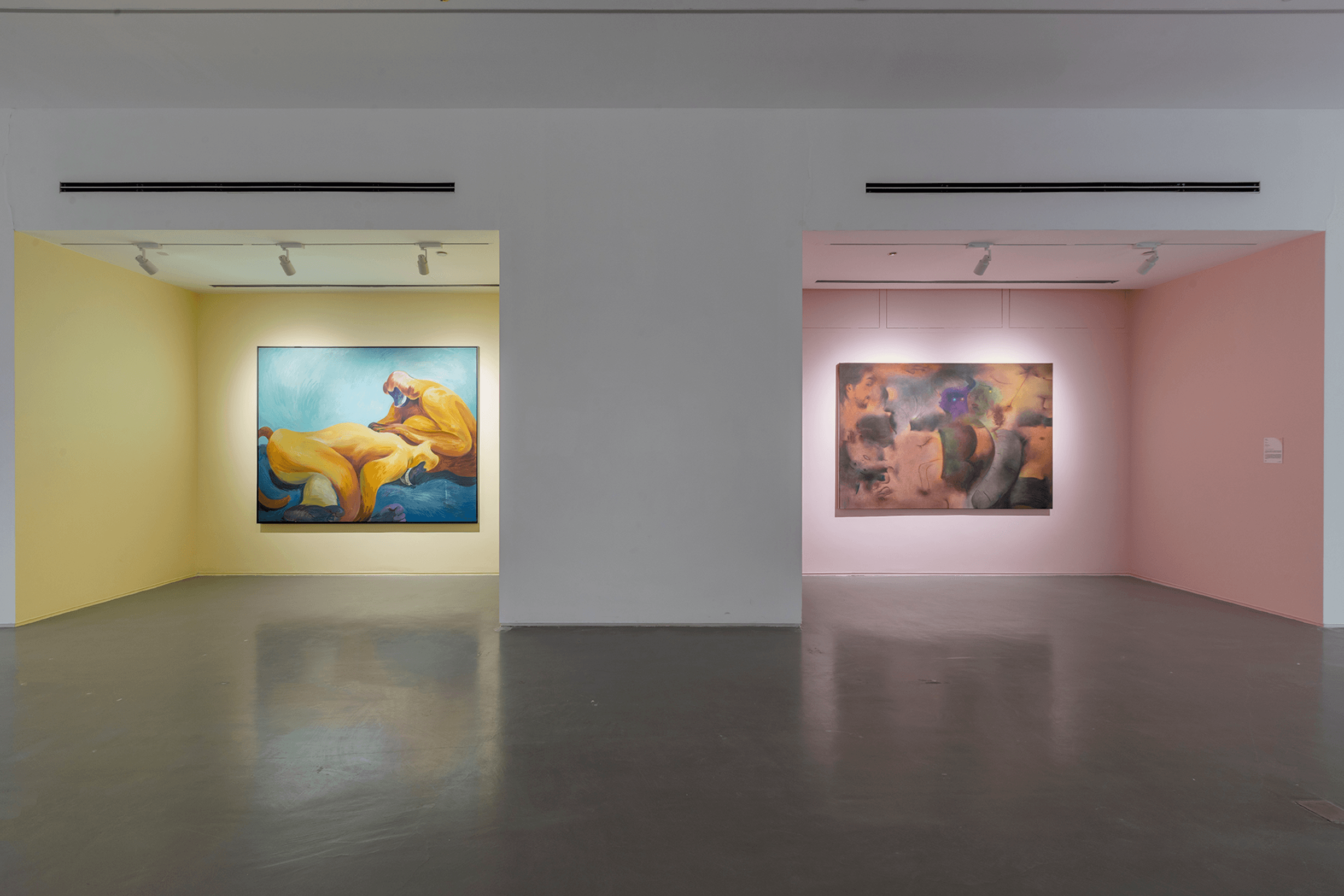
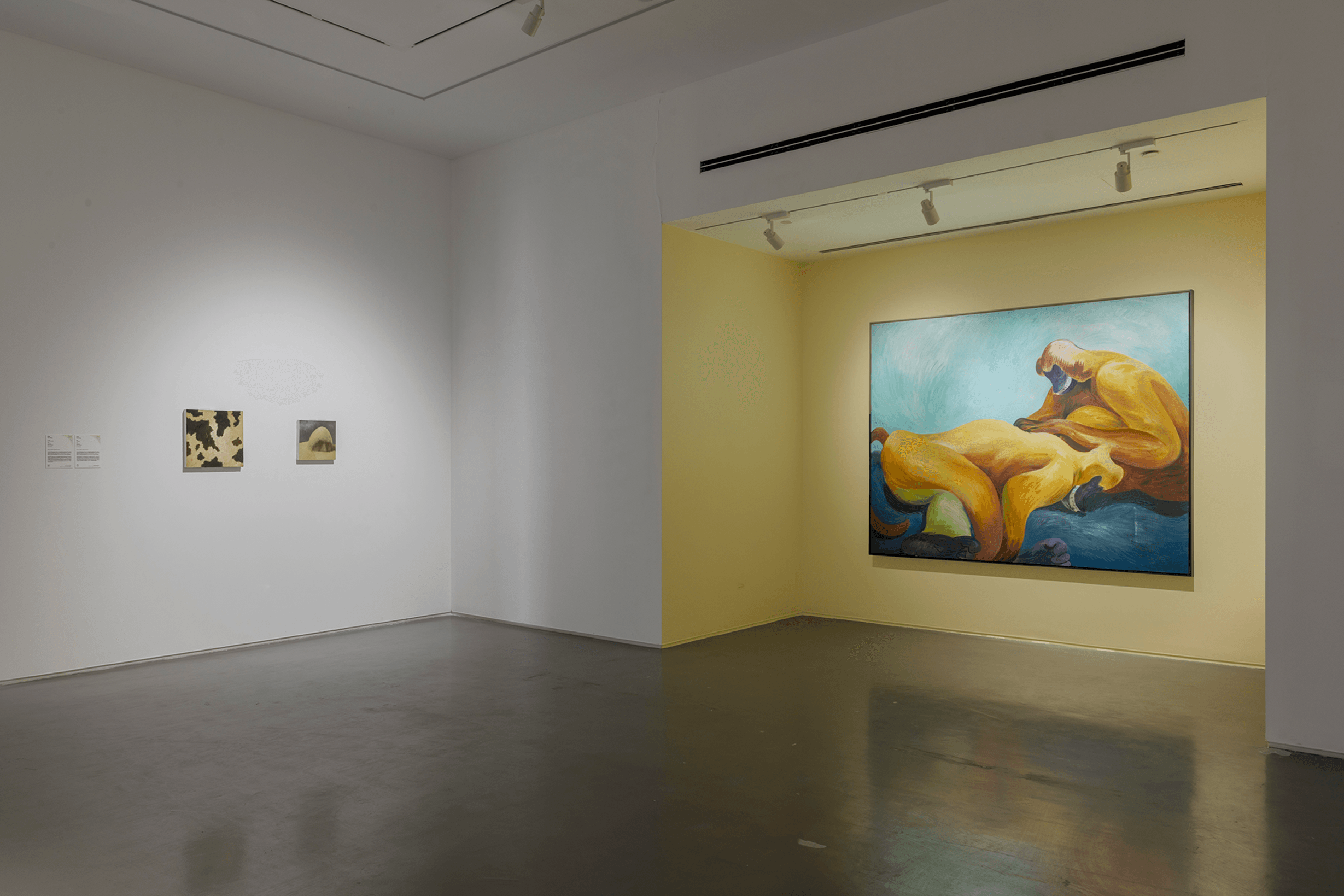
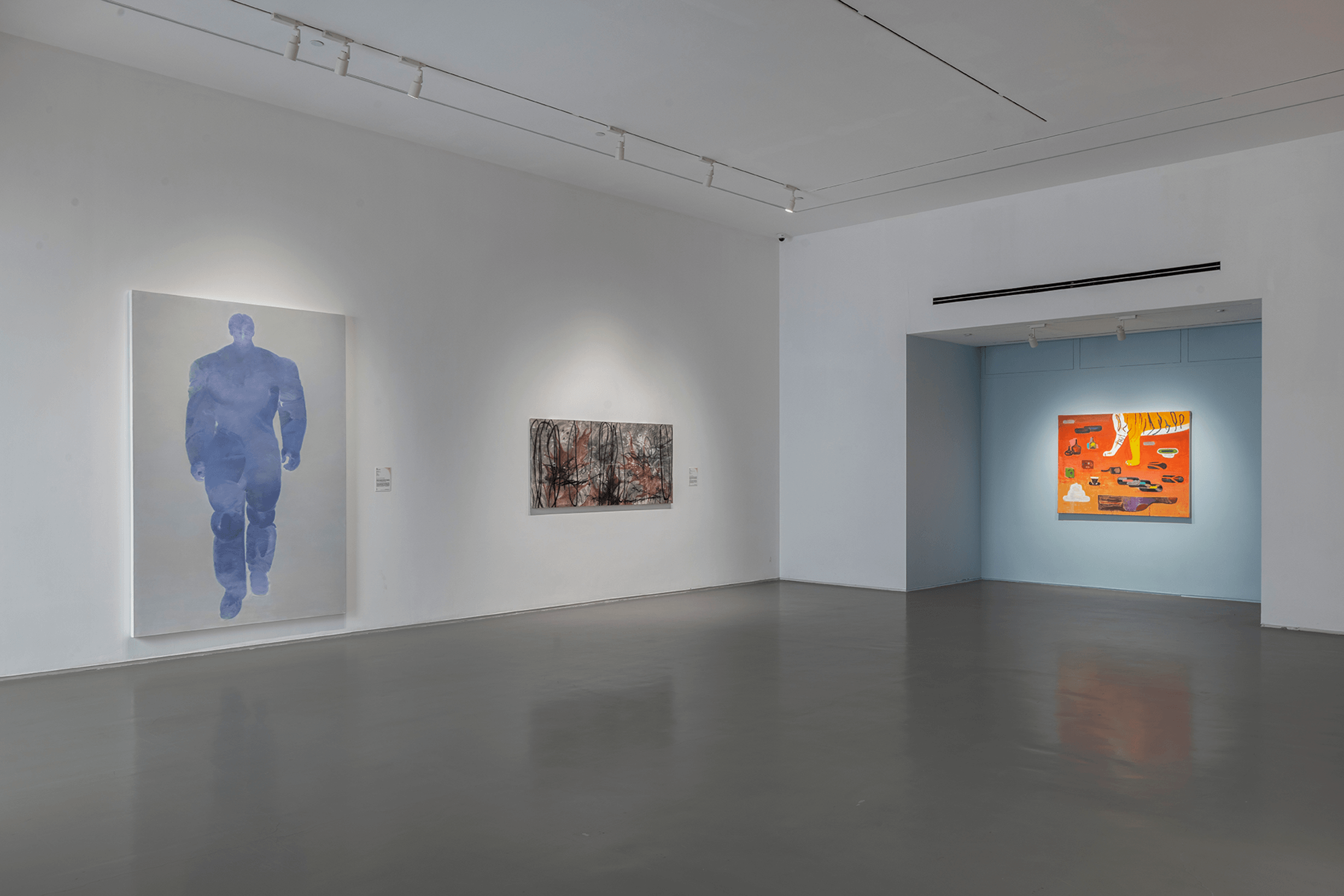
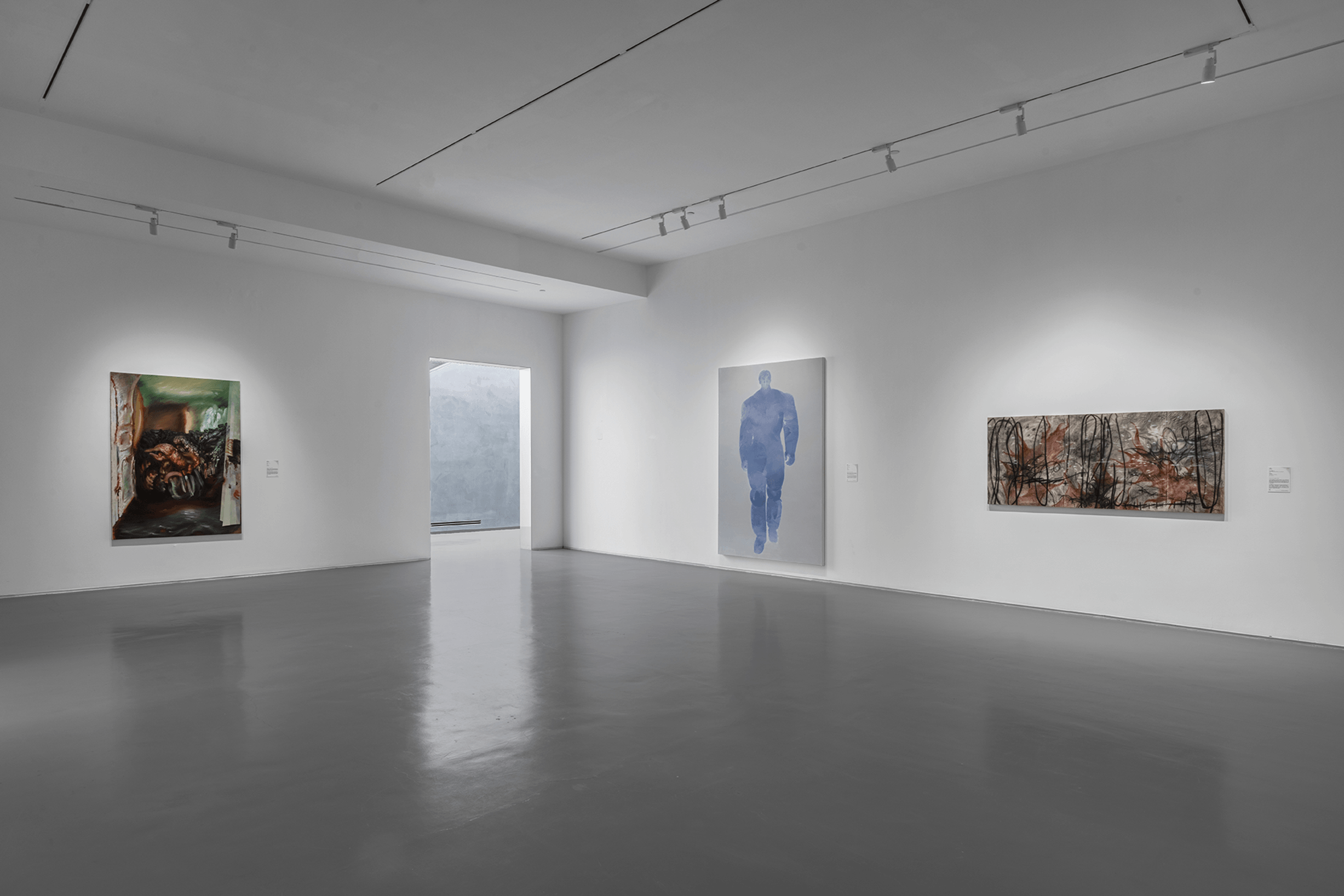
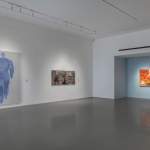
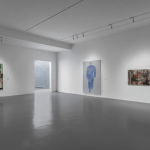
The X Triennial 2026 “Reaching the Spirit: Emotion, Form and Concept in Painting,” presented by X Museum in collaboration with Shouchuang Langyuan Station, aims to respond to the ongoing discussions and reflections provoked by painting as an information carrier, a mediumistic path, and a site of audience experience within contemporary visual culture. Painting, one of the oldest plane‑based material visual languages in the history of art, has in different periods and regions practiced and reflected various evolving theoretical approaches, which were often conditioned by the technological conditions, sociocultural environments, and allied disciplinary achievements of their times. From the curatorial standpoint, this exhibition attempts to propose a ternary perceptual structure—namely, from the triple perspectives of emotion, form, and concept—to characterise the Zeitgeist of artistic practitioners who work primarily with painting, thereby offering audiences multiple entry points into the pictorial context. In terms of curatorial method, unlike many recent painting‑focused exhibitions in China, this show adopts a dual‑curator structure: artist Wang Guangle leads the selection of works, while You Yang provides the exhibition’s conceptual framework.
The presence of painting substitutes for what is absent, forming cognitive perceptions at the level of the mind through a series of visual (and mis‑)perceptions. In terms of painting‑related theory, past theoretical paths have often been based on binary perspectives, i.e., first positing two poles for understanding art, and then locating each artwork somewhere along the spectrum between them. Examples include “disegno – colorire” in the 16th‑17th centuries, “mimesis – describe” (or “imitation – depiction”), “noble – vulgar” in the 18th century, and in modern times “open – closed,” “plane – depth,” “clear – ambiguous,” “figurative – non‑figurative,” “real – surreal,” and so on. These were used to interpret and analyse the emerging artistic styles of each period, while also employing the notion of “newness” to reinvest older works with contemporary significance. From the modern perspective that emerged from the 16th century onward, this binary epistemic path first treated painting as a discipline, and thus entering painting became a method of intellectual and analytical knowledge, with the ways of knowing painting also confined to contemporary epistemologies. This cognitive structure can be traced back to the binary framework of “form and its attachments” emphasised by Greek Logos, which, though possessing a certain objectivity, actually concealed the critic’s subjective leaning toward one pole. For instance, before the emergence of phenomenology, sociology of art, and related approaches, people often tacitly privileged “form” as the subject, while other elements such as colour and experience were relegated to subordinate positions as opposites or appendages to form. In other critiques, the emphasis would shift, according to the Zeitgeist, toward the edifying, spiritual, or socially reflective aspects of the work.
Different from the trajectory of Western art theory, early Chinese writings on painting emerged during the Wei‑Jin period, influenced by the contemporaneous Neo‑Daoist (Xuánxué,玄学) thought. They essentially stressed emotional resonance between the painting and the viewer, unifying artistic image and spiritual transmission—for example, “using form to depict spirit” (yǐ xíng xiě shén,以形写神)—thereby transcending mere diagrammatic functions such as “preserving admonition” or “accomplishing moral edification.” This emphasis on the affective power of pictorial imagery has had a subtle but enduring guiding influence on the development of Chinese painting’s brushwork, form, and embedded spiritual‑moral values.
Another point not to be overlooked is that in Western art criticism, one often encounters the phenomenon described by Lady Wei as “the good connoisseur does not paint, the good painter does not judge” — that is, critics themselves are not creators of paintings, and thus tend to approach works from the outside. This situation was gradually ameliorated with the development of disciplinary knowledge. Hegel, in the early 19th century, pioneered the expansion of the ternary dialectical system, whose tripartite structure offered greater stability and reduced or corrected the subjective bias of critical perspectives. It could be said that the ternary structure essentially spatialised the former binary dialectic, demonstrating a more open and sustained cultural cognition, enabling multi‑layered discussions, and indirectly inspiring 20th‑century theoretical developments concerning subjective perception and embodied experience in relation to painting. In contrast, critics in the Chinese art world have often also been practitioners themselves; therefore, beyond their concern for painting’s social and aesthetic functions, they have been adept at probing the inner spirit and conceptual value of artworks. From the Tang through the Song and Yuan dynasties, ancient scholars gradually refined a critical logic centred on form, spirit, and meaning (xíng, shén, yì,形、神、意), establishing a progressive interpretive path of “entering spirit through form, and reaching meaning through spirit.” With the advent of the Age of Discovery, paintings and concepts from foreign lands—brought by trade, military campaigns, diplomacy, and other activities—continually participated in the reshaping and reinvention of indigenous painting systems. Since the 19th century, with the gradual eastward transmission of Western learning and the proactive transformation of the Chinese art world, “the indigenisation of Western painting” has become one of the core issues in art education, criticism and appreciation, and the construction of the art ecosystem. “Indigenisation” refers not only to the integration of techniques and materials but also to the conceptual level of how to incorporate others’ benchmarks into one’s own cognitive framework.
Since the 20th century, the practical paths of painting have proliferated, and this essay will not enumerate them one by one. From a contemporary perspective, today’s pictorial landscape encompasses all the past issues and historical experiences, presented together before us. Whether we can expand new pathways into painting thus becomes a crucial question in responding to the conditions of our era. On this basis, the curatorial team adopts the triple‑element structure of “emotion, form, and concept” to present nearly 60 outstanding works by artists whose primary practice is painting. Most of these works were created in recent years, with a small number of older pieces included to create a dialogue and contrast. The works are presented in three identically named units across the first floor, second floor, and public spaces of X Museum, aiming to foster dialogue between works and between spaces. At the start of each unit, the curatorial team has written introductory conceptual texts. By experiencing this exhibition, audiences may come to realise that these three elements have always been inherent in the ontology of painting, and that in different periods and regions, one or another element has played a correspondingly dominant role.
“Reaching the Spirit” is first and foremost a dynamic term, with multiple extensions in the field of hinese visual arts: it points to the artist’s mind‑heart, to the numinous quality (shényùn,神韵) of the depicted objects, and to the viewer’s mental state when entering the work. For the artist, “entering spirit” means the unity of mind and hand; for the viewer, it means the spirit wandering with the objects. Creating and appreciating works of visual culture, feeling one’s own cultural lineage while engaging in mutual learning with others, enables one to “enter spirit” and locate one’s coordinates in time. In a comparative East‑West perspective, Eastern art proceeds from form to spirit: it takes form as a basis, transcends it, and attains numinous quality—this becomes the fundamental criterion for judging artistic excellence. This differs markedly from the Platonic‑Aristotelian standard that elevates “form‑idea” above “appearance‑sensibility.” As a painting exhibition that emphasises the creative perspective, the three elements of emotion, form, and concept have both a progressive and a mutually supportive structural relationship. First, the emphasis on emotion—entering painting from bodily experience, with the subject asserting itself—also signifies painting’s liberation from itself: that is, painting is not a channel for representing other domains, but actively engages in a meta‑exploration of its own nature, and this is precisely the agency of artistic practice. The emphasis on form means treating painting as an image that can be reduced to form; this is also a process of simplifying painting into form—while foregrounding certain features, it inevitably neglects others. In eras when critics emphasised form, one can still discern contemporary artists’ active explorations of emotion and concept, a fact that has been demonstrated by 20th‑century research methods in painting. Concept, meanwhile, points to artists treating painting as a conceptual carrier and object of study, constantly renewing its meanings and expanding the definition of painting. From the viewer’s experiential perspective, the gradual entry into the work is also a triple process from emotion to form to concept, involving both an understanding of the artist’s intention and the viewer’s own subjective responses.
An exhibition is itself an art based on space, where real space coexists with virtual space, sensation and perception intermingle, bodily movement and pictorial mirroring complement each other, and openness is inherent. As the 2026 X Triennial and the inaugural “Langyuan Station X Art Season” exhibition, “Reaching the Spirit” invites audiences to generate their own paths into painting, to experience the rich charm and spiritual encounters of painting, and to return to the most simple and direct viewing—before all images come into being.