
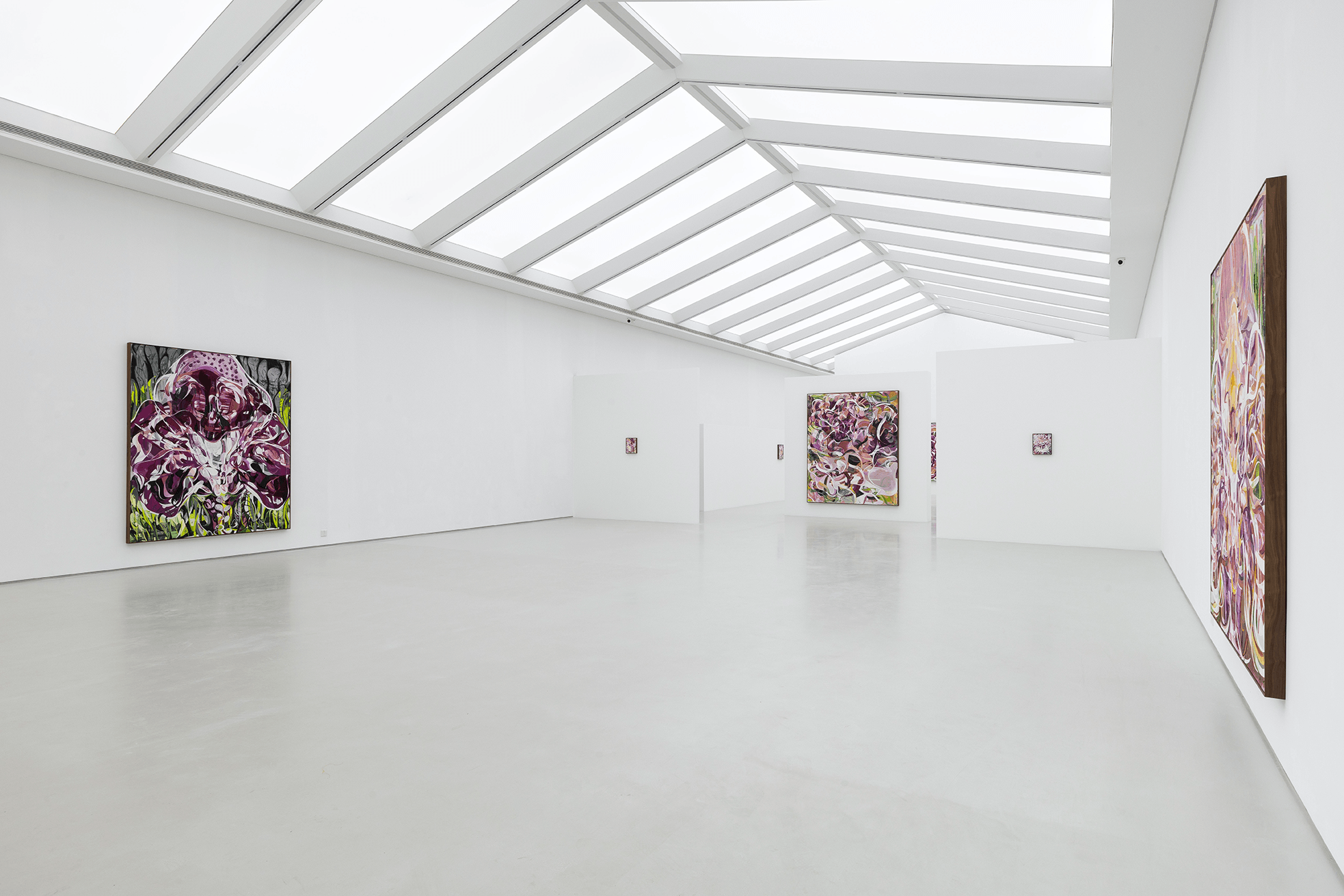
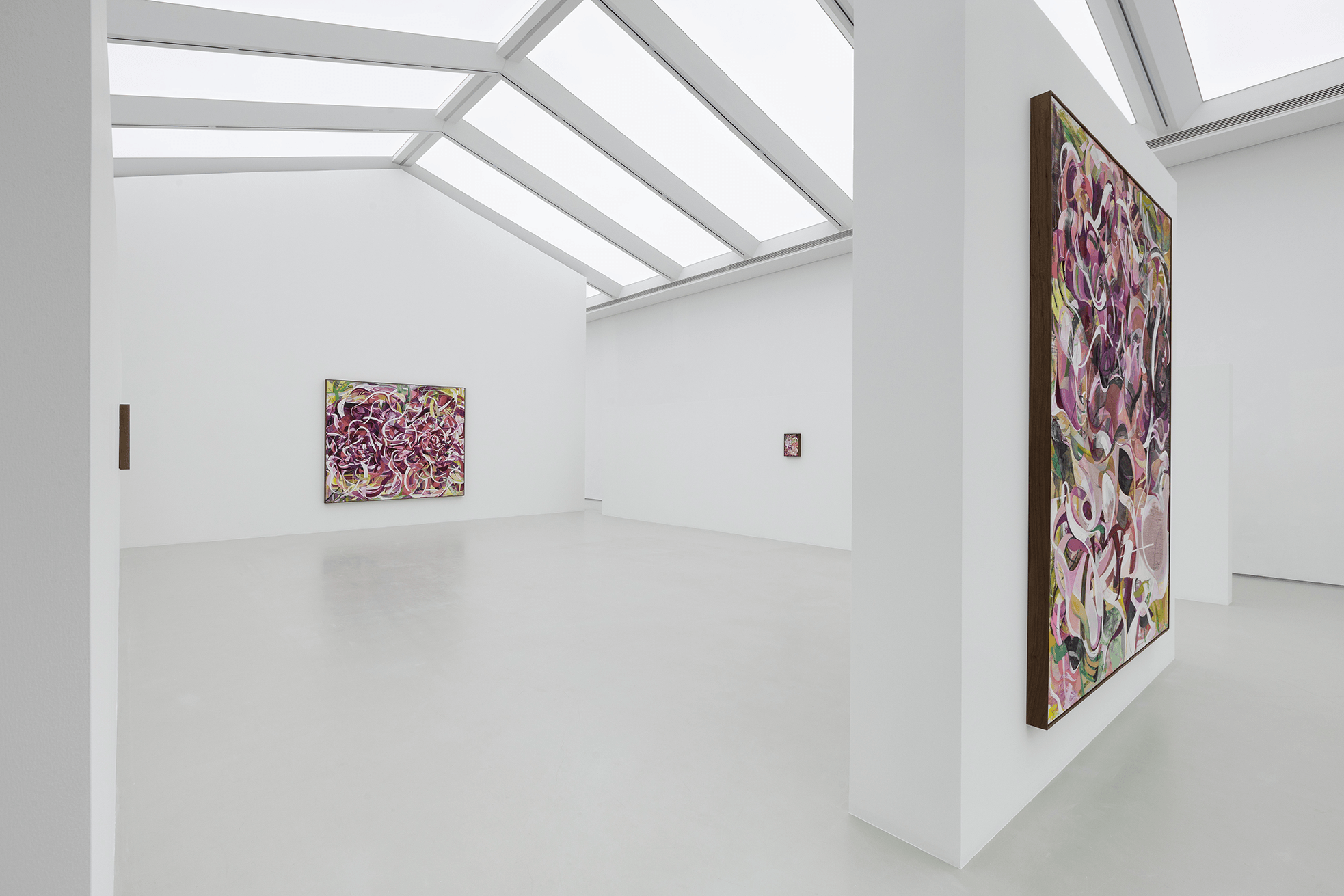
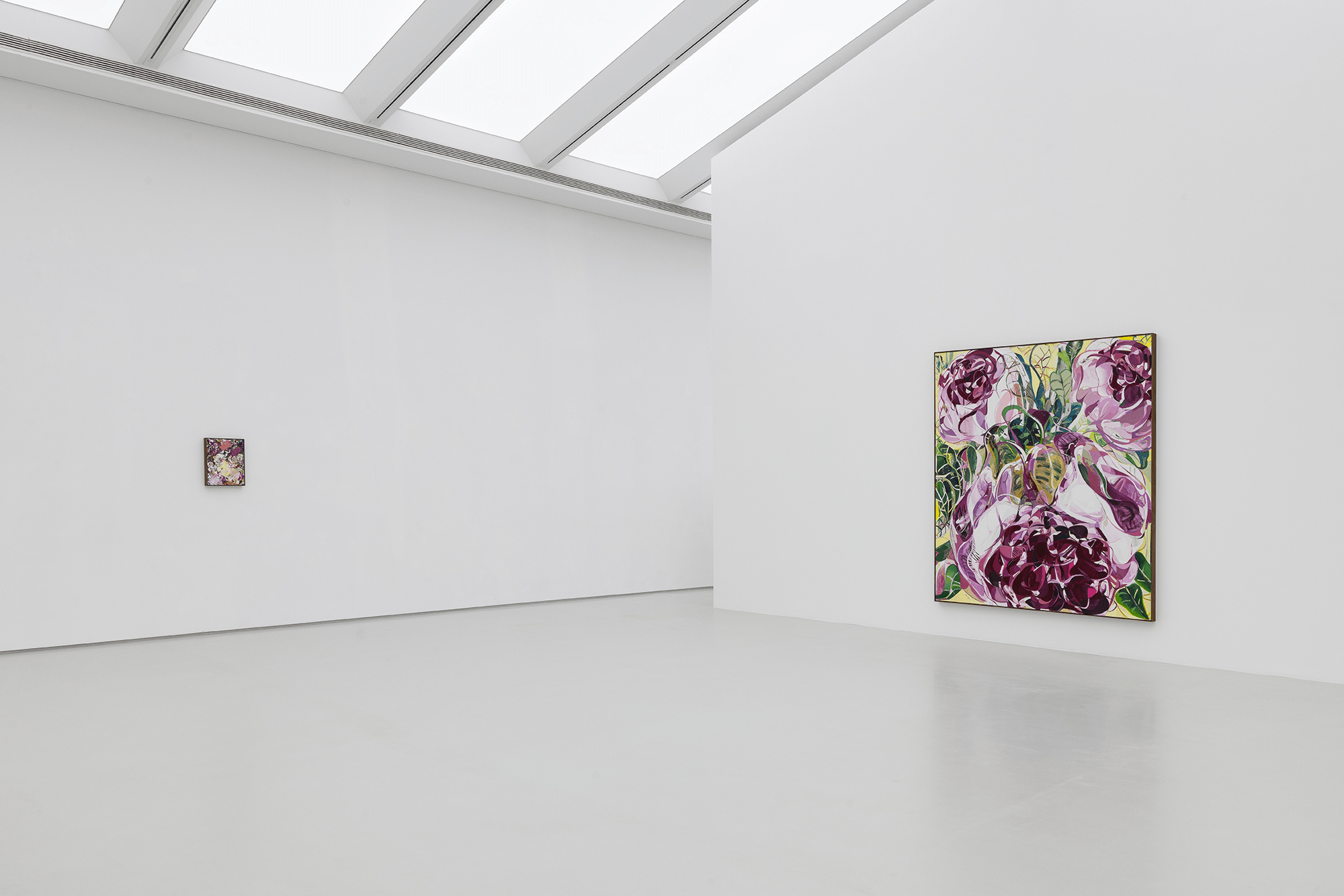
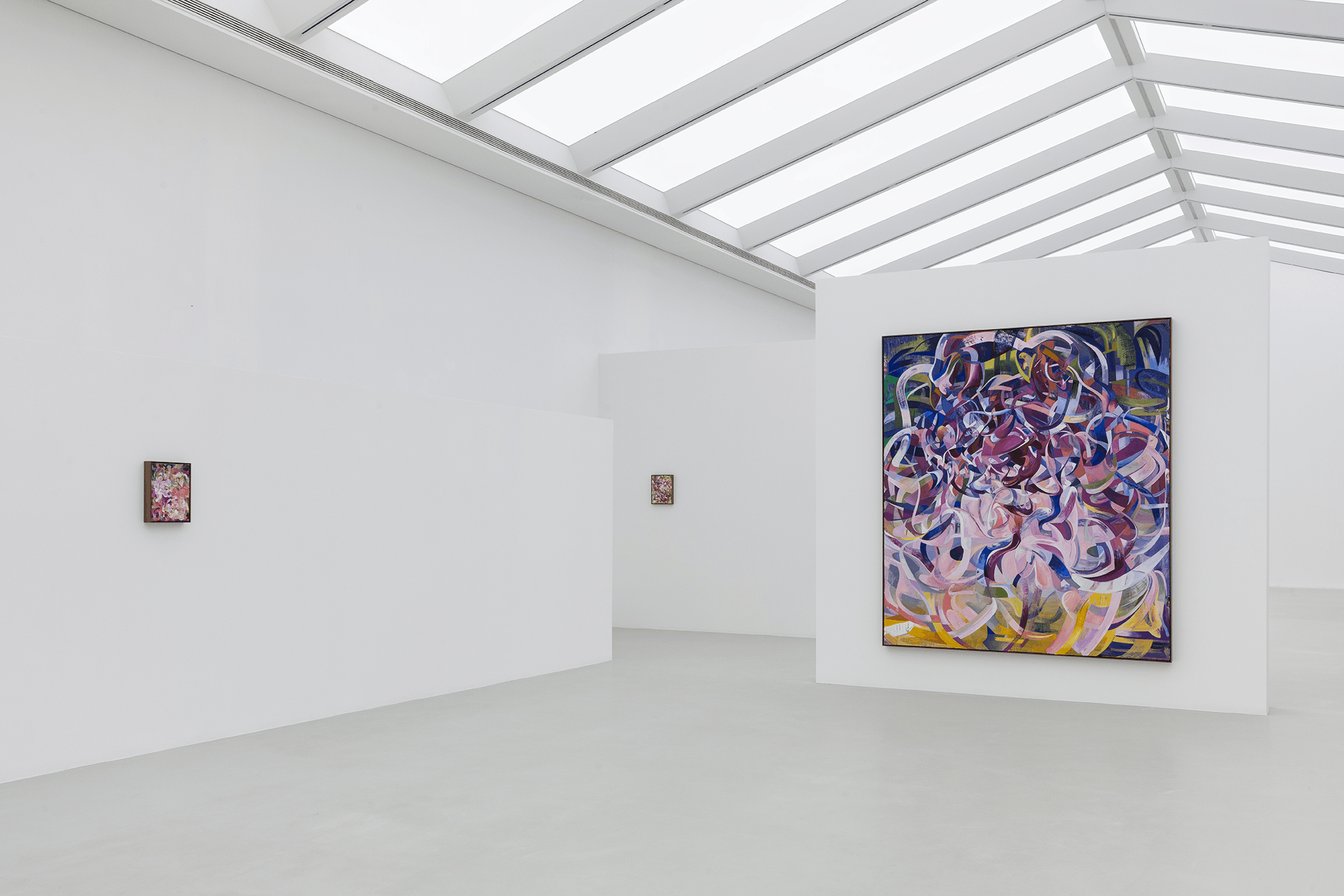
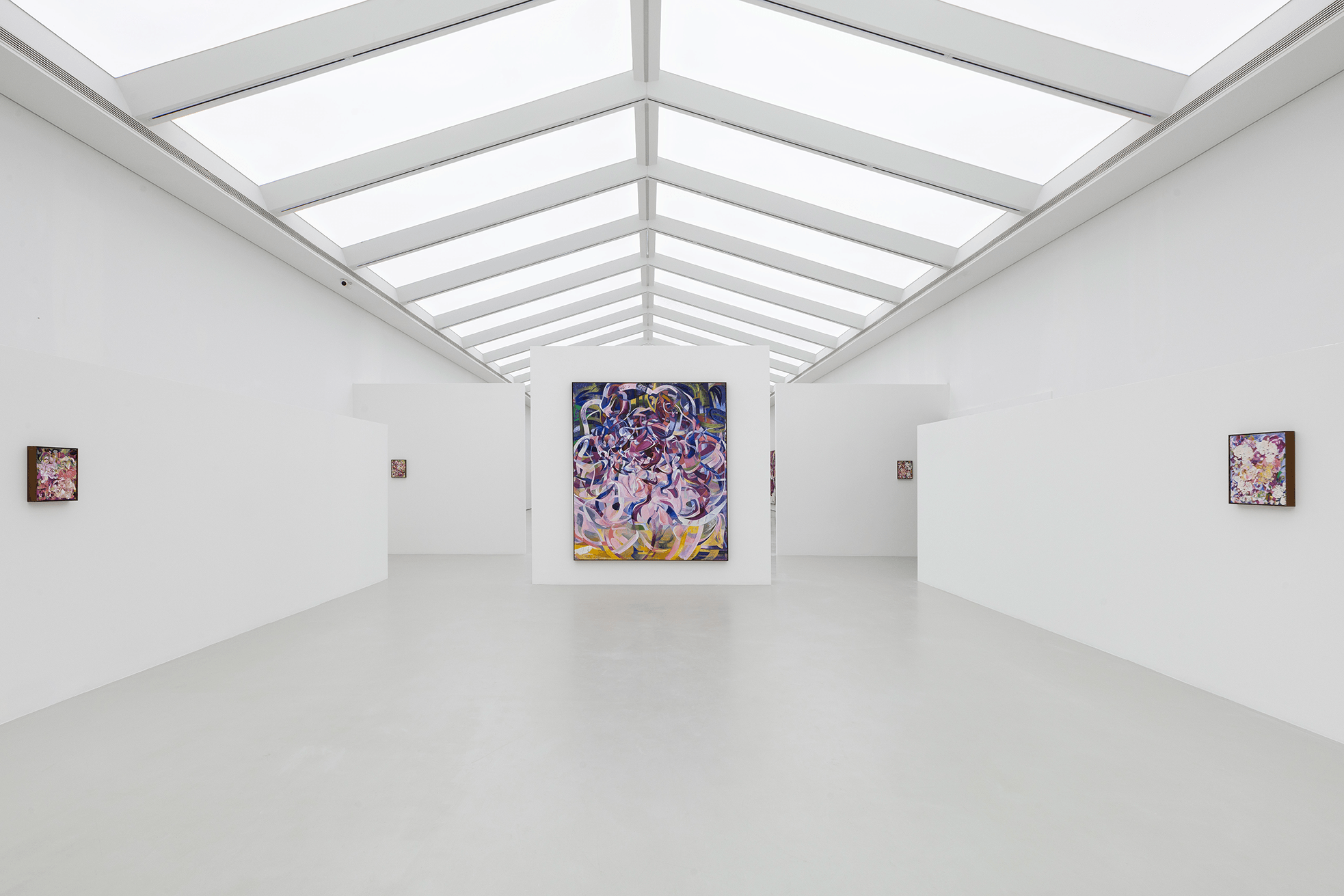
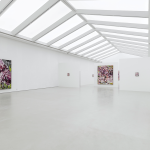
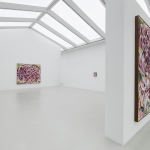
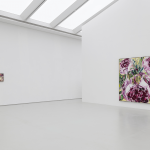
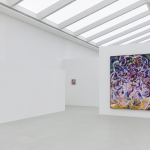
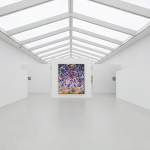
Song Art Museum will collaborate with WHITE SPACE to jointly present Eden 404, a solo exhibition by artist Zhang Zipiao, on view from September 5 to October 11, 2026. The exhibition brings together a new body of oil paintings on canvas from recent years.
The exhibition title draws from two conflicting impulses: “Eden” evokes an ancient imagining of a harmonious, abundant, and whole world, whereas “404” signals rupture—the page not found, the path to utopia null. Their juxtaposition, however, does more than announce the loss of paradise. It places the idea of “friction” at the outset of the exhibition: When the outside world no longer offers a viable way forward, how do forms keep forming? How do paintings unfold in a state of obstruction, and how do individuals keep pushing through mounting friction?
For Zhang, it is not so much the flowers themselves that interest her as how forms keep growing under pressure. Roses, orchids, lilies—floral forms extend outward while being pushed back by the edges of the canvases, the backgrounds, and other blocks of color. Simultaneously expanding and compressing, the paintings are constantly destabilized by the clash of these two forces. Compared to her earlier works, which departed from bodily experience, desire, and the mechanism of looking, this new body of paintings adopts a conceptual framework inspired by plants themselves—one that neither fully succumbs to external forces nor rejects them through direct confrontation, but instead redirects and transforms itself under pressure, absorbing friction into its own becoming.
This tension first manifests in Zhang’s use of “folding” as a structural principle. Petals are pulled close, enlarged, and taken apart; swaths of color and lines wrap inward, layer by layer, then unfolding along the creases. Folding here isn’t a decorative device, but a structure naturally produced by the collision of two forces: the impulse to grow outward runs up against and is therefore pressed by the edges, backgrounds, and adjacent forms in the composition, and so it bends, recoils, and skews. Amidst the overlay of paints, the threading of lines, and the misalignment of colors, the flower’s contour fluctuates, coming into shape only to dissolve into the background. It appears to passively take in the frictional drag imposed from outside, but it never stops becoming, changing course as it forms.
Scale further alters this interplay of forces. Stretching over two meters, Zhang’s massive canvases inundate the viewers with their colors and textured brushstrokes. The impossibility of grasping their entirety up close at once leaves the viewers no choice but to move along the painted lines, tracing the structures of the plants amongst their furling and unfurling. The smaller works, which measure around 40 centimeters, are not simply scaled-down versions of the large ones. By applying thick coats of paint, the artist allows different sections of the paintings to overlap, resulting in a compression of the pictorial space. Petals and branches obscure each other, and the layers of colors take on an almost tactile weight. In the large-scale paintings, forms fold and unfold toward the edges, whereas the smaller ones translate folding into accumulated density. Both confront the viewers with compositions whose internal relationships refuse quick resolution.
In a time when images are rapidly recognized, named, and categorized in overwhelming numbers, roses or orchids would be among the easiest forms to identify. Yet Zhang subjects the very act of recognition to friction: just as the viewer identifies a flower, it slips away amid overlapping colors, folding and unfolding lines, and a figure-ground relationship in forever flux. Her paintings are not a simple refusal of familiar images. Rather, they accept that familiarity and shift it from within. The resulting uncertainty unshackles images from any singular reading, positioning the act of looking within an ongoing process of colliding forces and reconfiguring forms.
In this sense, the rupture suggested by Eden 404 moves beyond a figure of speech to become a condition that sustains the internal dynamics of a painting itself. Zhang is not concerned with fixing this “error,” nor is her use of the floral motif a promise of some ideal, perfect state. Compressed colors, folded lines, overlapping forms, and unresolved images—through these formal devices, Zhang lets friction remain embedded in her paintings. Growth, then, no longer signifies an unconditional expansion outward, but a continuous happening that undergoes endurance, resistance, and adjustment: external pressures don’t disappear, and forms never give away. They wrestle, and they converge. Within this tension, both paintings and individuals retain the possibility of continued growth.
About the artist
Zhang Zipiao’s painting practice revolves around human body, organs, and natural objects. By depicting content inconsistent with traditional society’s social and ethical frameworks, her paintings directly or subtly reveal gender imagery, where the body revels before the demise of illusions. Her works are replete with vitality. The bodily body seems to be an erosive landscape in flux, and natural objects are imbued with restless humanity, projecting a rich and complex character of hypocrisy, sincerity, vulnerability, and strength. By exploring the medium of painting’s physical faculty for universally connecting body and spirit, Zhang Zipiao’s works reflect on and critique reality under the theme of body politics.
Zhang Zipiao, born in Beijing in 1993, studied at the Maryland Institute of Art from 2011-2012, graduated from the Art Institute of Chicago in 2015. Her recent solo exhibitions include, Blooming II, Derouillon × Salon 94, Paris, France (2025); Instinct, Pond Society, Shanghai, China (2023); Swallow Whole, LGDR, New York, USA (2023); Moonquake, Long Museum, Shanghai, China (2022); Heart of Anchor, Salon 94, New York, USA (2021); Blooming, WHITE SPACE, Beijing, China (2020); Cutthroat Kitchen, Mine Project Gallery, Hong Kong, China (2019); The Ultimate Moist!, WHITE SPACE, Beijing, China (2018); Shallow Painting 101, Star Gallery, Beijing, China (2017), and Sexy Hysteria, Ying Space, Beijing, China (2015). Zhang Zipiao was featured on the list of “30 Under 30 Asia” by Forbes and “2019 Best of the Best” in the annual young artist category by Robb Report in 2019. The artist currently lives and works in Beijing.


