




This exhibition borrows its title from the South Korean-German philosopher’s well-known tract, The Agony of Eros. In this short but incisive text, Han identifies and maps out a problem with modern love, claiming it has become a frictionless place where any real confrontation with the Other has been replaced by nothing more than a narcissistic will to see oneself reflected back to oneself, a kind of sameness or affirmation. “Today,” he writes, “Through the increasing positivization and domestication of love, the Other is disappearing entirely. One stays the same and seeks only the confirmation of oneself in the Other.” Unambiguous, borderless, and hypervisible, any potential experience of the other is subsumed into a transparent or pornographic flattening of the world. The pornographic, according to Han, conceals nothing and reveals everything to the point of making it disappear. He counters this by celebrating the erotic, which “is never free from secrecy.” More specifically, he writes, “The corollary of hypervisibility thepornographicthepornographic is the dismantling of thresholds and borders. Hypervisibility is the telos of the society of transparency. Space becomes transparent when it is smoothed out and leveled. Thresholds and transitions are zones of mystery and riddle—here, the atopic Other begins. When borders and thresholds vanish, fantasies of the Other disappear too. Without the negativity of thresholds—or threshold experiences—fantasy withers. The contemporary crisis in literature and the arts stems from a crisis of fantasy: the disappearance of the Other. This is the agony of eros.”
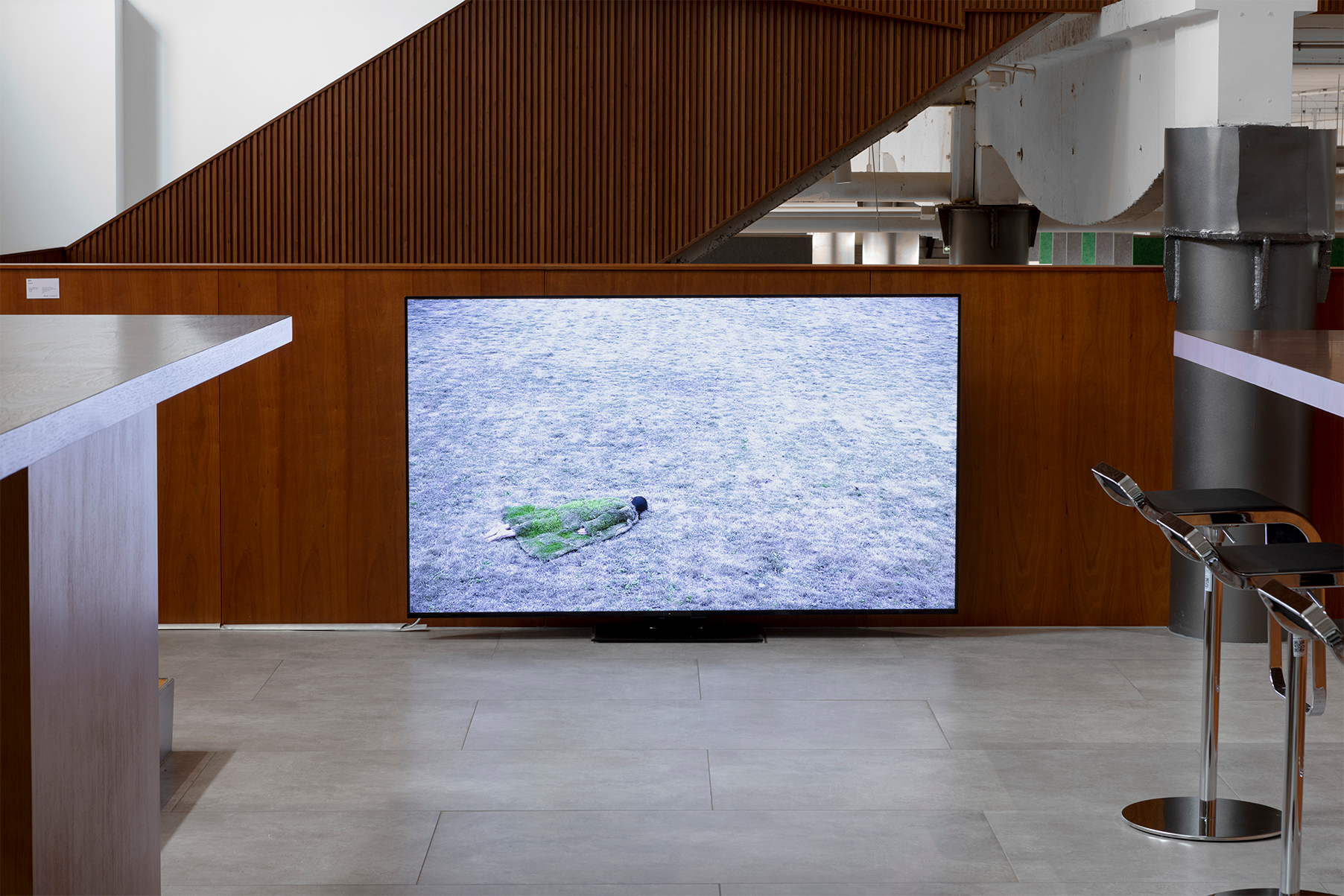
Against the agony of eros, this exhibition proposes work that insists on preserving the space wherein art can thrive: through the erotic, the opaque, mystery, ambiguity, and, finally, its own essential secrecy. This is achieved largely through foregrounding not just ambiguous or interpretable images, but also through a sensuous experience of art; through form, materials, texture, surface (varieties thereof), all of which produce friction, challenge, and confront the viewer. Indeed, in this exhibition, the Other is alive and well, and so is, as a consequence, eros.