
对不起,此内容只适用于EN。
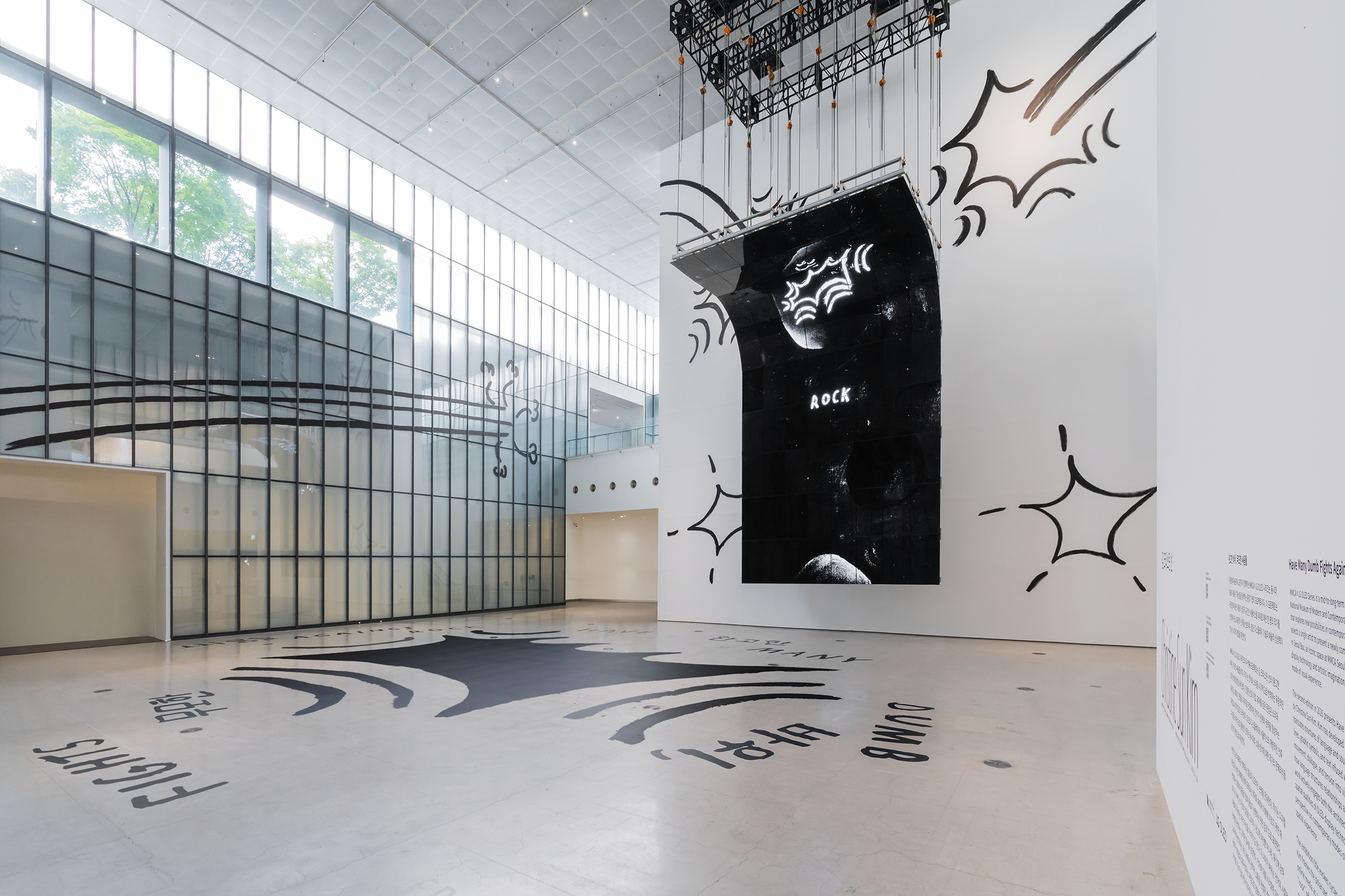
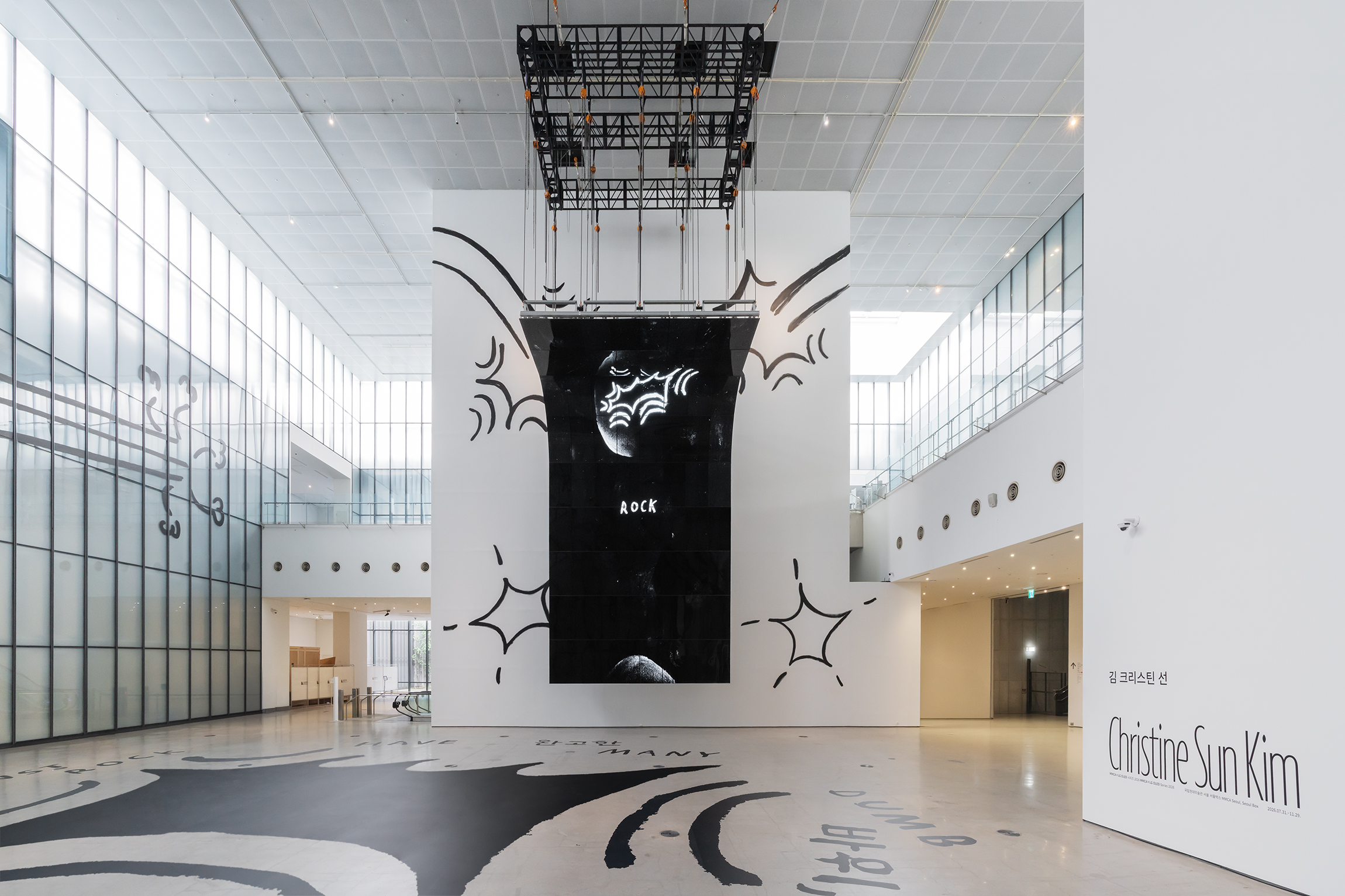
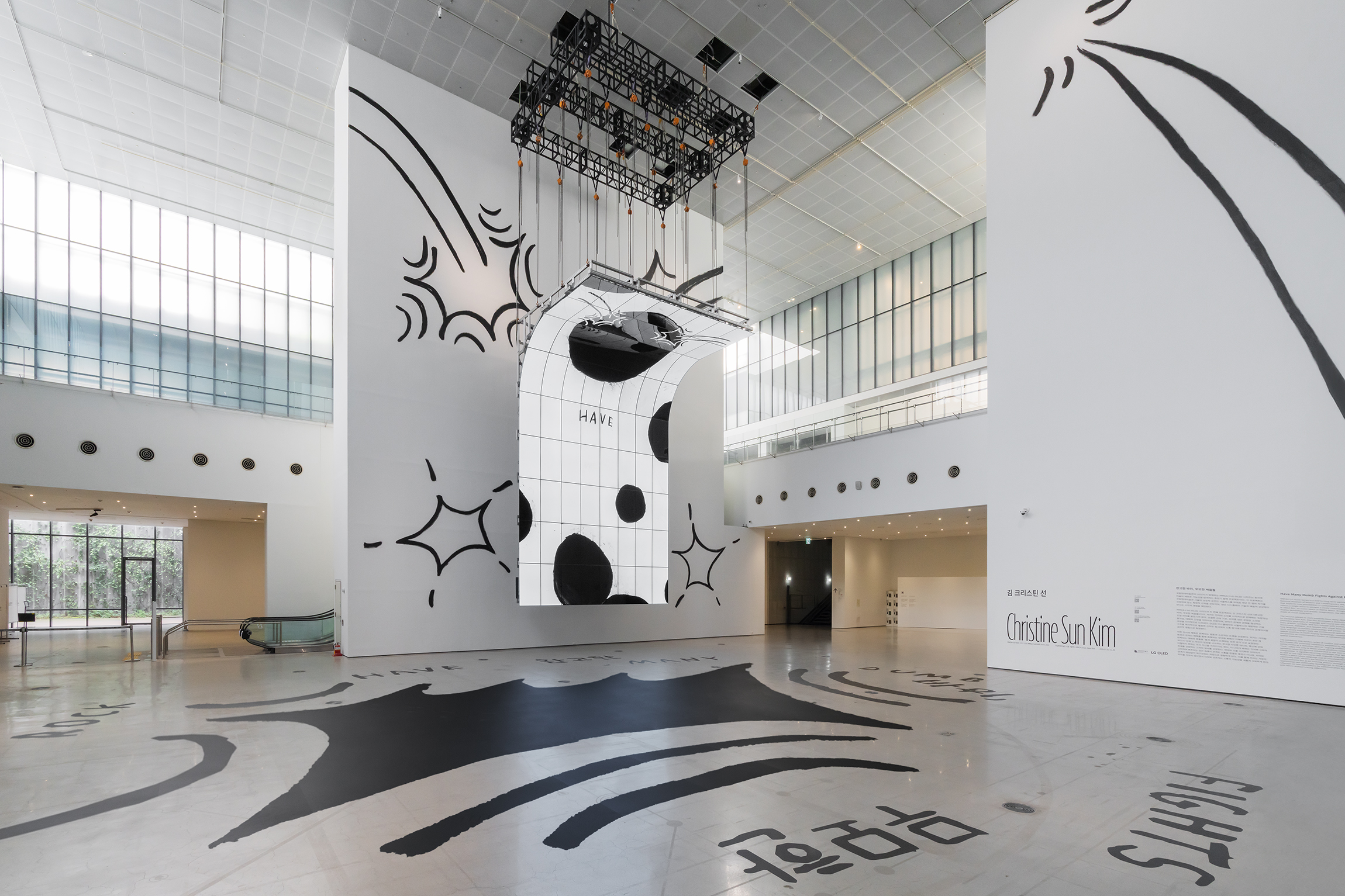
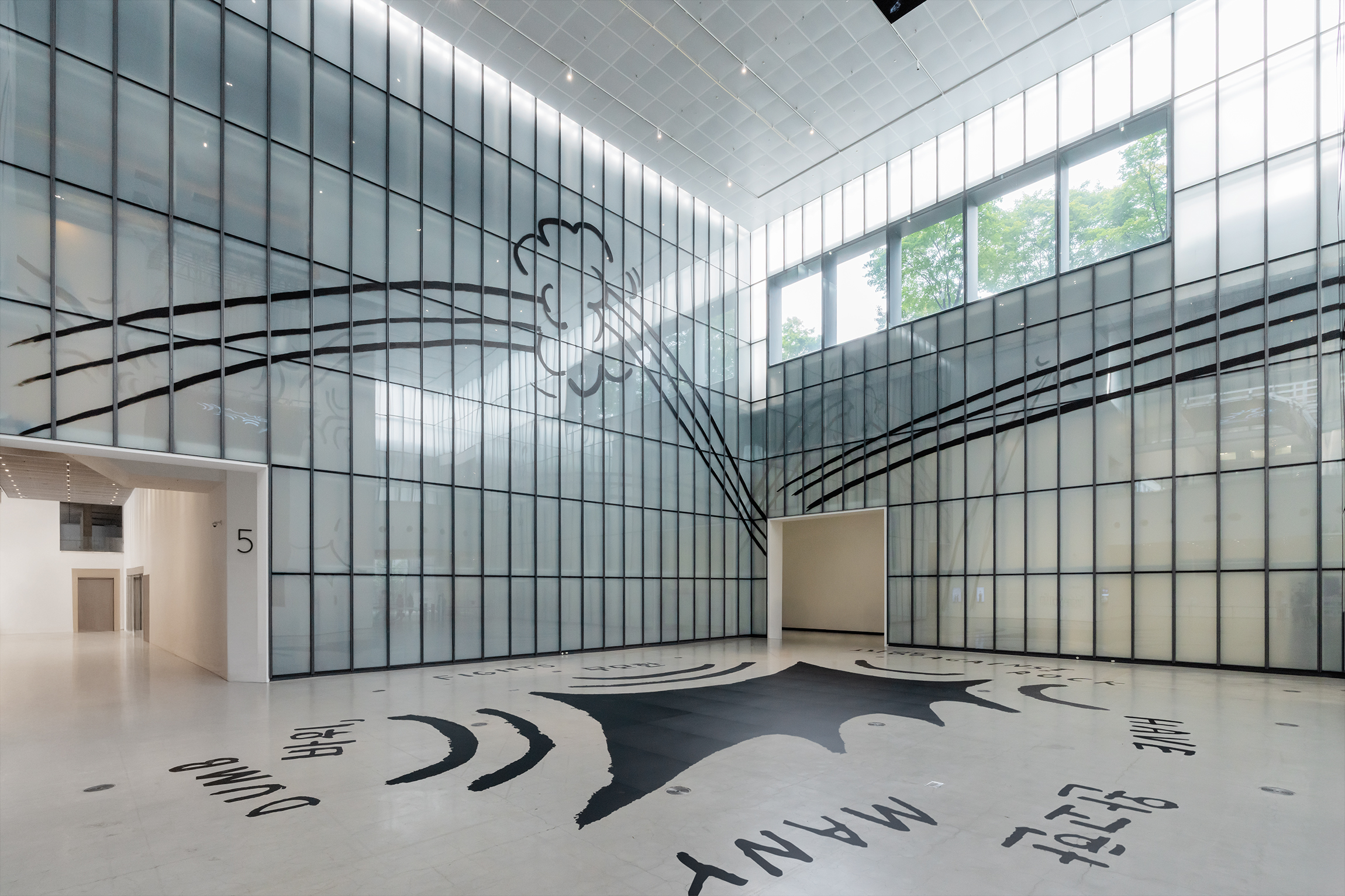
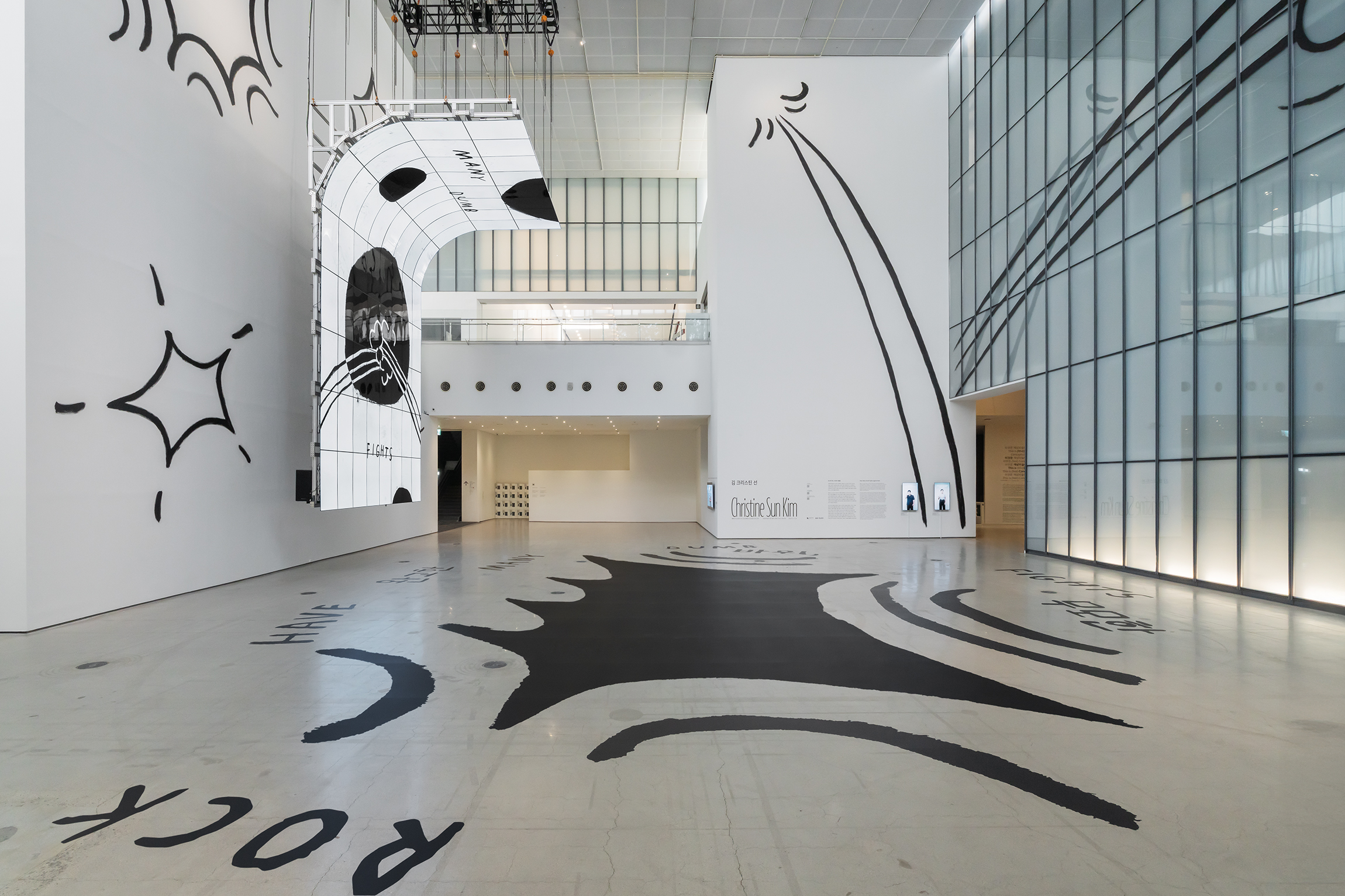
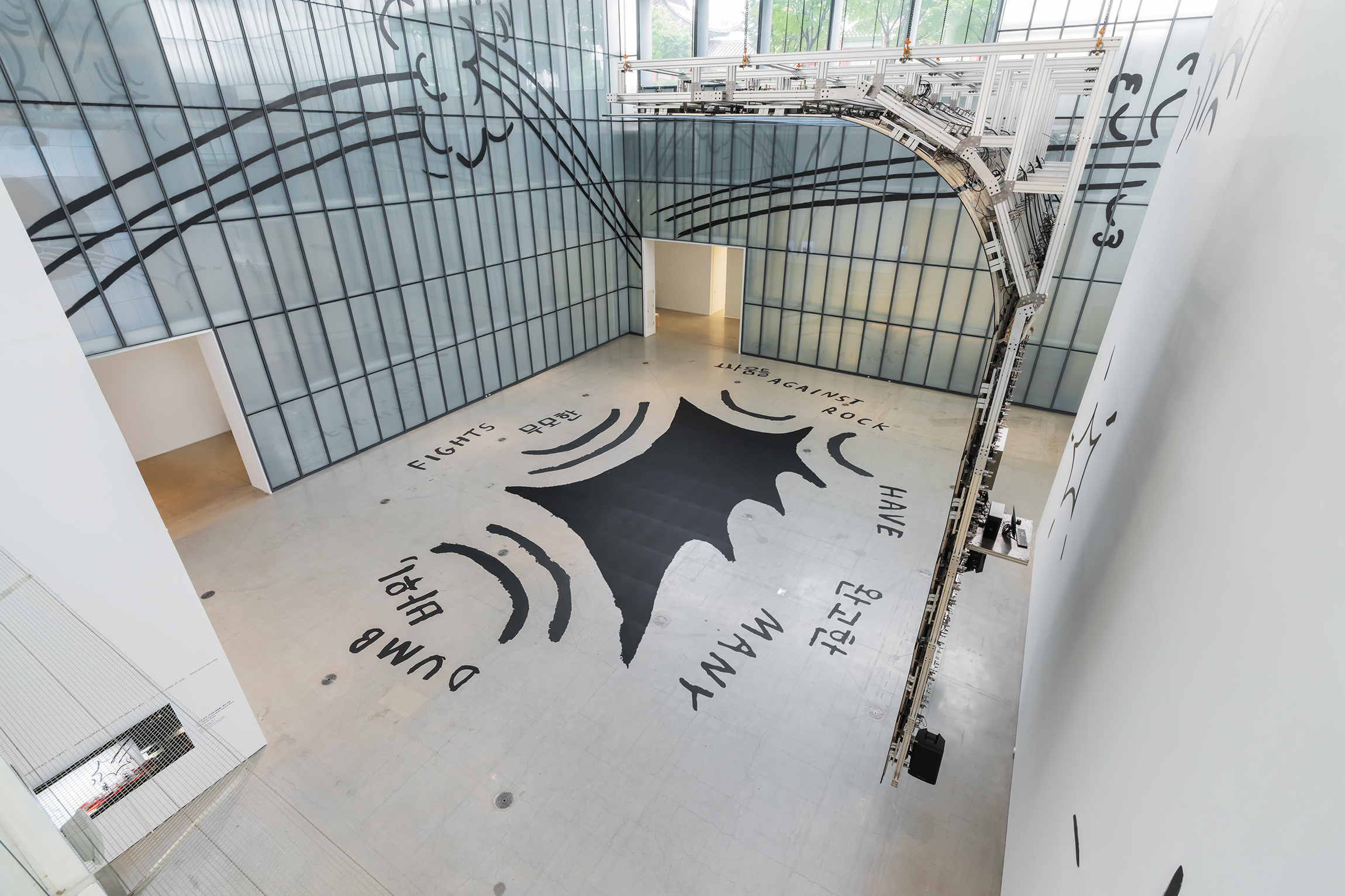
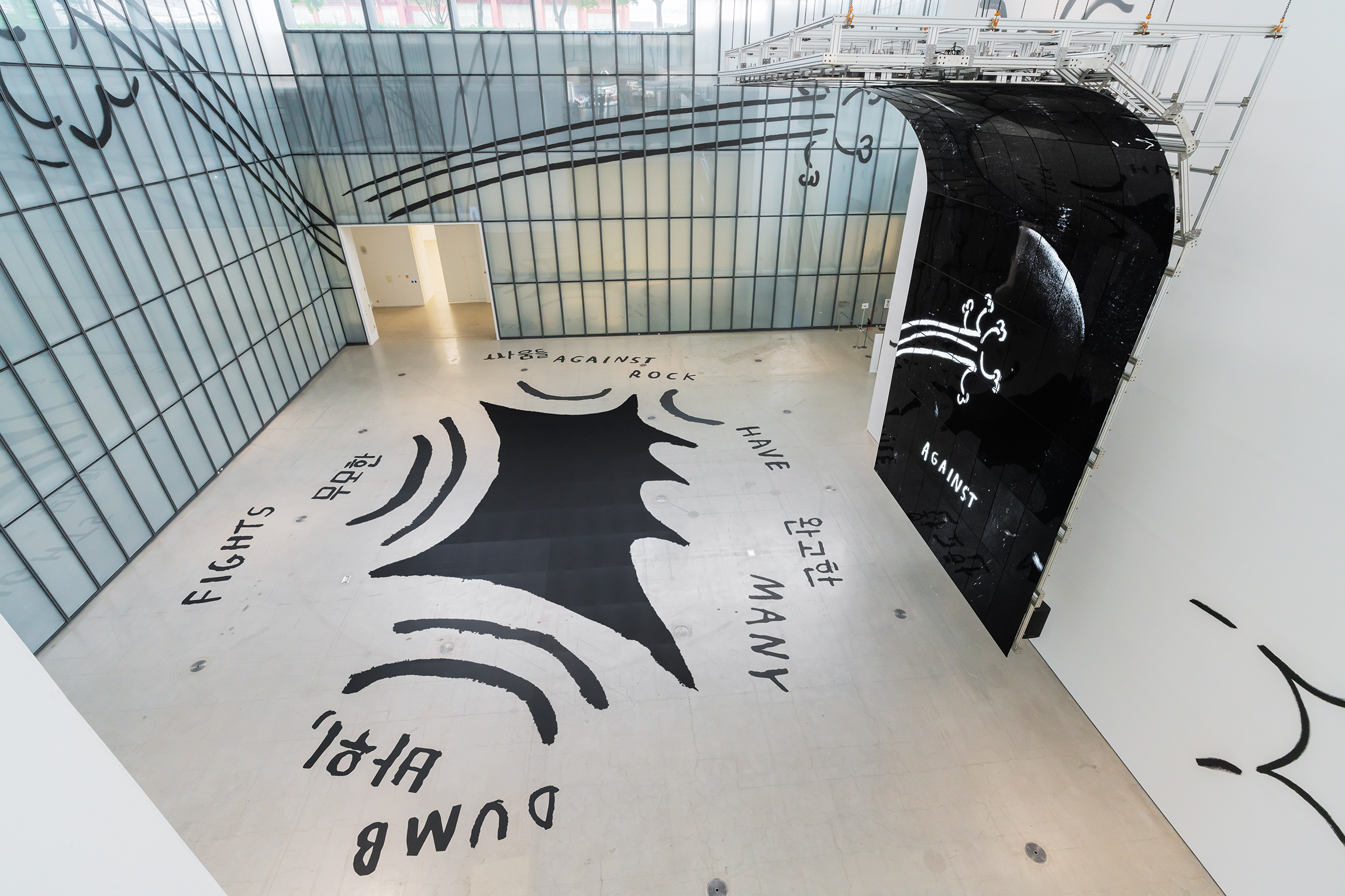
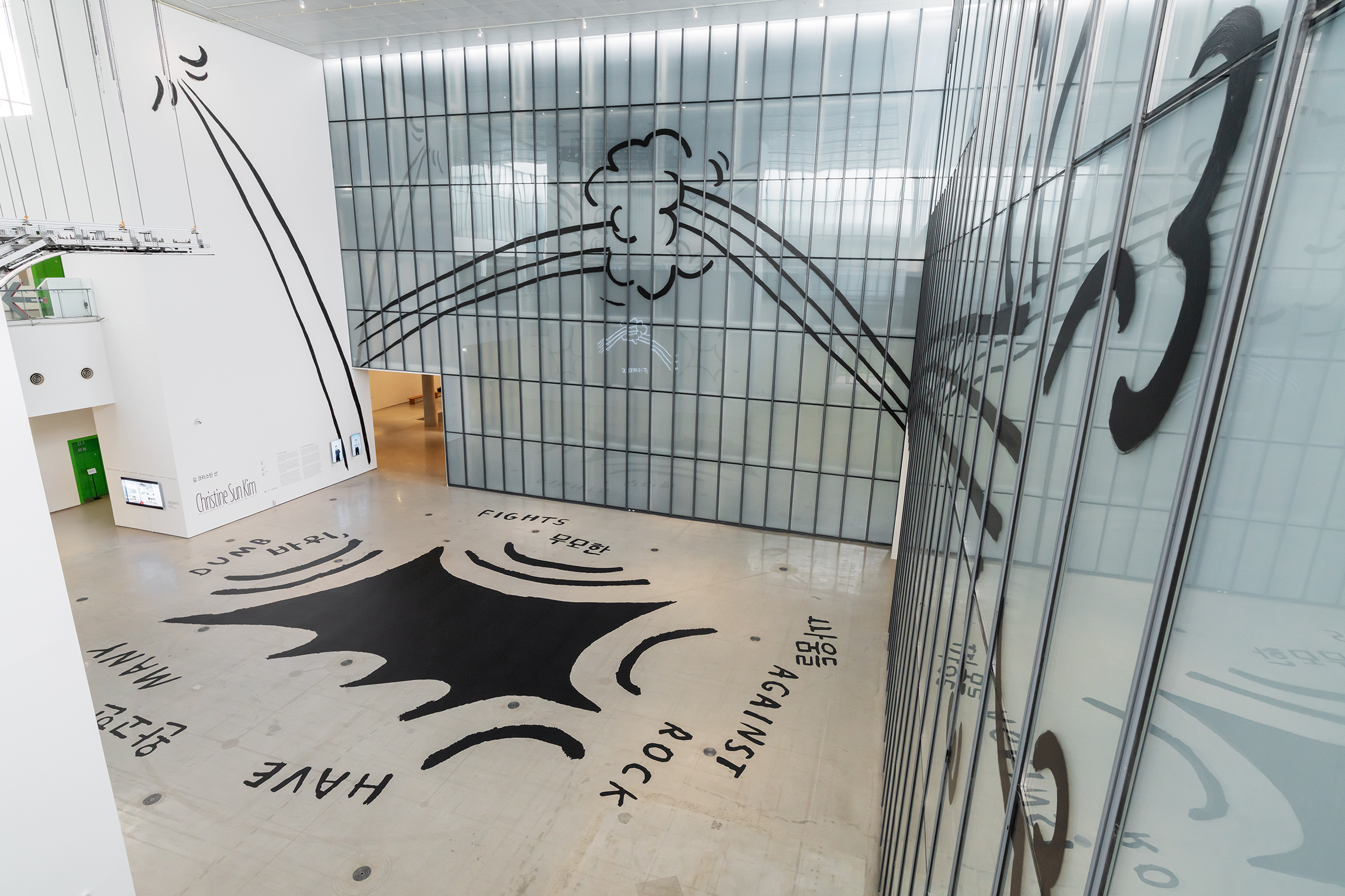
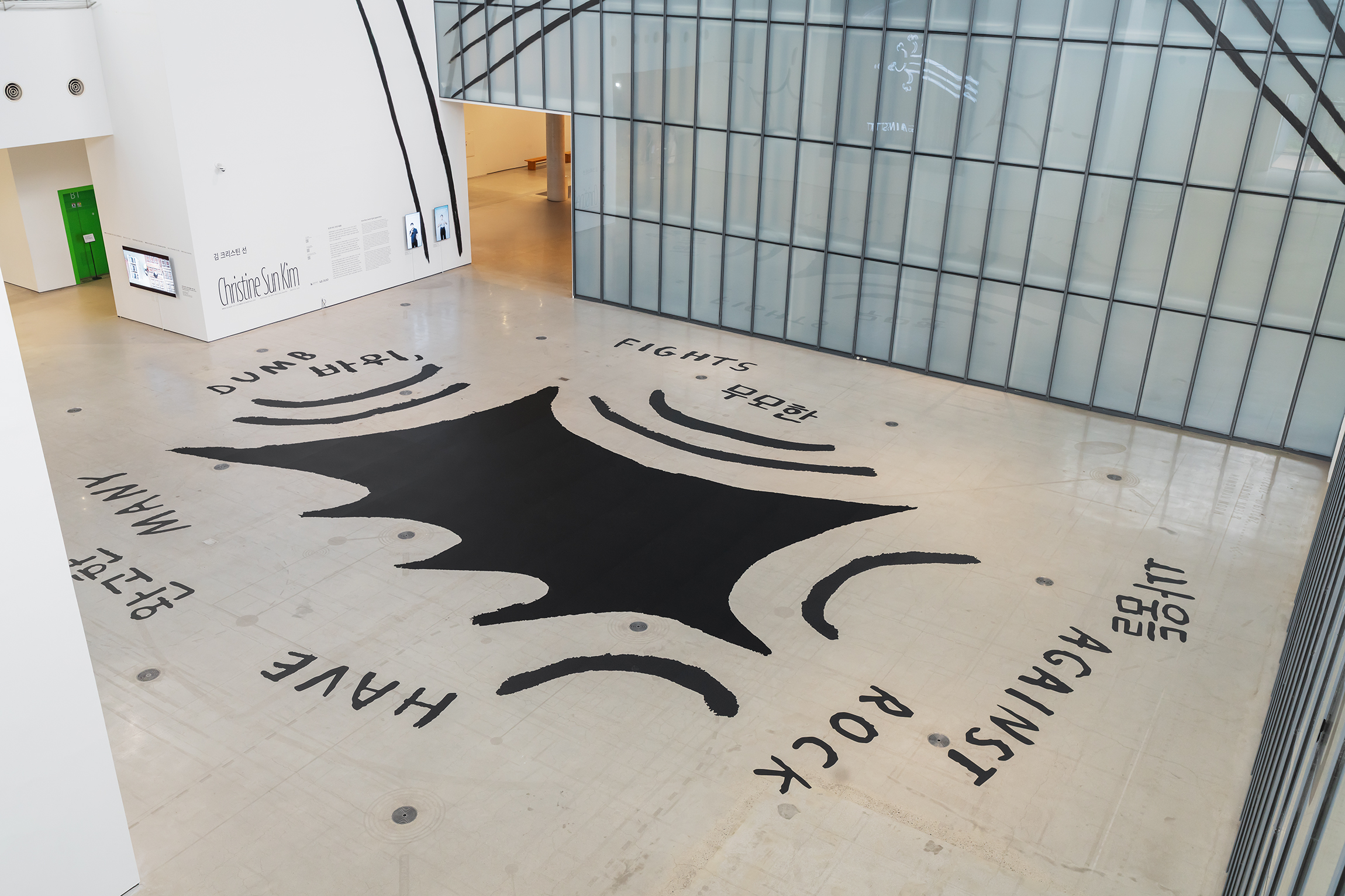
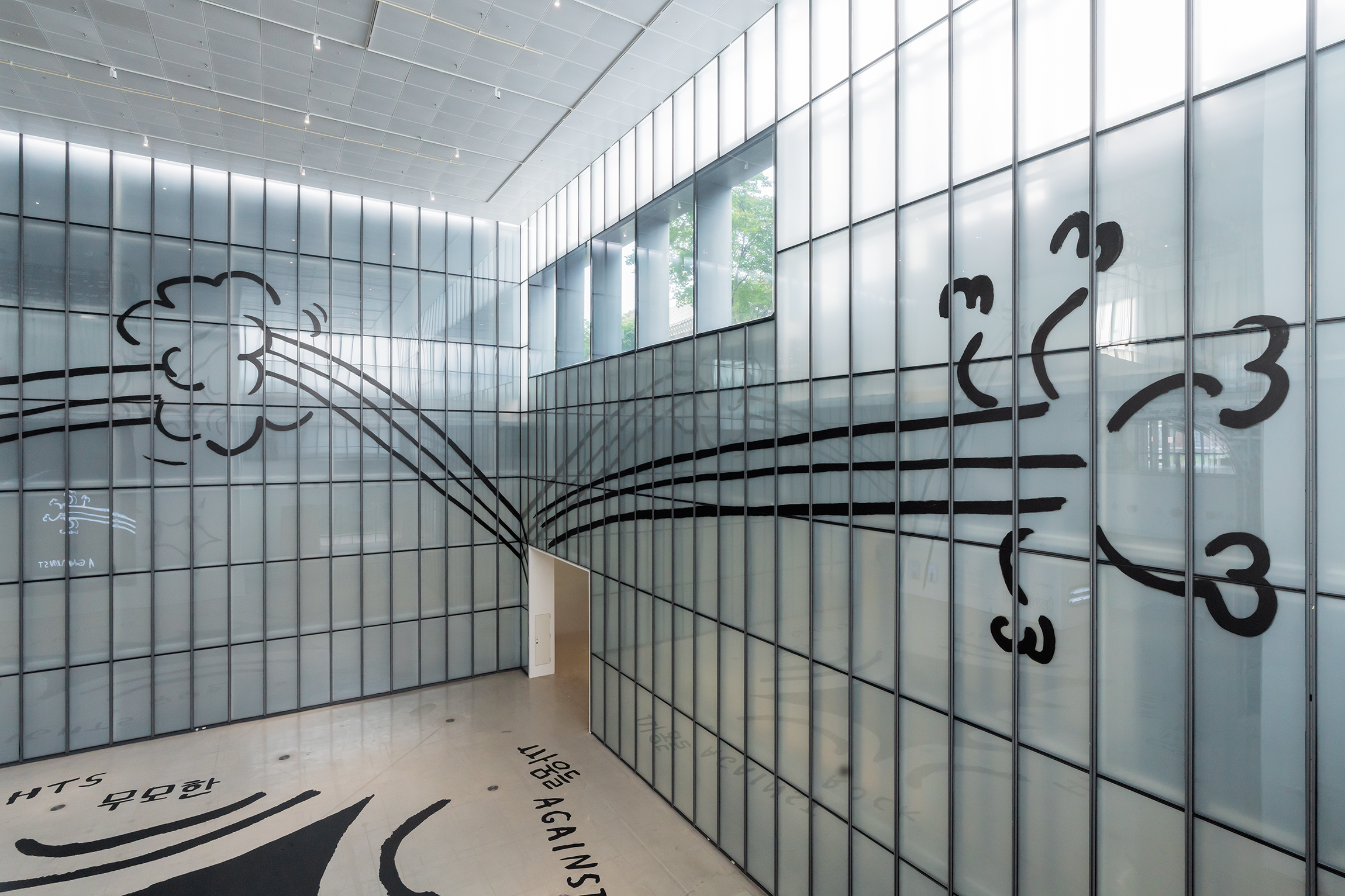
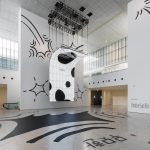
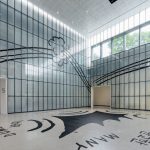
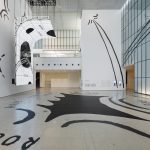
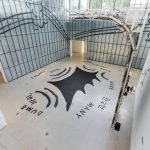
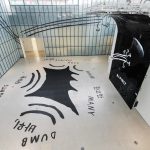
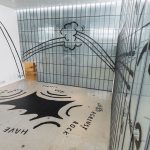
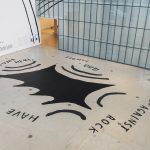
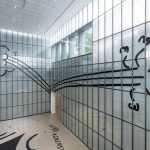
This exhibition builds upon Kim’s recent practice of expanding drawing into an architectural scale. She reconfigures drawing not as a discrete image but as an environment where movement, duration, and architectural experience intersect, transforming the act of reading language into a spatial experience. Have Many Dumb Fights Against Rock continues this trajectory as a new site-specific installation in which architecture, moving image, and sound form a unified environment. Combining the open structure of Seoul Box with the formal possibilities of OLED displays, the work is integrated into a single, organic spatial composition of animation, drawing, mural, sound, and text.
Kim reinterprets the motion lines from classic comics and the movement inherent in ASL in to her own visual grammar. Visual elements that convey speed, direction, collision, and tension function here as formal devices that articulate movement, affect, and relationships within language. As viewers move through Seoul Box, they encounter processes in which language is formed, intersects, and is continually rearticulated within space. Communication thus emerges not as the transmission of fixed meaning but as an ongoing process through which differing perceptions and perspectives are continually negotiated and understood.
The exhibition title, Have Many Dumb Fights Against Rock, evokes cycles of conflict and unproductive argumentation. Kim frames the polarization intensified by digital environments and online media as a sensation akin to “arguing endlessly with a rock.” Here, the “rock” refers not only to an unyielding other who insists on their position, but also to ourselves when we become confined within our own certainties and unable to compromise. More broadly, the rock signifies the entrenched structures that govern language and social relationships. Within a space where language and its visualized forms intersect and continually shift, viewers are invited to experience communication not as a fixed outcome but as an evolving process through which difference and relationships are continually reconfigured. In doing so, the exhibition invites reflection on new possibilities for communication that enable coexistence with others without erasing difference.