
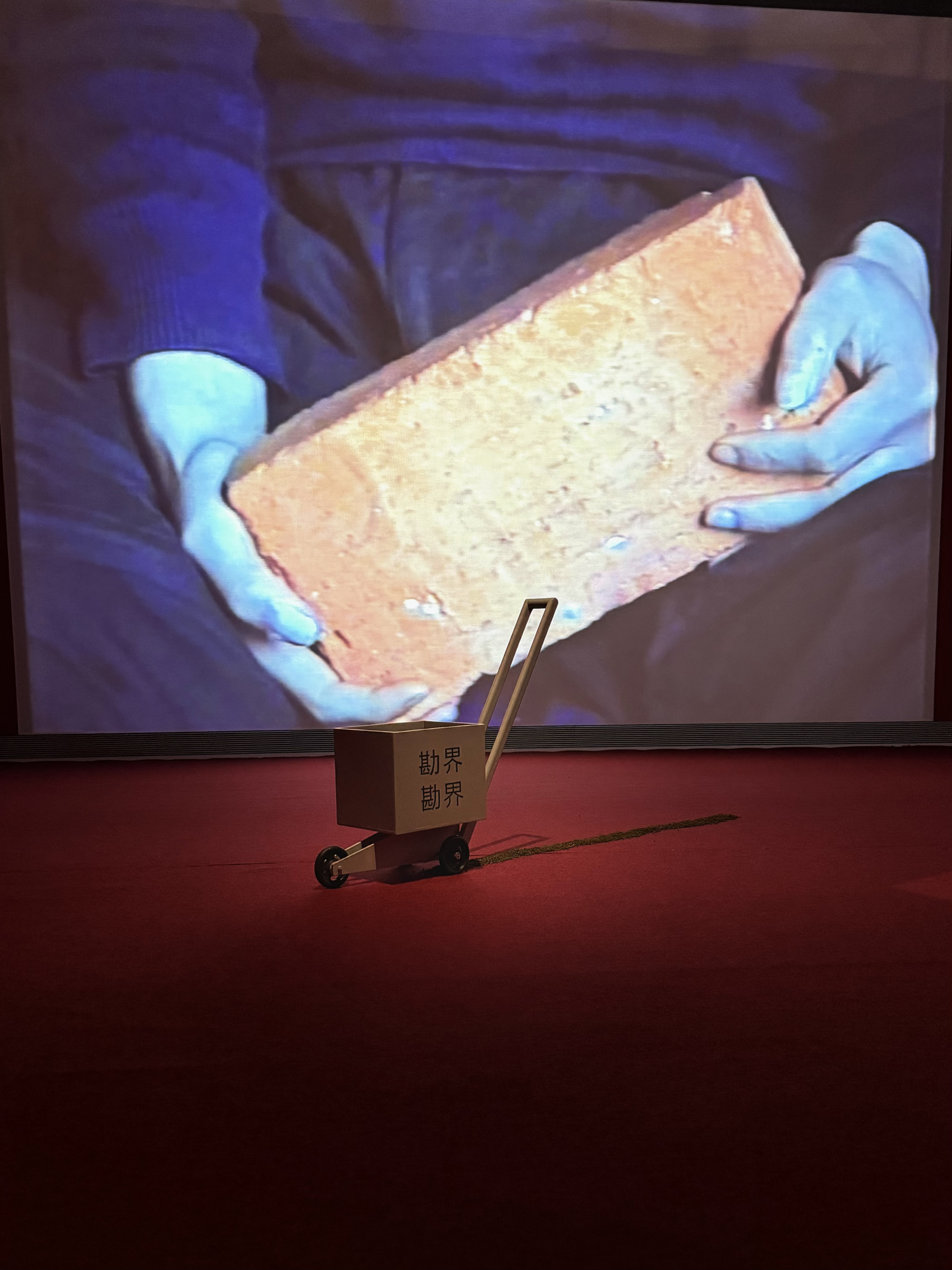
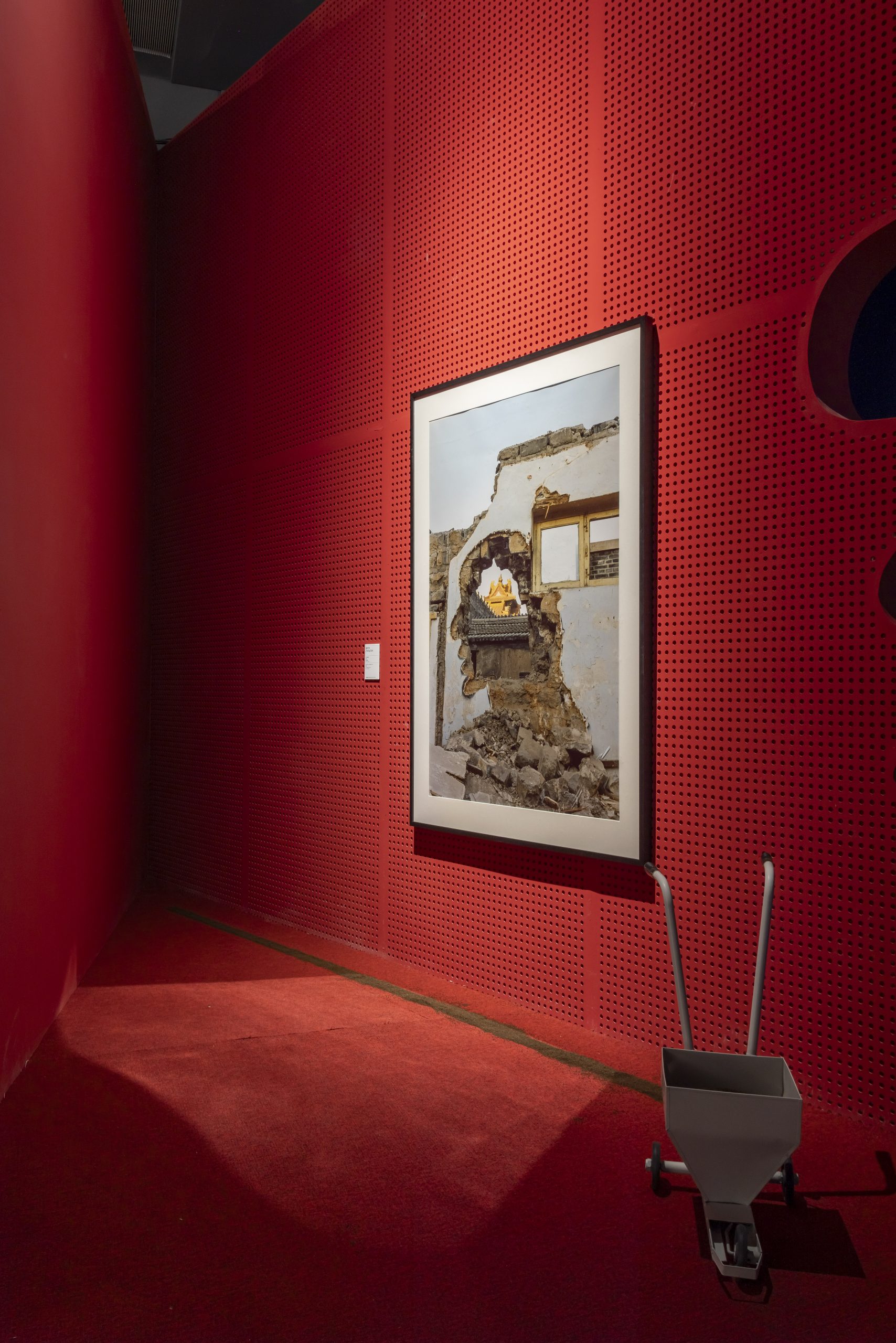
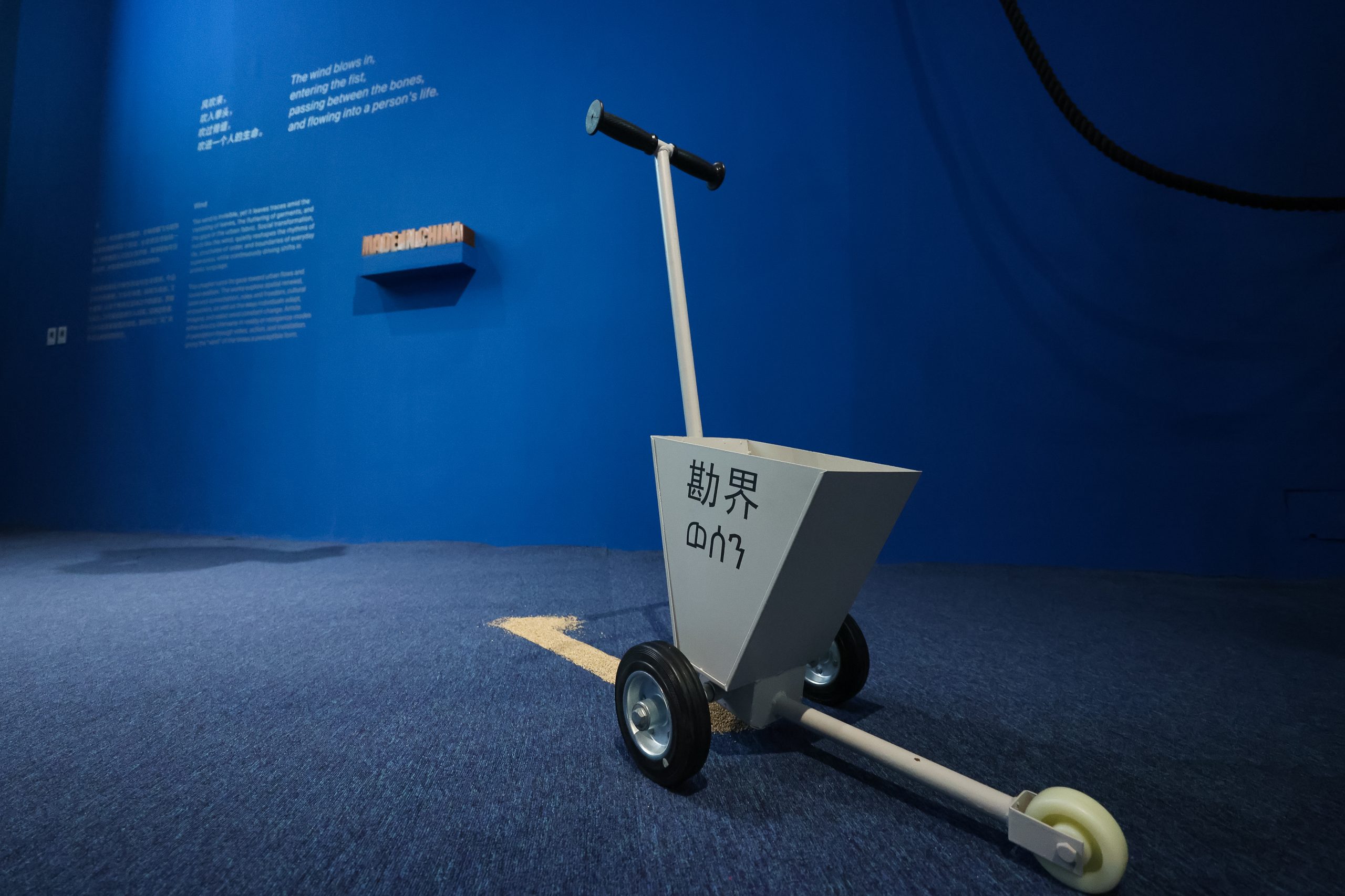
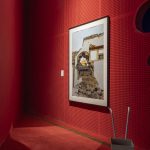
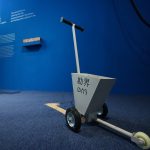
To commemorate its 30th anniversary, Taikang Insurance Group, in collaboration with Taikang Art Museum, presents the large-scale contemporary art exhibition Blues on White: Art Exhibition Celebrating the 30th Anniversary of Taikang Insurance Group, on view from August 4 to October 7, 2026.
The exhibition title, Blues on White, evokes the freedom of creation on a blank canvas and the vibrant blue light shimmering across the spectrum. Through countless “shades of blue,” it captures the courage and passion of generations of artists moving through the currents of time. The Chinese title, Feng Zhong Xie Sheng, reflects on how we perceive and record our times: “wind” (feng) refers to the flow of time, shifting social atmospheres, and visual traces, while “sketching from life” (xie shen) extends beyond traditional representation to encompass artists’ ongoing observation, recording, and response to reality through bodies, images, sounds, spaces, and actions. Bringing together 74 works and projects by 56 artists and artist groups, the exhibition traces the development of Chinese contemporary art from the 1990s to the present through a diverse range of media, including video, installation, painting, and photography. Focusing on themes such as individual lives, intergenerational relationships, social transformation, memories of homecoming, and the echoes of life, the exhibition reconfigures three decades of artistic responses to lived reality, embodied experience, and the consciousness of time into an immersive contemporary art experience that invites visitors to enter, traverse, and experience. Admission is free, and a comprehensive program of public events will accompany the exhibition, extending its reflections on lived experience and the spirit of the times into broader public engagement.
Companionship has been the guiding principle of Taikang’s commitment to the arts over the past three decades. As one of the earliest financial institutions in China to systematically collect modern and contemporary Chinese artworks, Taikang Insurance Group pioneered a model of systematic corporate art collecting. Through its collections, exhibitions, research, and public programs, the Group has consistently supported the development of Chinese contemporary art while fostering long-term relationships with artists, establishing a distinctive model for corporate participation in China’s artistic ecosystem.
In 2003, Taikang Insurance Group (then Taikang Life Insurance Co., Ltd.) established Taikang Space, the first non-profit contemporary art institution founded by a financial enterprise in China. In 2023, the Taikang Art Museum officially opened to the public. From supporting emerging artists to building a systematic collection, and from operating an independent art space to running a museum that serves the wider public, Taikang has consistently contributed to the development of China’s contemporary art ecosystem through sustained and tangible actions, accompanying artists and audiences.
This thirty-year bond of mutual companionship and shared growth has inspired an exhibition built around the theme of companionship. Nearly half of the participating artists have maintained long-standing relationships with Taikang in various capacities. Some artists have works included in the Taikang Collection and have been featured in major collection exhibitions. Meanwhile, others—primarily emerging and mid-career artists—have received sustained support through initiatives such as Taikang Space’s 51 m2, Light Pavilion, and the Taikang Art Museum’s Rehearsal. Blues on White reflects on the relationship between art and the individual amid ongoing social transformation. Through each artist’s personal experience and artistic expression, the exhibition uncovers emotional narratives hidden in the subtle details of everyday life. Their works awaken our senses and invite us to reinterpret—and reimagine—our understanding of the past, the present, and the future.
Upon entering the exhibition hall, visitors embark on a journey through five chapters—Skin, Wind, Soil, Trace, and Stay—which together evoke the passage of a human life. The Prologue juxtaposes works by Zhang Yinquan, Xu Bing, and Chen Yifei with Karl Marx’s Das Kapital (First Edition) and Adam Smith’s The Wealth of Nations, positioning the exhibition within the historical relationship between modern China, art, and social transformation. Three chronological milestones—1905, 1942, and 1977—serve as key coordinates in the Taikang Collection’s research framework, establishing historical points of reference before visitors enter the landscape of Chinese contemporary art from 1996 onwards.
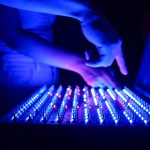
The first chapter, Skin, begins at the threshold of bodily perception and extends into intimate relationships, family experience, and embodied perception. It uses works in diverse media to evoke deeply personal experiences that often resist verbal expression. In Song Dong’s work, moving images of the artist’s own hands are projected onto his father’s body. Through a form of “virtual touch” that can never truly take place, the work explores the physical and emotional boundaries that remain unspoken within the Chinese father-son relationship. In his paintings and notebooks, Hu Qingtai repeatedly writes and reinforces a phrase his mother once told him: “Qingtai, the most beautiful color is yellow.” Through this process of self-persuasion and self-affirmation, he attempts to convince himself of the truth of her words.
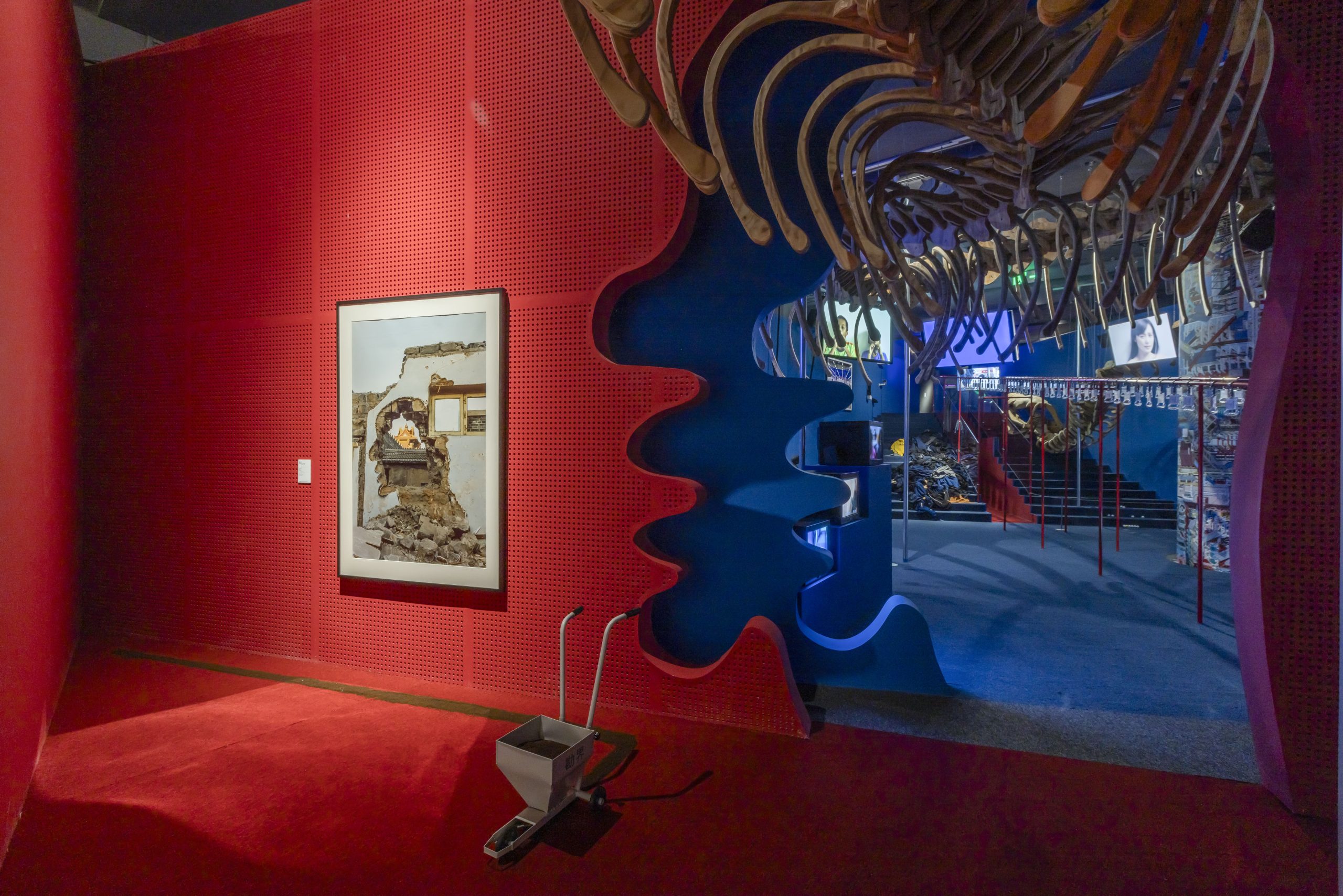
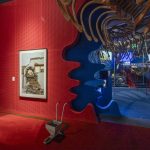
The second chapter, Wind, turns its focus to urban mobility and social scenes. Through video, photography, installation, sculpture, and performance, the participating artists capture transformations in urban movement, labor experience, and public space. In Fly, Fly, Jiang Zhi presents a woman whose arm imitates the motion of a bird’s wing, evoking a fairy-tale vision of liberation within the confines of a 1990s apartment building. Cao Fei’s photographic work My Future Is Not a Dream emerged from her long-term project exploring factory labor and individual imagination. Temporarily stepping outside their identities as industrial workers, factory employees assume imagined roles and alternative personas. In doing so, they reveal aspirations that are often obscured by the repetitive routines of assembly-line life. One of the landmark works in the Taikang Collection, Huang Yong Ping’s monumental installation Python stretches across the ceiling of the museum’s first-floor gallery. Built from wooden structural elements bound together with hemp rope, the thirty-meter-long skeletal form resembles both the fossilized remains of a prehistoric creature and an endlessly expanding architectural framework. Suspended between movement and stillness, transformation and permanence, the work creates a powerful visual tension that permeates the entire space.
The third chapter, Soil, explores homecoming, migration, native places, and memories of identity, asking how people come to rediscover their origins after the passage of time. Each artist approaches the enduring concept of home from a different perspective. Some return to their hometowns to photograph familiar streets and neighborhoods once more. Others seek an anchor for their identity in the soil of distant places, while still others transform physical materials, allowing earth itself to become a vessel of memory. Li Binyuan’s two video works, Freedom Farming and The Last Letter, together form a deeply personal meditation on his father, the land, and memory. The museum premiere of Xiang Jing’s cross-disciplinary work Return to the North documents contemporary artist Wang Guangyi’s long journey back to his hometown. Through this journey, the work reflects on the themes of collective forgetting and remembrance amid an era of profound social transformation.
The fourth chapter, Trace, explores the fragments, echoes, and narratives that time leaves behind. In Tao Hui’s video work The Dusk of Teheran, a woman dressed in traditional Iranian attire performs a monologue adapted from Anita Mui’s farewell concert while seated inside a car. By transplanting a narrative of farewell from Chinese popular culture into the social and visual landscape of Tehran, the work evokes emotional resonances that are both familiar and disorienting, allowing different cultural experiences to intersect in unexpected ways. Thai filmmaker Apichatpong Weerasethakul’s Fiction revolves around the act of recording a dream. Under dim light, a figure writes down a dream that has just been experienced, repeatedly interrupted by insects and a cat. Here, writing becomes both an act of documentation and one of creation—simultaneously preserving memory and generating fiction. Unfolding through a sequence of almost imperceptible gestures, the work reflects Apichatpong’s enduring fascination with dreams, memory, the body, and the porous boundaries between reality and imagination.
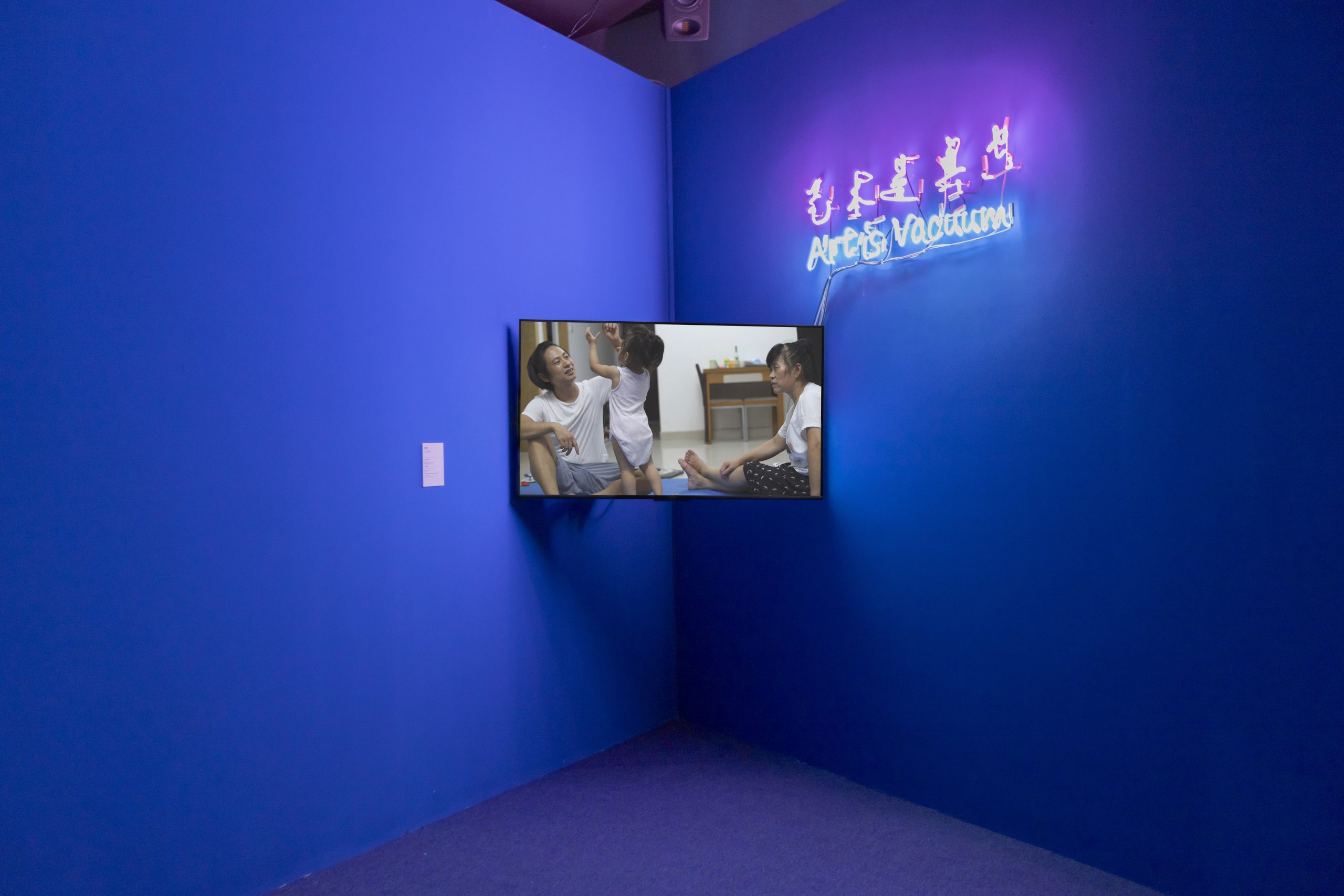
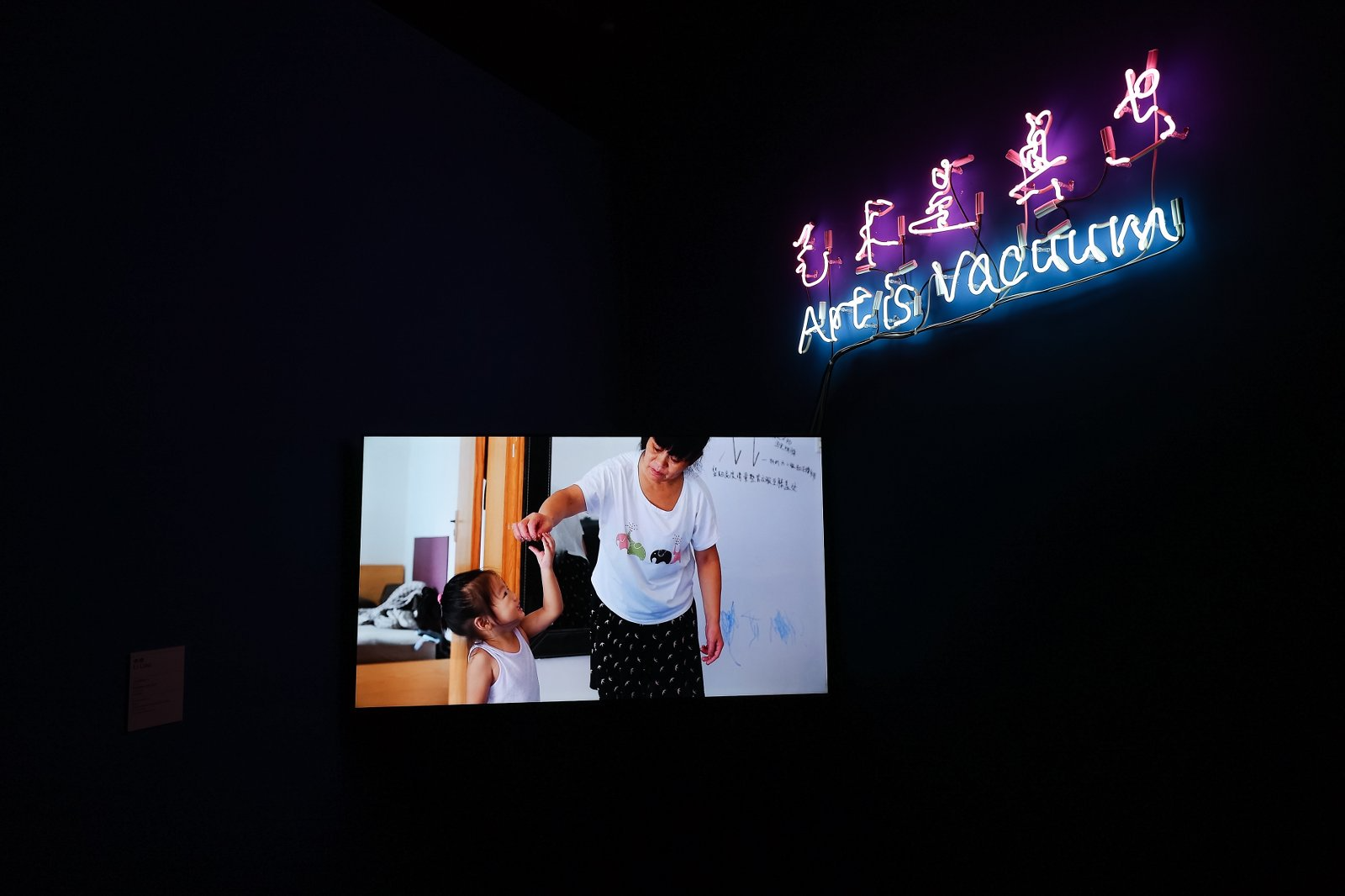
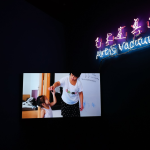
The fifth chapter, Stay, poses a fundamental question: What can art truly preserve? Perhaps it is not monumental objects or enduring memorials, but fleeting moments that continue to resonate in the human heart. In Li Liao’s Art Is Vacuum 2, after the birth of his daughter, the artist spent more than a year repeatedly teaching her so that the first complete sentence she learned to say was neither “Daddy” nor “Mommy,” but “Art is vacuum.” Words that once wounded the artist are now deliberately passed on to the next generation. In doing so, a deeply personal experience is transformed into an unsettling reflection on inheritance, memory, and the transmission of values. Take Me Home, the final short film by Iranian filmmaker Abbas Kiarostami, distills a lifetime of reflection on the act of seeing. The football that endlessly rolls downhill serves both as a guide for the viewer’s gaze and as a measure of time itself. Every bounce or change of direction leaves a fleeting trace on the stone steps, and together these accumulated traces become a metaphor for the journey home. In the Epilogue, works such as Alexander Kluge’s Cosmic Miniatures further juxtapose the brevity of individual existence with the vastness of human thought, guiding the exhibition from personal experience toward broader reflections on time, life, and existence. Each work, in its own way, poses the same enduring questions: When everything changes over time, what can truly remain? And what is worth preserving?
As Taikang marks its 30th anniversary, Blues on White celebrates the shared journey of growth between Taikang and the artists it has supported over the past three decades. The exhibition invites visitors to recognize the people, objects, voices, and memories carried on the winds of our time and to experience how art transcends grand historical narratives to reveal the most subtle yet enduring dimensions of lived experience. The moments we see, touch, hear, and remember become points of entry through which we come to understand the present. Art is never separate from life. It remains in the winds of the age, accompanying us as we perceive, understand, and give expression to the world we inhabit.
As another major initiative marking Taikang’s 30th anniversary, the photography residency and commissioned exhibition Ramping Up will open on October 24, 2026. The project invites photographers to undertake site-specific residencies within Taikang Community, exploring the relationships between architecture, care, and everyday life while examining the spatial dimensions of longevity in an aging society.