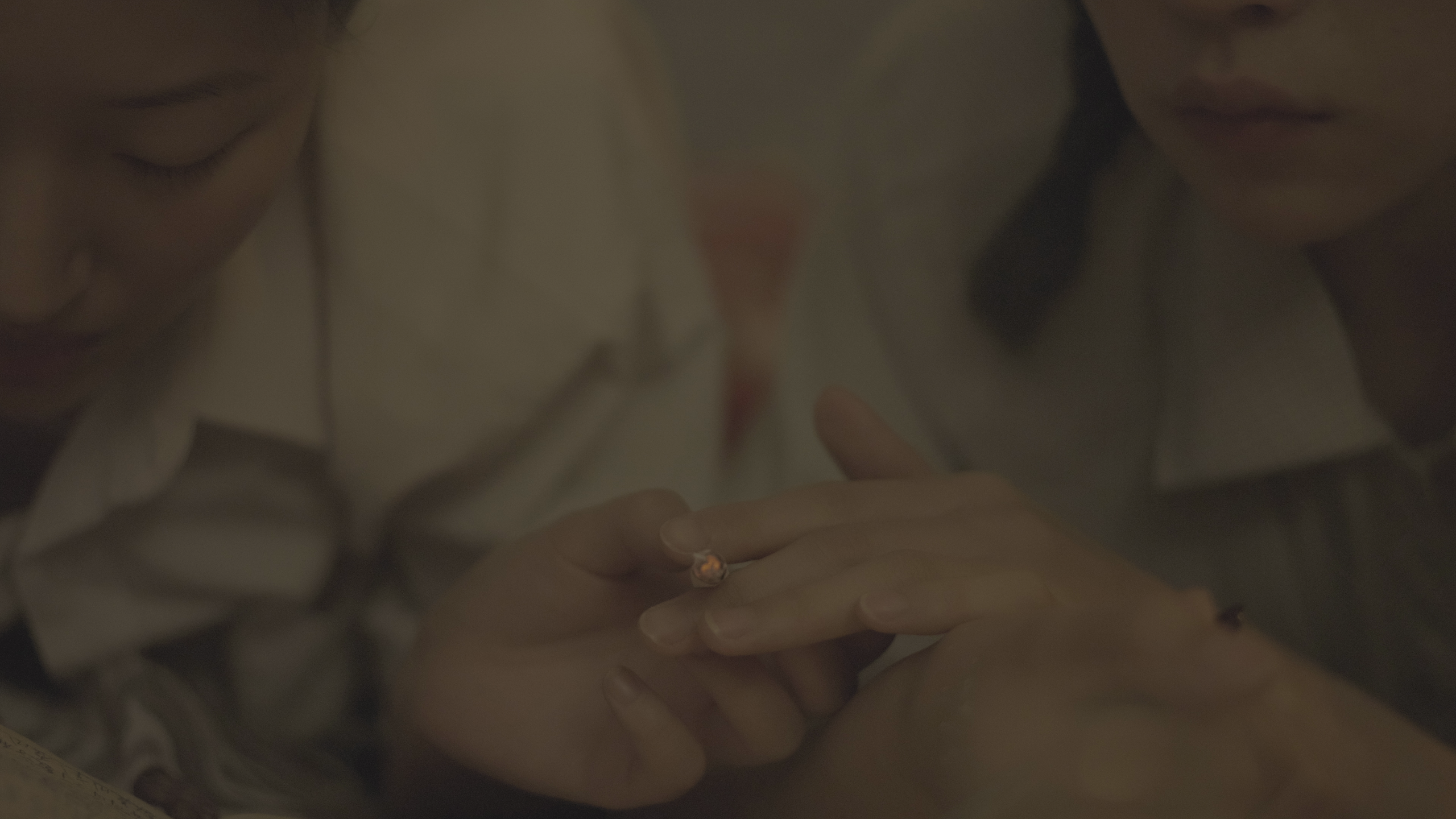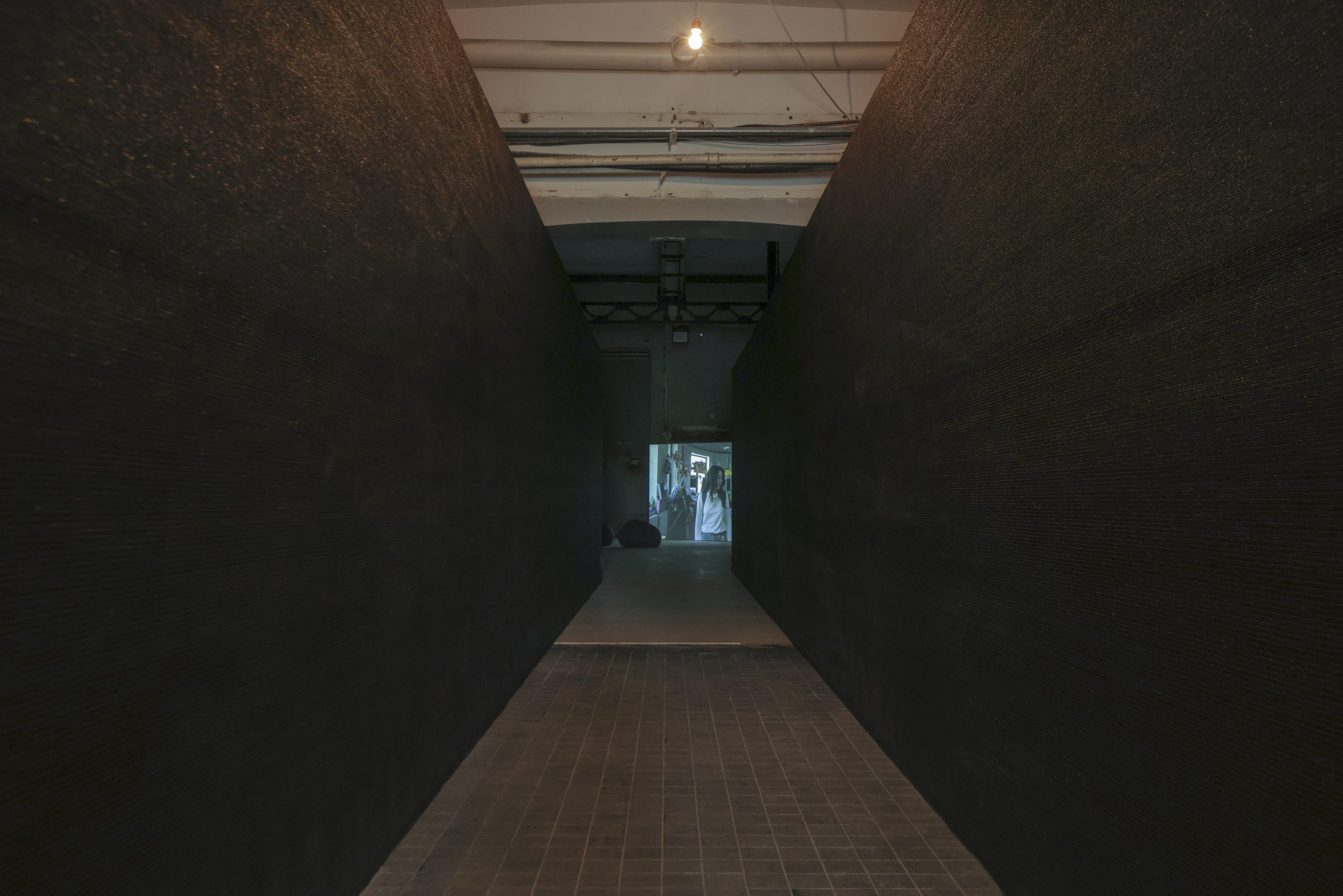
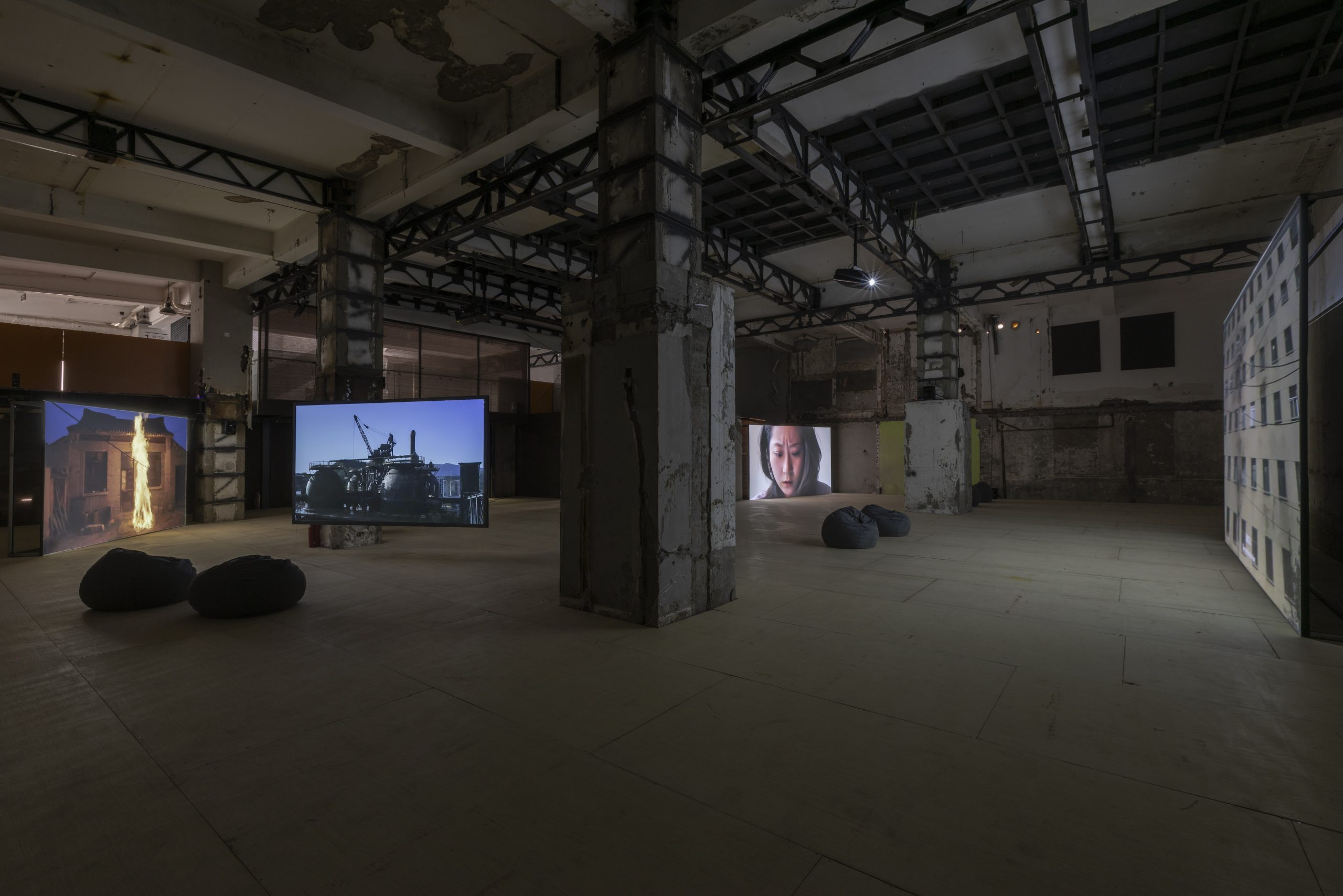
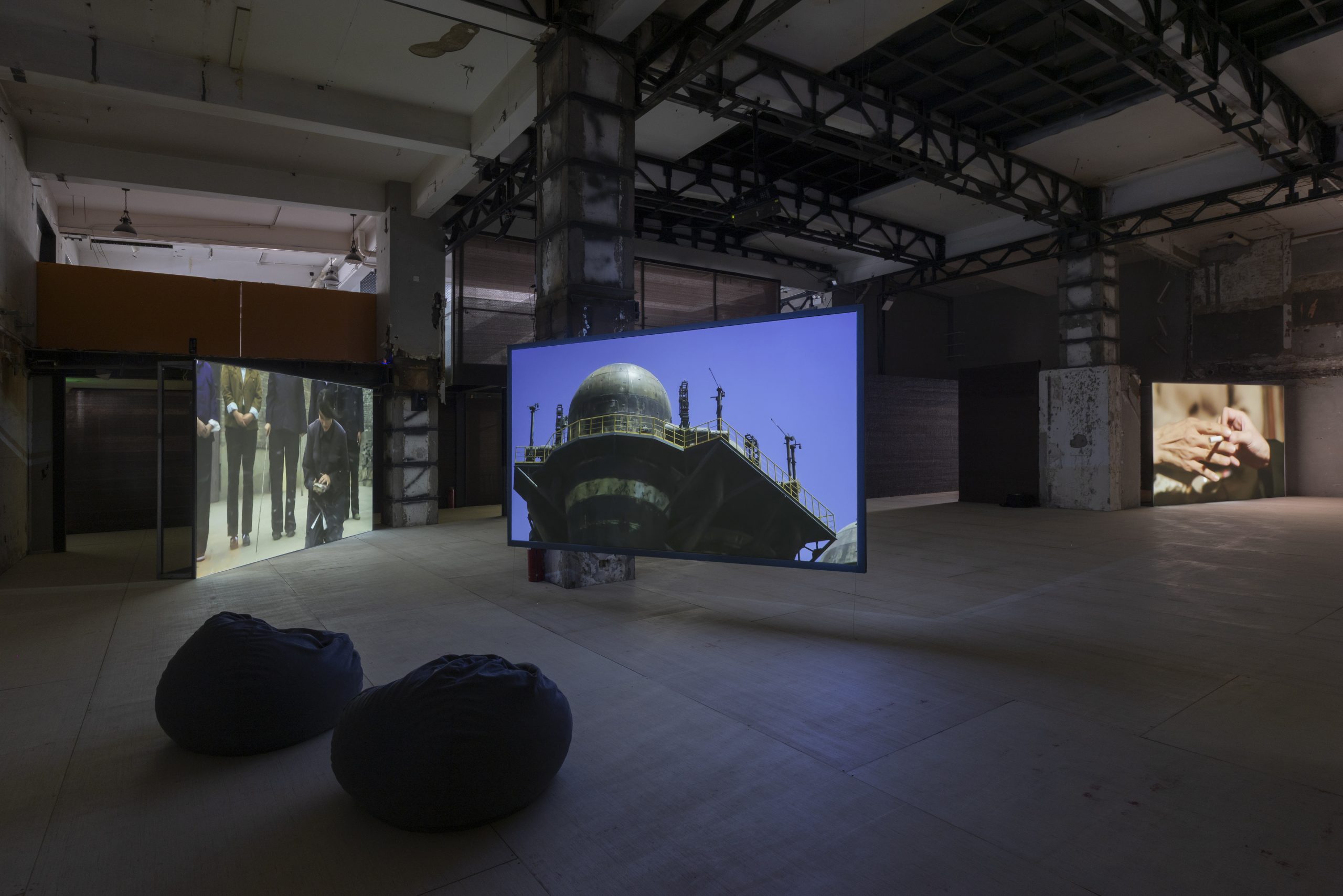
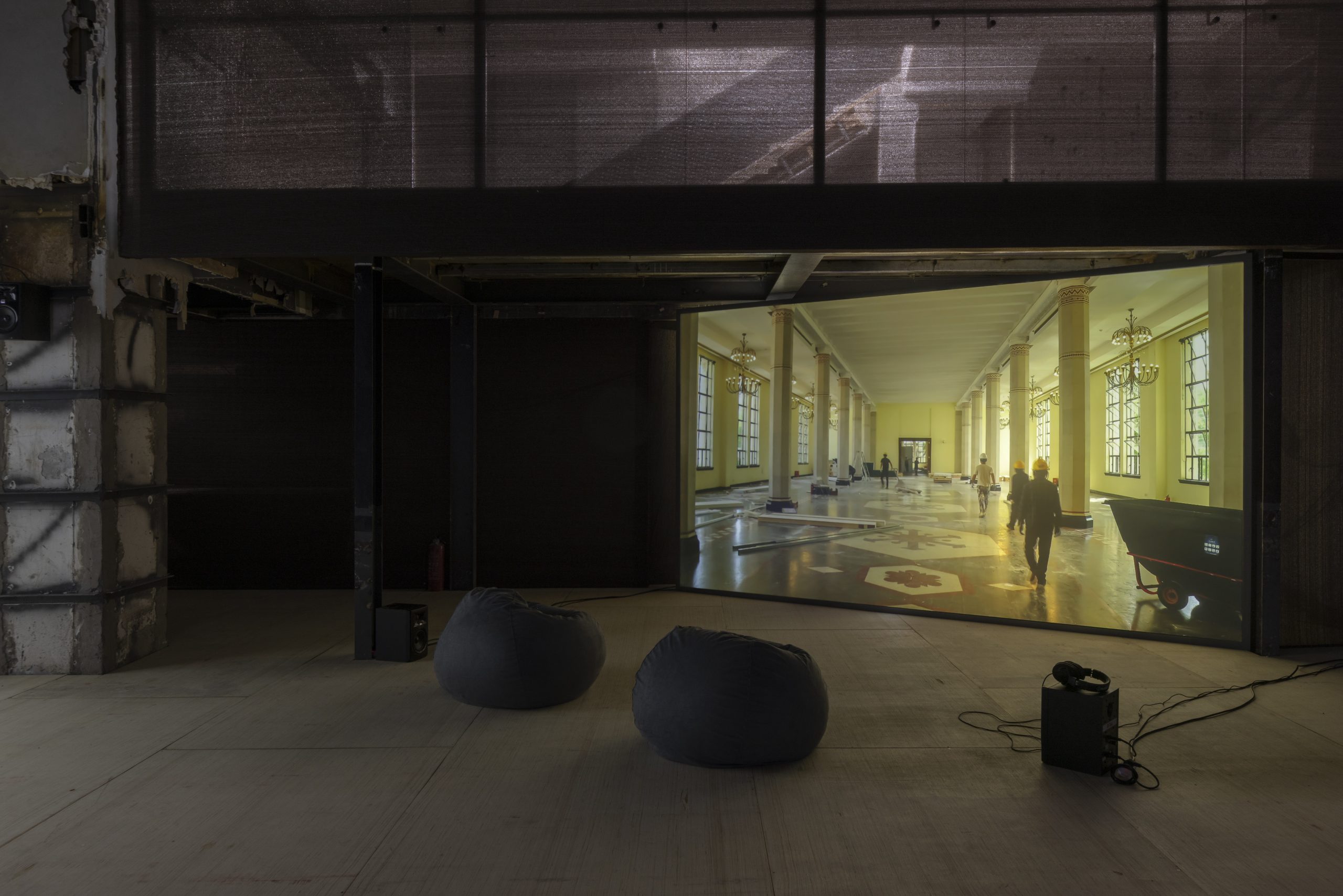
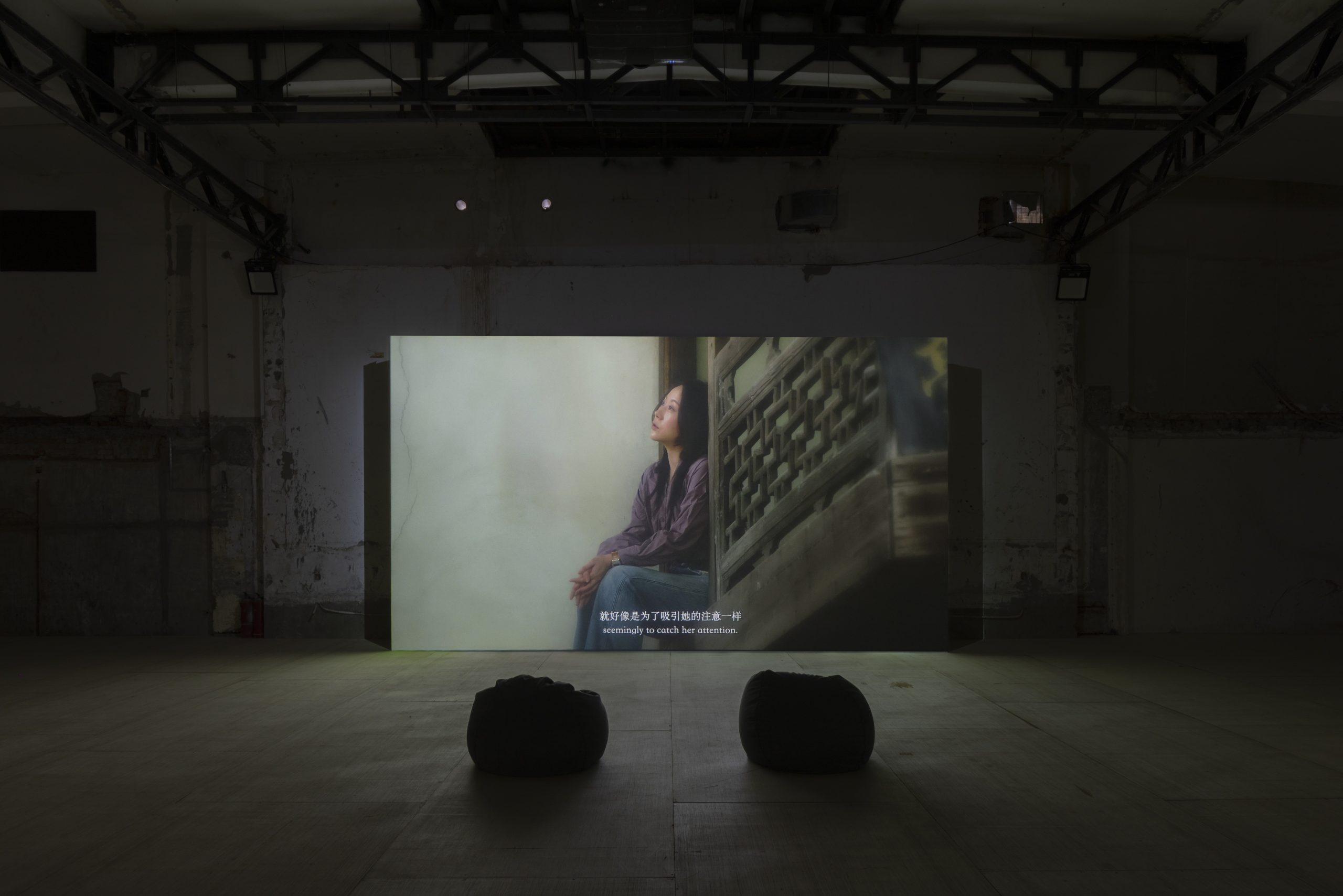
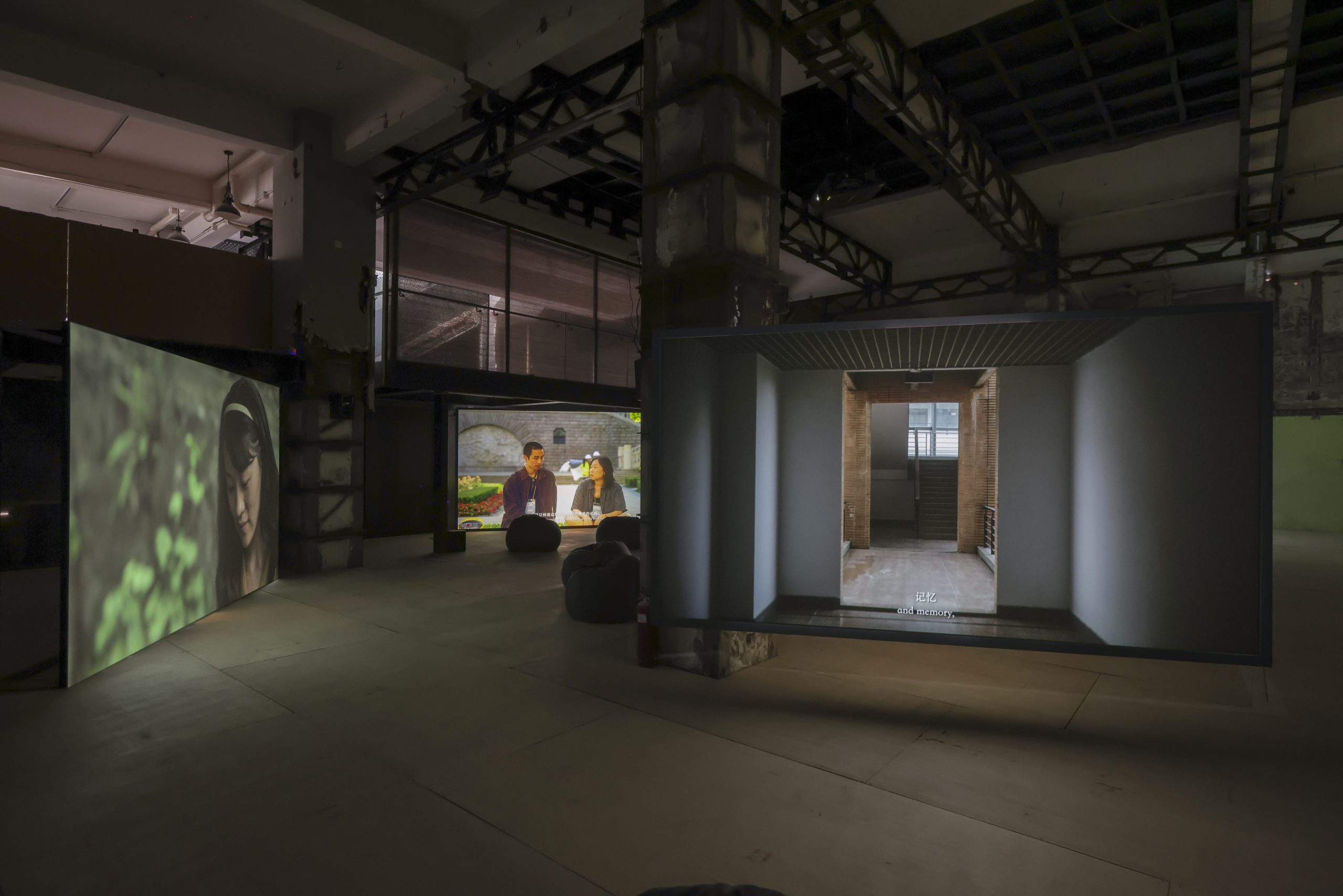
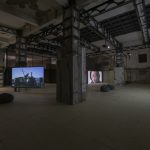
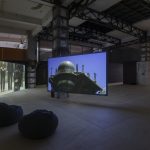
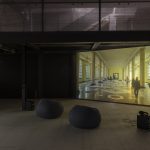
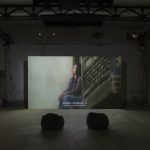
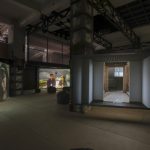
Architectural space has long served in WANG Tuo’s practice as a critical lens, through which the entanglements of individual consciousness, collective memory, and historical narrative are examined. For example, Spiral (2018) examines how desires formed within the two-dimensional world are projected into three-dimensional reality, where they are continuously amplified, consumed, and deepened; Obsessions (2019) investigates how the internal structures of socialist-era buildings reflect and shape the collective subconscious. In recent years, as the artist has continued to explore the transformations of Chinese modernity and the setbacks in intellectual history, his ongoing video project Intensity in Ten Cities (2025—) approaches ten buildings through another route. Located across northern and southern China, these buildings were completed between 1949 and 1979, one of the most ideologically charged periods in the history of modern Chinese architecture; in this project, however, they do not appear as the primary emblems of a particular era, but rather as portals into different temporalities, containers of neglected emotions, and traces of suppressed trauma.
The historiography of architecture has tended to read formal language, spatial configuration, and construction techniques as materialized expressions of the spirituality and intention of their respective periods. At the same time, the illusion of historical continuity produced by such scholarship has concealed the ruptures, silences, and residues within built environments and historical time that cannot be absorbed into
established narratives. It is precisely through this fissure that Wang enters a passage never explicitly written into history. In the work, therefore, these buildings carry a double historicity: publicly they remain material remnants of state will and monuments of collective memory, and privately they become silent vessels of individual experience and hidden sites where personal trauma left its traces. The emotions traced in the work admitted, at the time, of neither clear articulation nor private legitimation. This invisibility owed as much to the era’s systematic foreclosure of non-normative intimacy
as to the voicelessness of those who bore them, having never been granted the right to speak. Here, the architectural vanishing point where perspectival order dissolves is recast as a figure of historical epistemology; those points at which individual experience has been systematically erased from the historical record become precisely the origin of another narration.
Intensity in Ten Cities makes no claim to reconstructing or explaining historical trauma in full; it leaves secrets undisclosed and wounds without resolution.Yet it is precisely within this deliberately retained incompleteness, at the threshold between what can and cannot be spoken, that the viewer is drawn into an almost ritualized everyday realm to feel the weight of silence itself, to discern the contours of individual lives flattened by the texture of history, and to recognize how emotions that never received a name continue to persist quietly in the interstices of space and time.
About the Artist
WANG Tuo
Wang Tuo (b. 1984 in Changchun, China) currently lives and works in Beijing. Through various media, including film, performance, painting, and writing, he interweaves art history, cultural archives, literature, and mythology to construct narratives that blur the boundaries of time and space. Drawing upon perspectives from intellectual history and political philosophy, Wang examines the complex entanglements between the disruptions of modernity in China and East Asia and the contemporary dilemmas that emerge. By engaging with the concept of “hauntology” within the Chinese context, he introduces “pan-shamanization” as a proactive mechanism shaped by historical forces to evoke suppressed and untreated memories of the 20th century, revealing the hidden logics within current social power structures and the intricate relationships between collective unconsciousness and historical trauma.
Wang has recently held solo exhibitions at K21, Düsseldorf; UCCA Center for Contemporary Art, Beijing; Present Company, New York; Salt Project, Beijing; Taikang Space, Beijing. He has also participated in group exhibitions at Fondazione In Between Art Film, Venice; Canadian Centre for Architecture, Montreal; Auckland Art Gallery, Auckland; documenta Institut, Kassel; Rockbund Art Museum, Shanghai; Queensland Art Gallery, Brisbane; M+ Museum, Hong Kong; National Museum of Modern and Contemporary Art, Seoul; Julia Stoschek Collection, Düsseldorf; Staatliche Kunsthalle Baden-Baden, Baden-Baden; Queens Museum, New York; Kino der Kunst, Munich; Zarya Center for Contemporary Art, Vladivostok; Incheon Art Platform, Incheon; Power Station of Art, Shanghai; OCAT, Shenzhen & Shanghai; Times Museum, Guangzhou; National Taiwan Museum of Fine Arts, Taichung. Wang was an Artist in Residence at the Queens Museum in New York from 2015 to 2017. He received the China Top Shorts Award and the Outstanding Art Exploration Award at the Beijing International Short Film Festival in 2018. Wang was also awarded the Three Shadows Photography Award in 2018 and the Youth Contemporary Art Wuzhen Award in 2019, OCAT x KADIST Media Artist Prize in 2020. Wang was the recipient of the Sigg Prize 2023 from the M+ Museum in Hong Kong and the K21 Global Art Award from K21 Düsseldorf in 2024. In 2025, Wang was awarded the DAAD Artists-in Berlin Program fellowship.