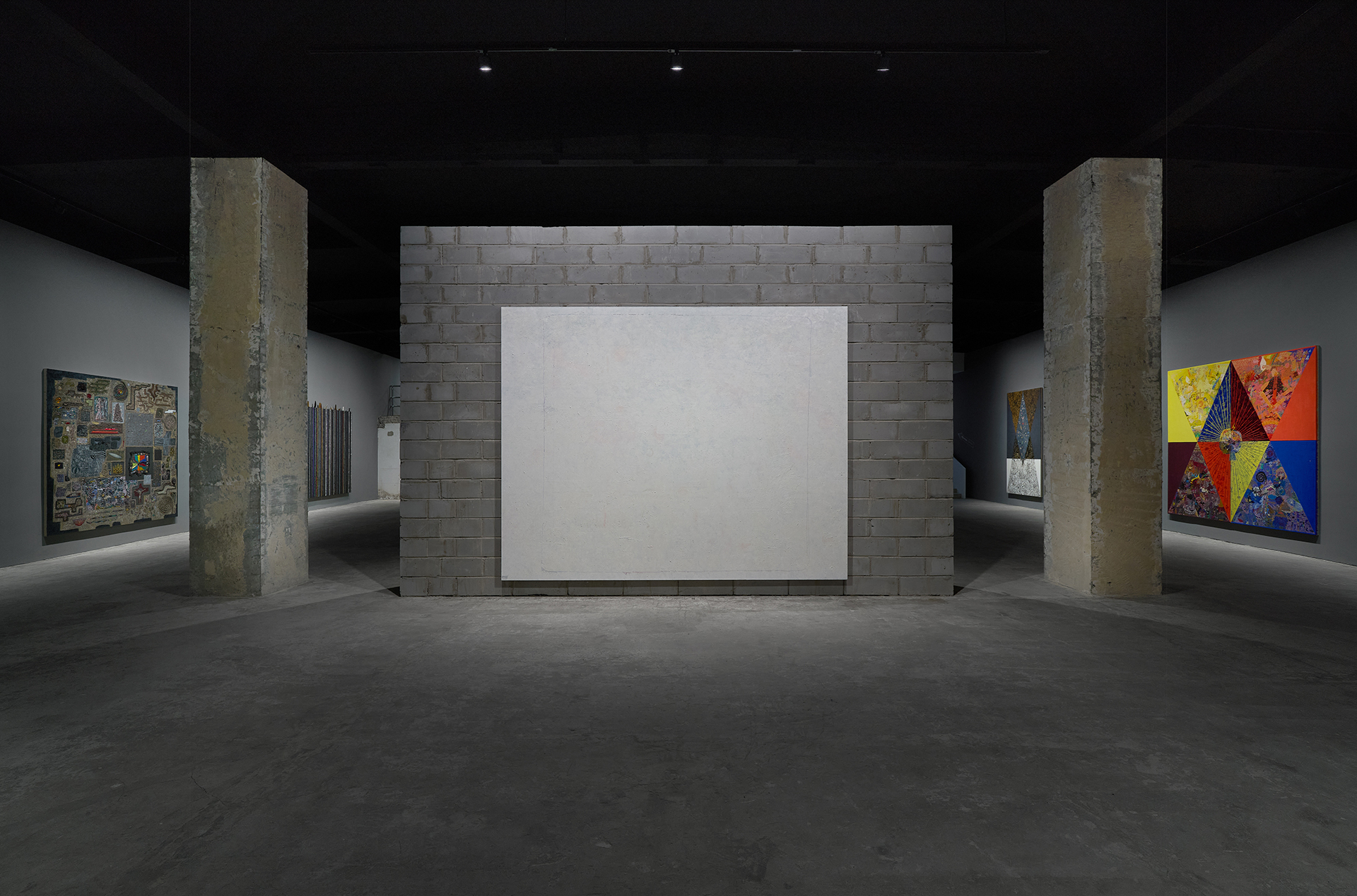
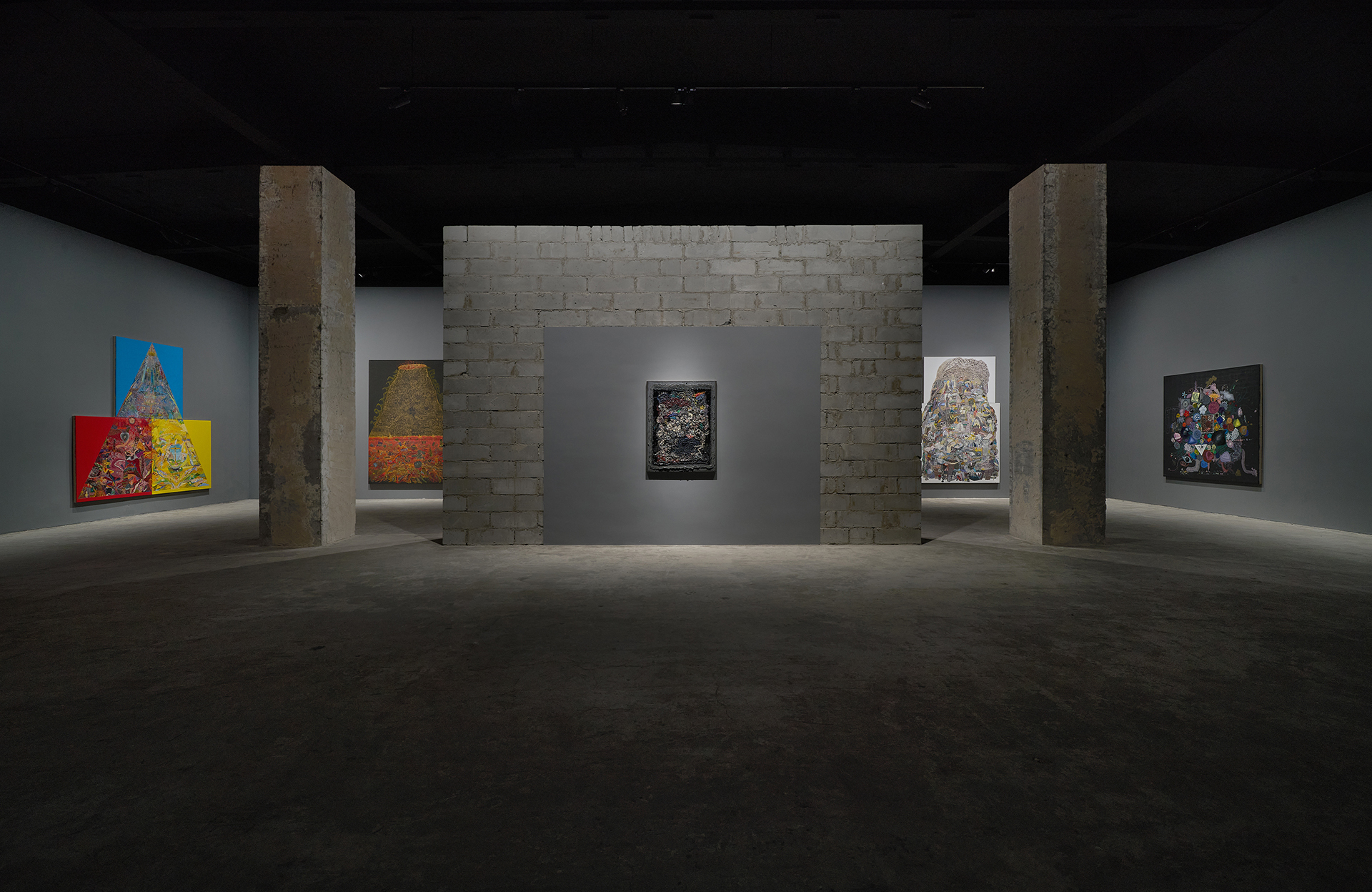
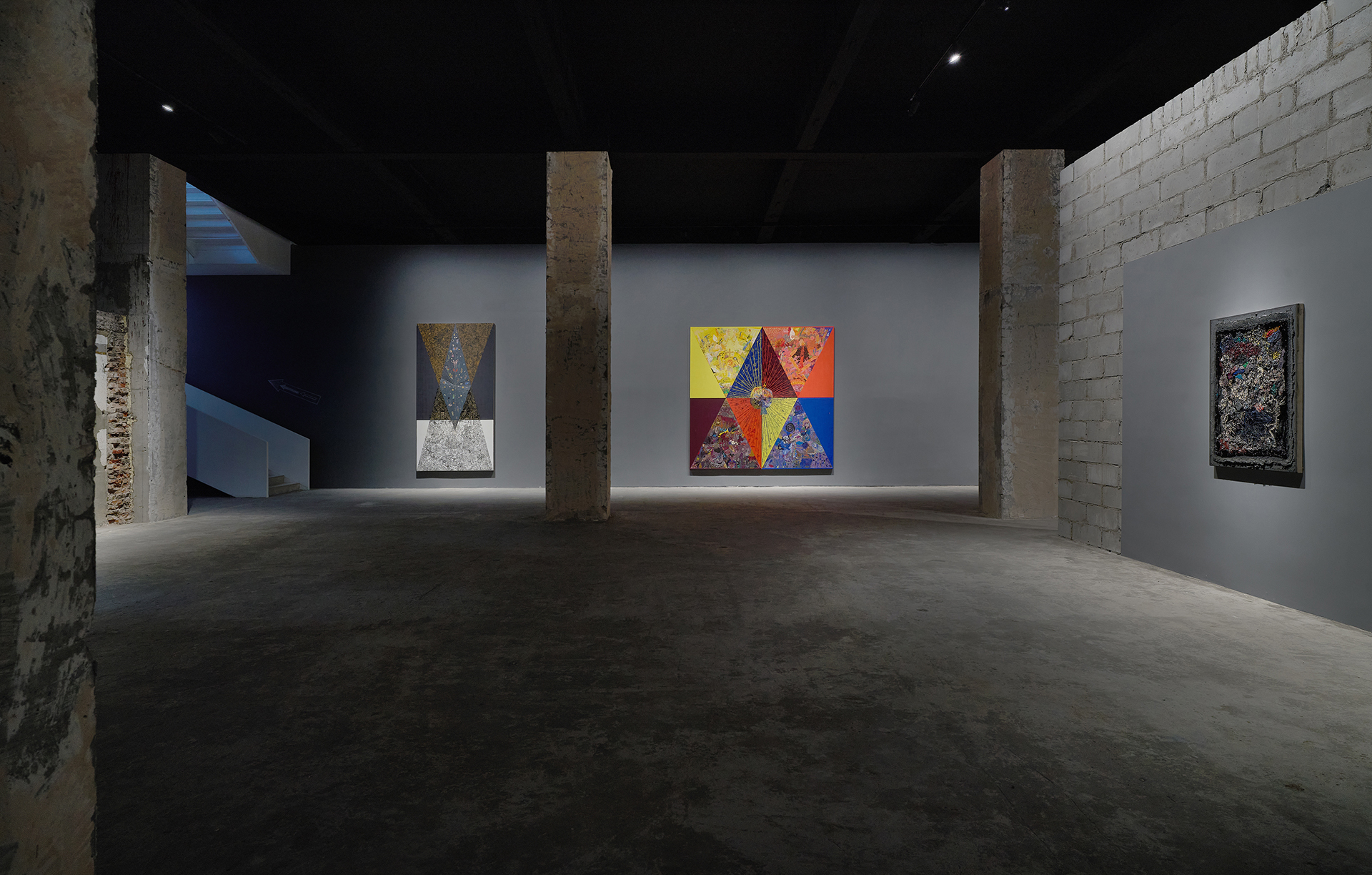
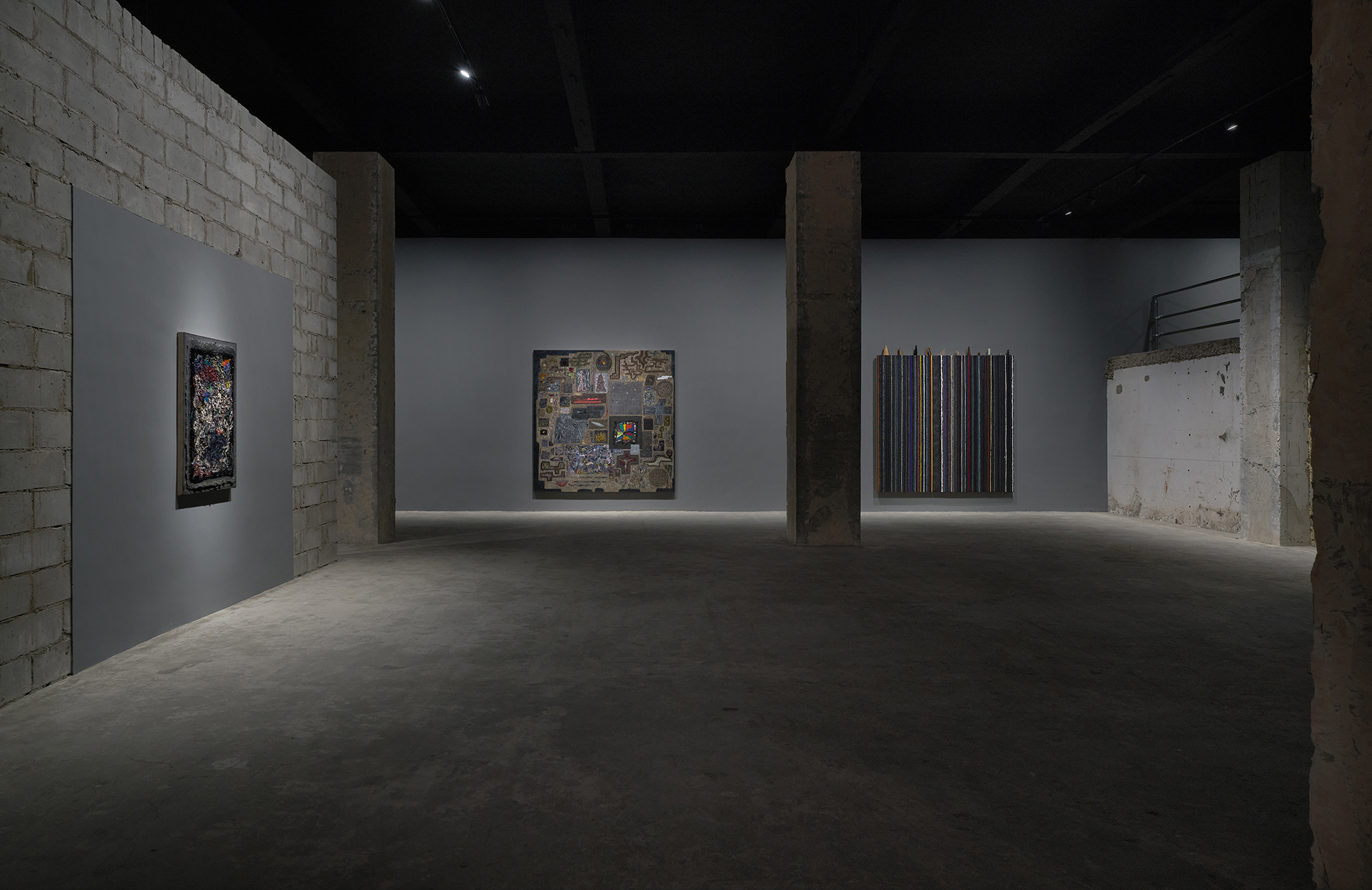
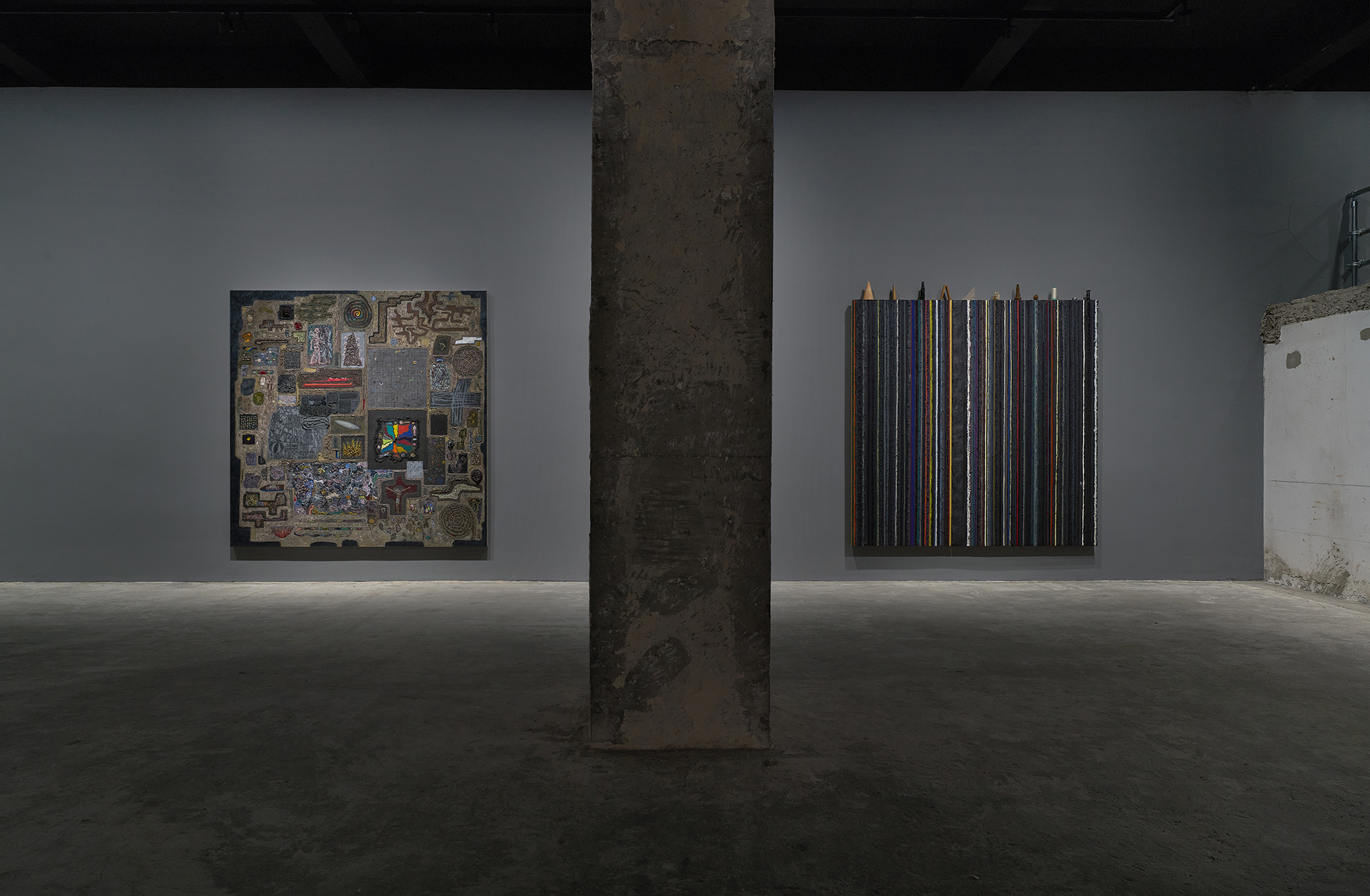
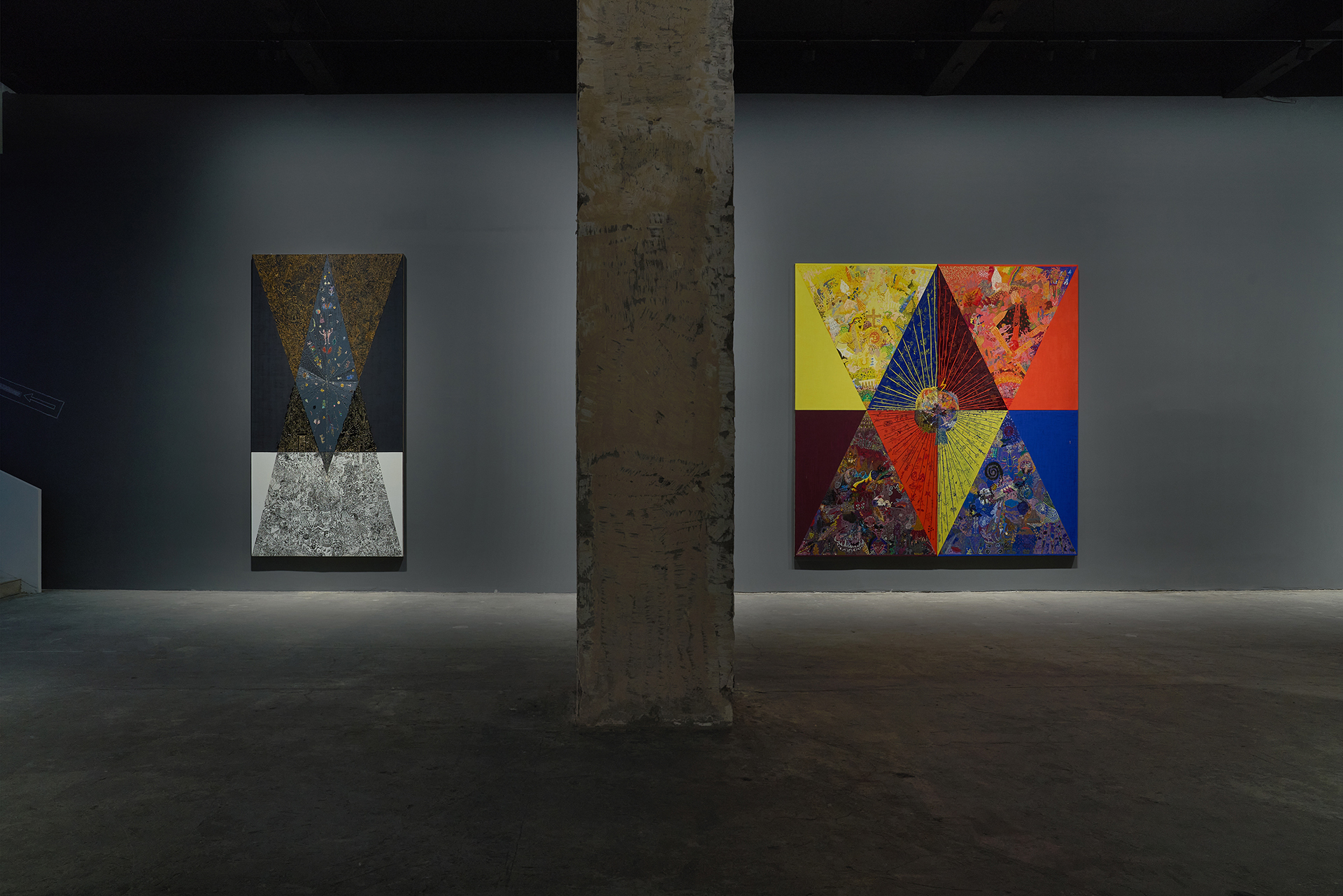
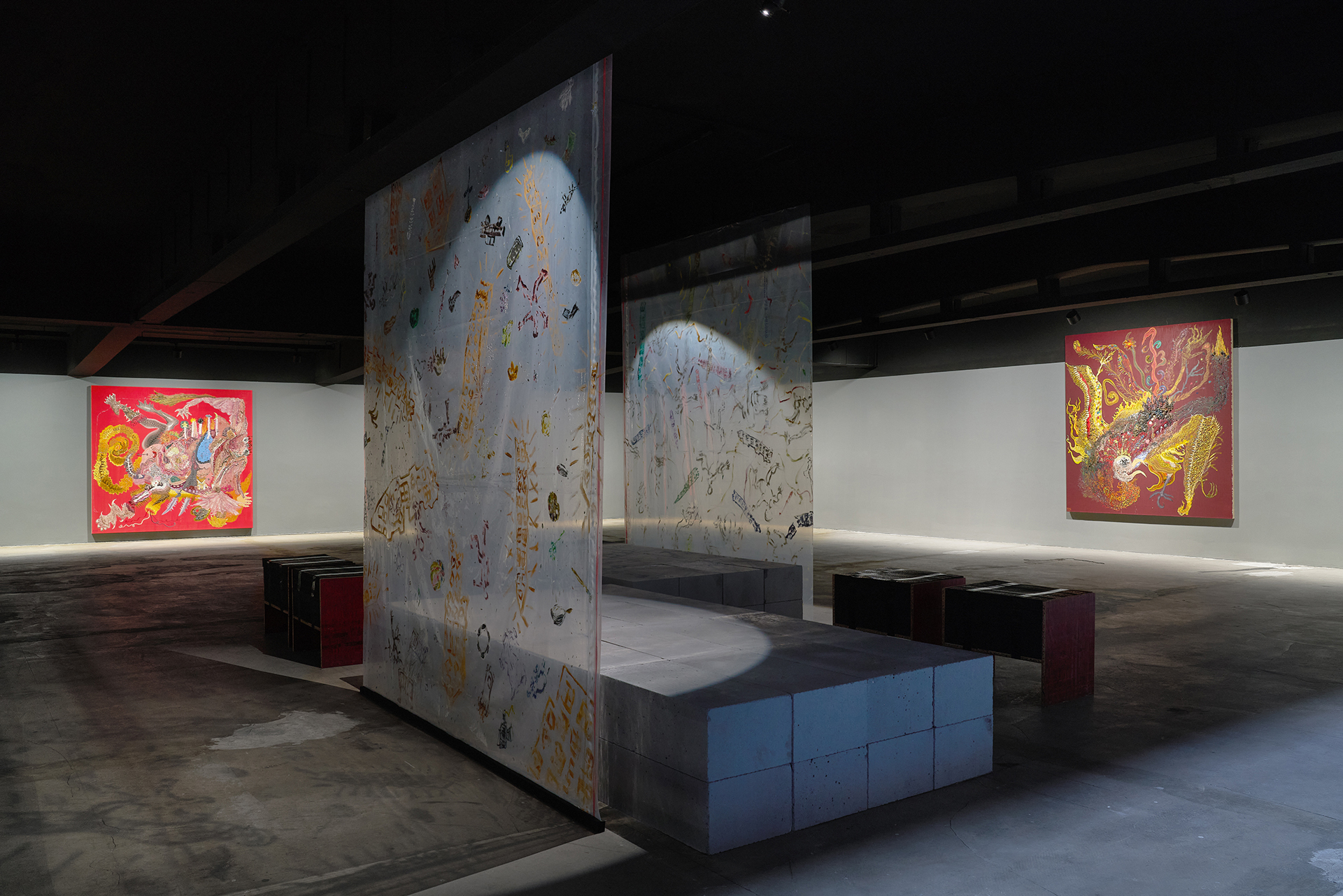
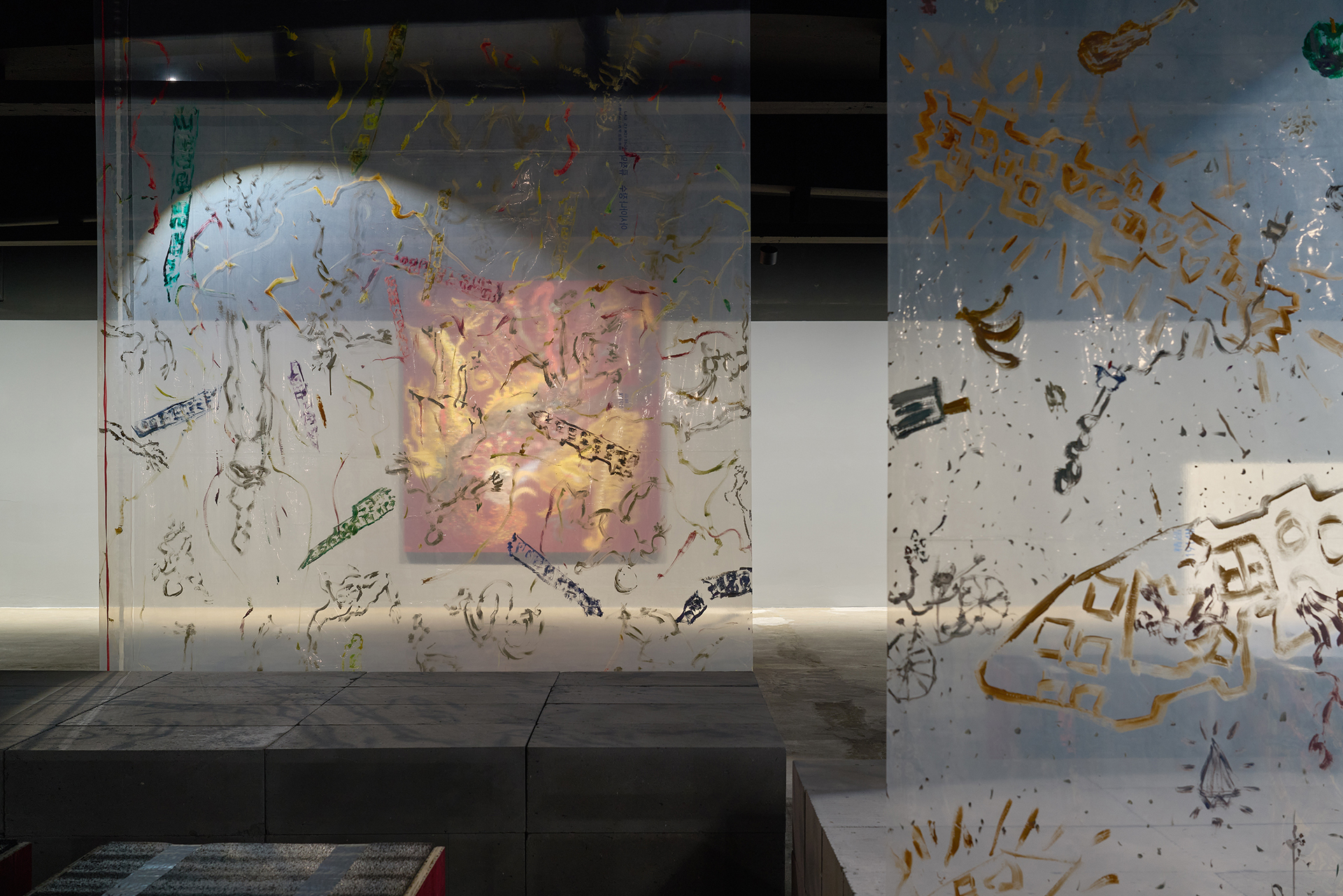
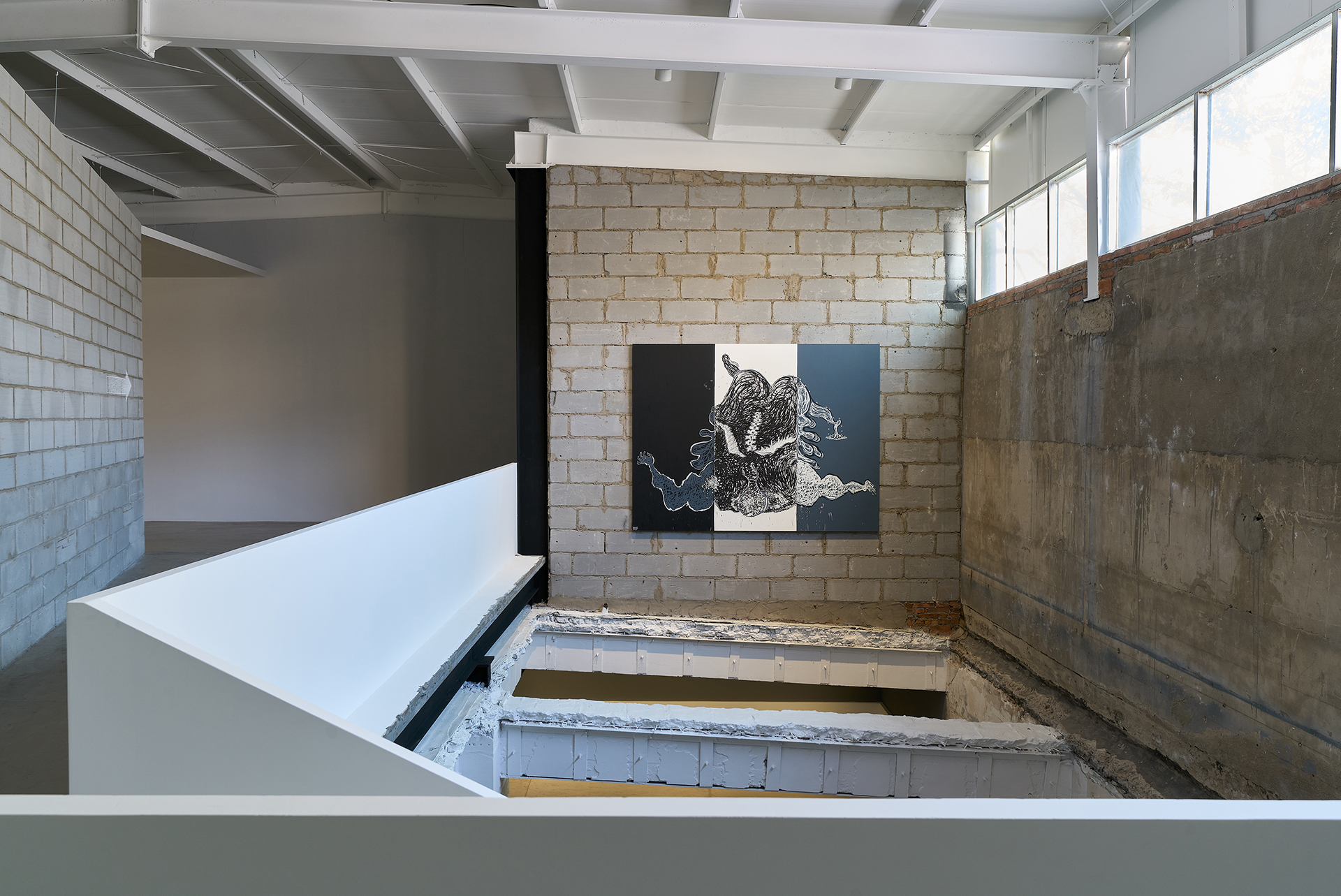
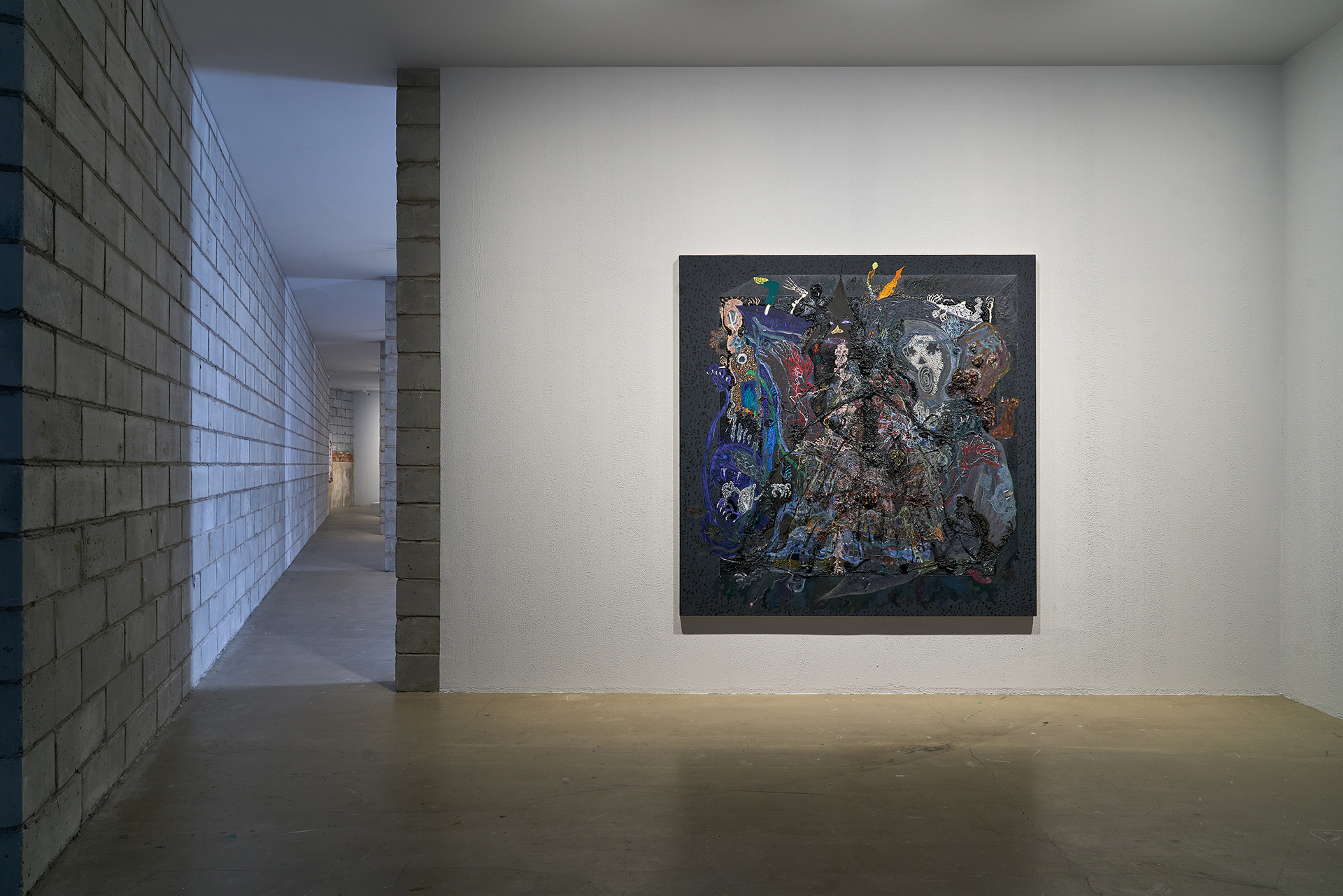
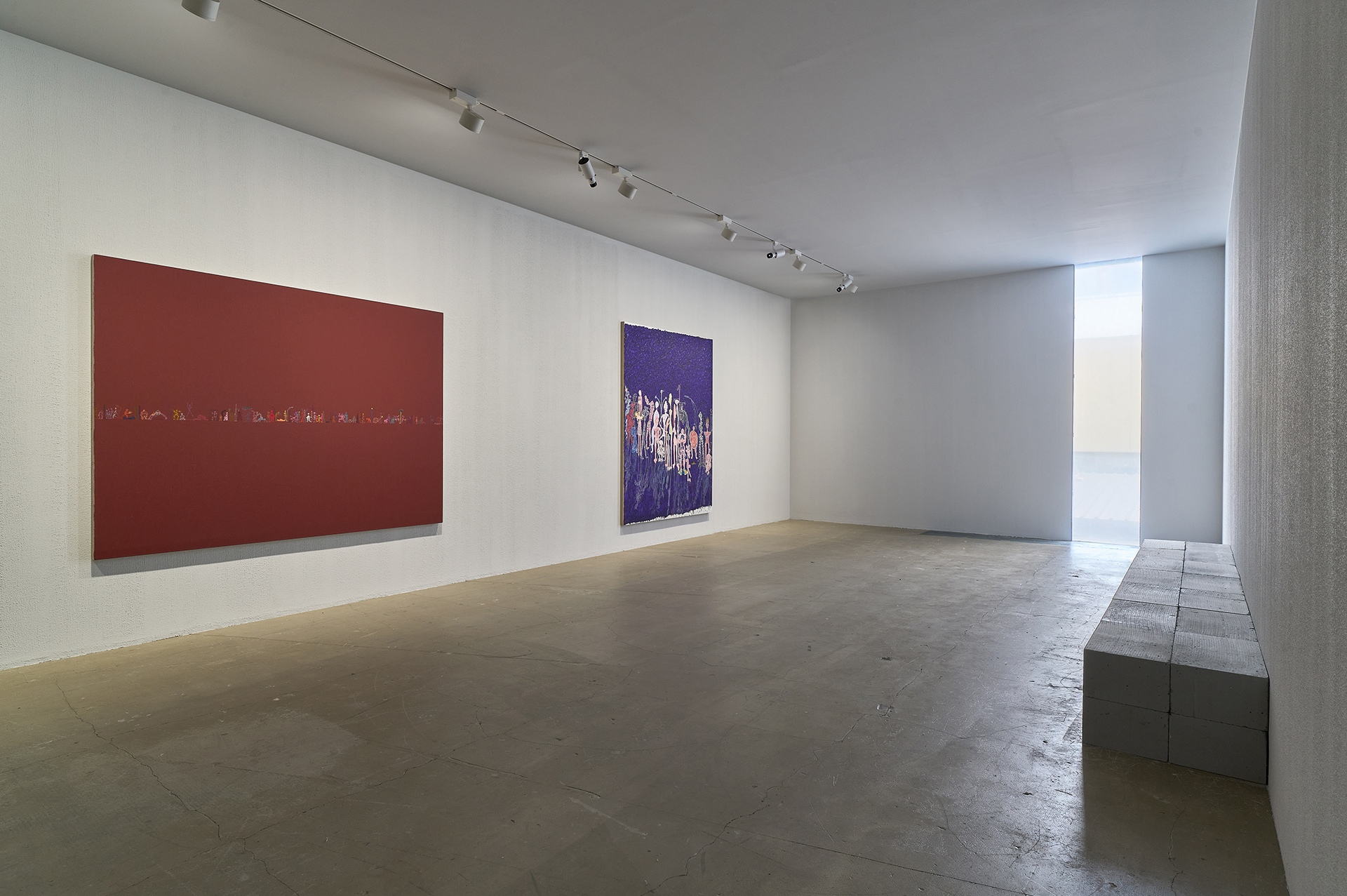
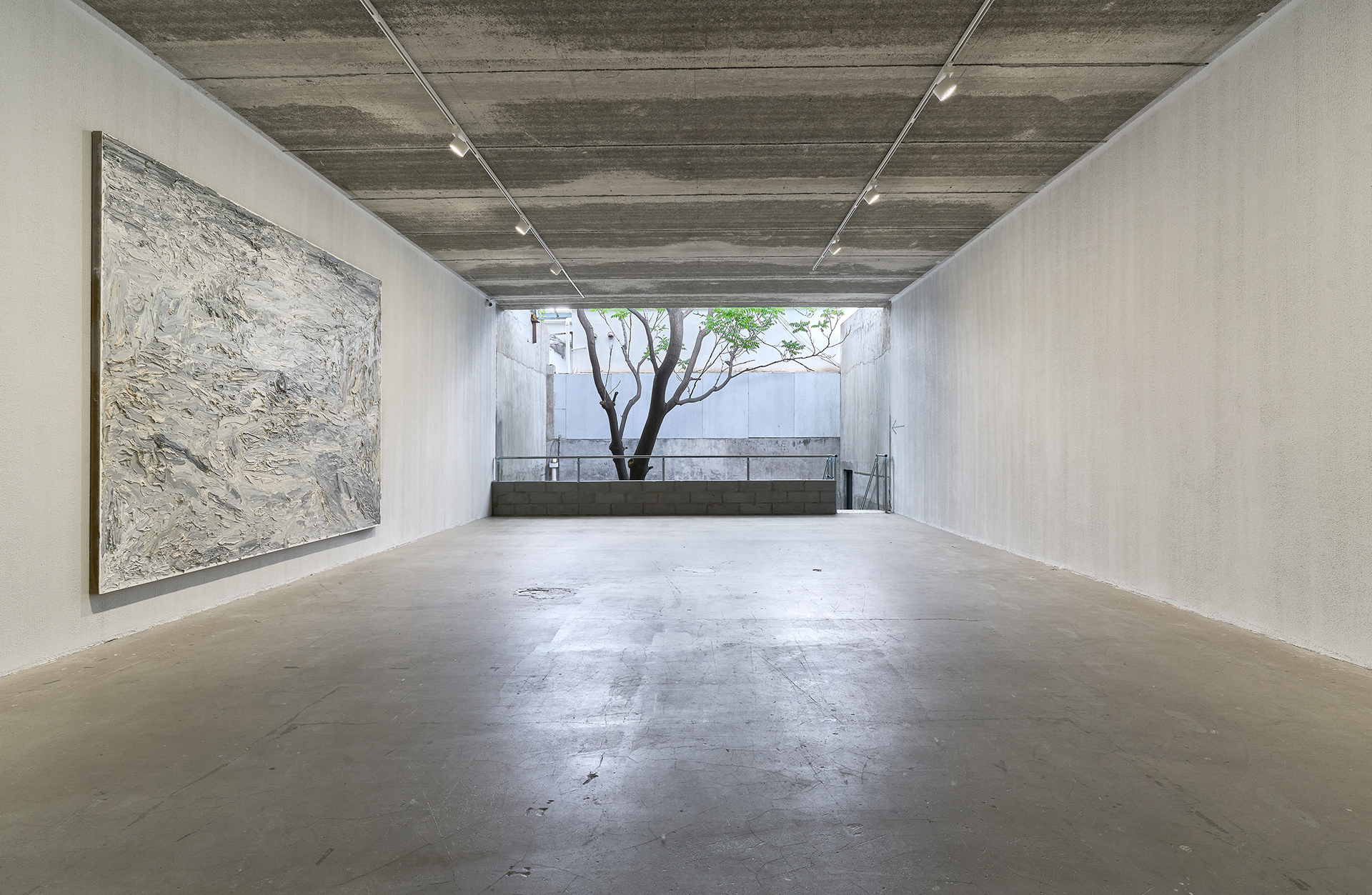
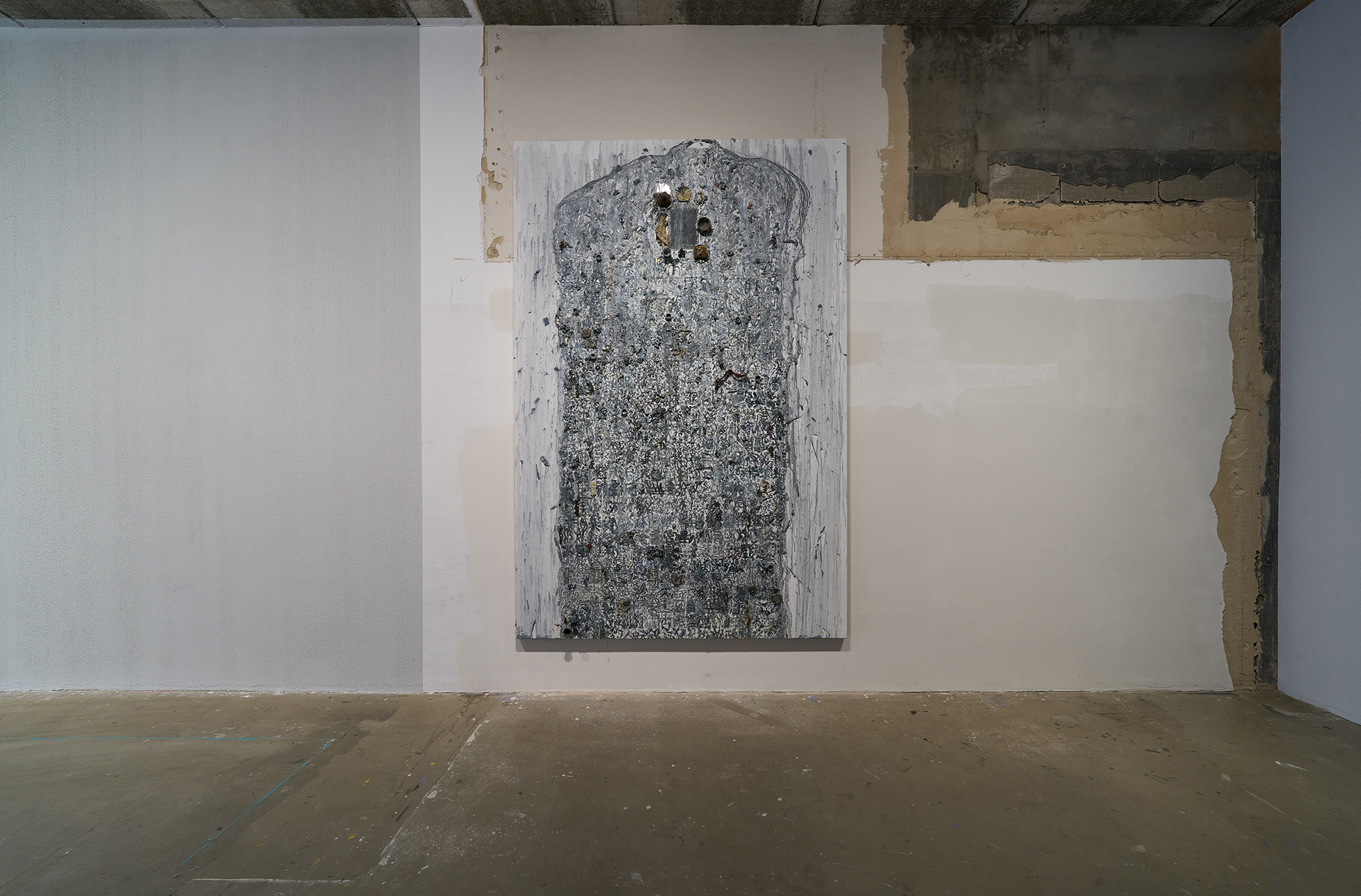
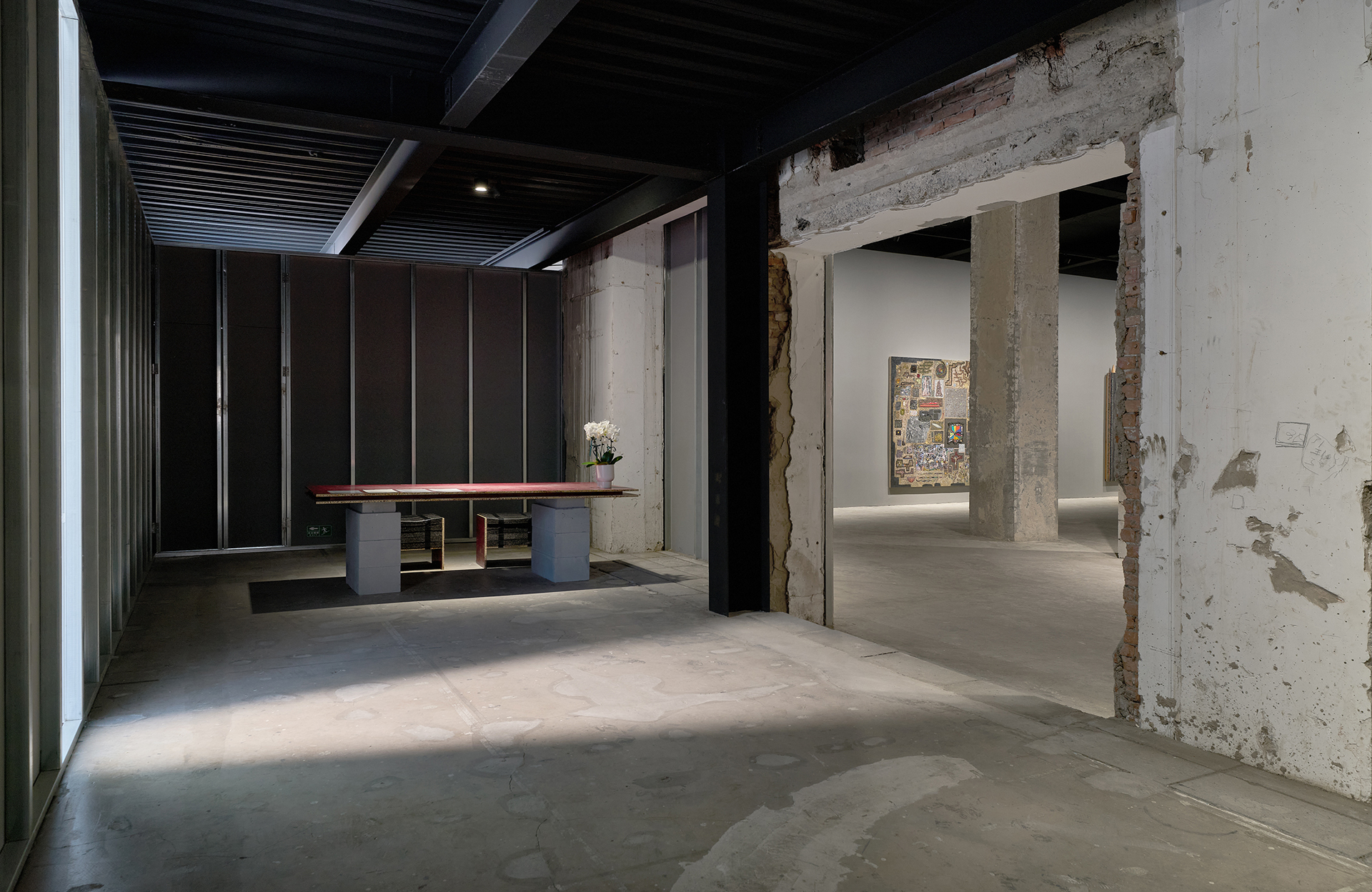
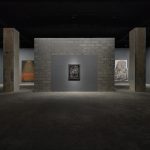
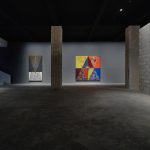
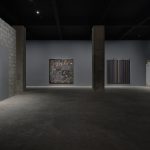
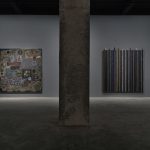
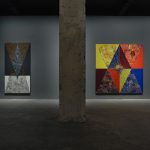
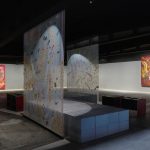
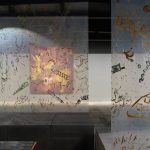
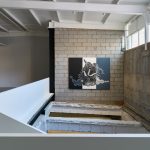
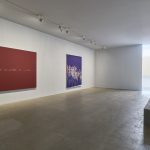
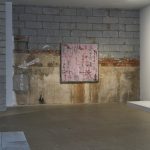
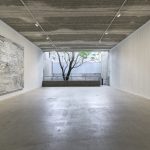
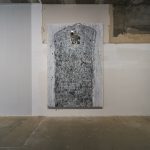
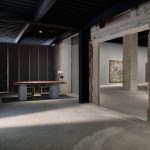
WHITE SPACE presents “Nirvana,” a new exhibition by Ouyang Chun, opening on April 28, 2026 in 798 Art District’s D01 Building and on view through June 7. The exhibition space was conceived by Tian Jun, an exhibition designer and contemporary art collector.
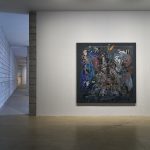
As if a storm sweeping through both senses and psyche, “Nirvana” situates the audience in a site charged with gritty materiality, profound metaphors, and the unceasing force that is life. The exhibition brings together works by Ouyang made across seven years, from 2018 to 2025. For him, “nirvana” describes a mental state tempered by an enduring spiritual ordeal he puts himself through. It marks the continual process of groping through chaos and darkness, rebuilding from wreckage and destruction, but it is also a crucible for transformation and rebirth. Upon entering the gallery, viewers are confronted by the monumental Abyss (2018). Swaths of black, white, and grey oil paint undulate across a canvas nearly four meters wide, forming vortices that, as if exerting its own gravitational pull, draw both gazes and thoughts into a boundless field of psychic expanse. This plunge into the abysmal establishes the undertone of the exhibition and conceptually contains the rest of the oeuvre: the painter gazed into the abyss, and the abyss returned with distinct echoes and reflections, materialized as paintings.
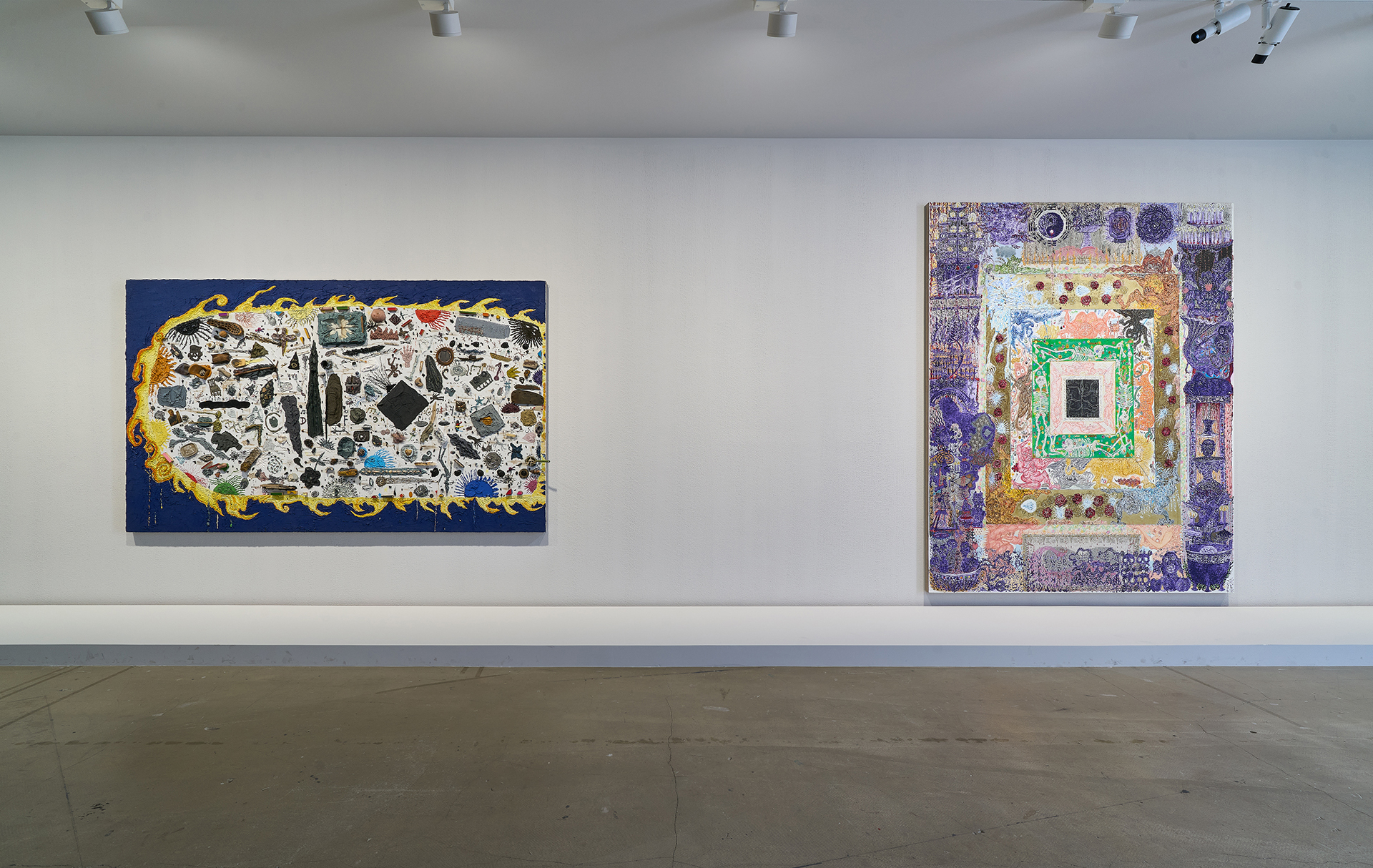
Ouyang’s journey toward a state of nirvana began with an intensified focus and expanded engagement with the materiality of painting. In works such as the titular piece from 2021, oil paint was mixed with sand and asphalt to congeal into a textured surface that evokes the coarseness and density of a geological fault. Land of Festering (2021–2022) further incorporates mineral paint and found objects. The composition thus extends beyond the bounds of a two-dimensional surface, becoming an assemblage that holds the sediments of time and affective memory. In Comet (2022), the artist embedded personal objects collected and treasured over two decades into the canvas. Cocooned in asphalt and wax, fragments from the past open the painting to a collision between personal life history and vast cosmic conjurings. The “chaotic” use of non-traditional painting materials goes beyond formalist experiments. Rather, it is an instinctive externalization of the artist’s inner state, a formless, indeterminate chaos; an attempt to capture, in the amalgam of material and psyche, the liminal moment where an incipient life-force breaks into being.
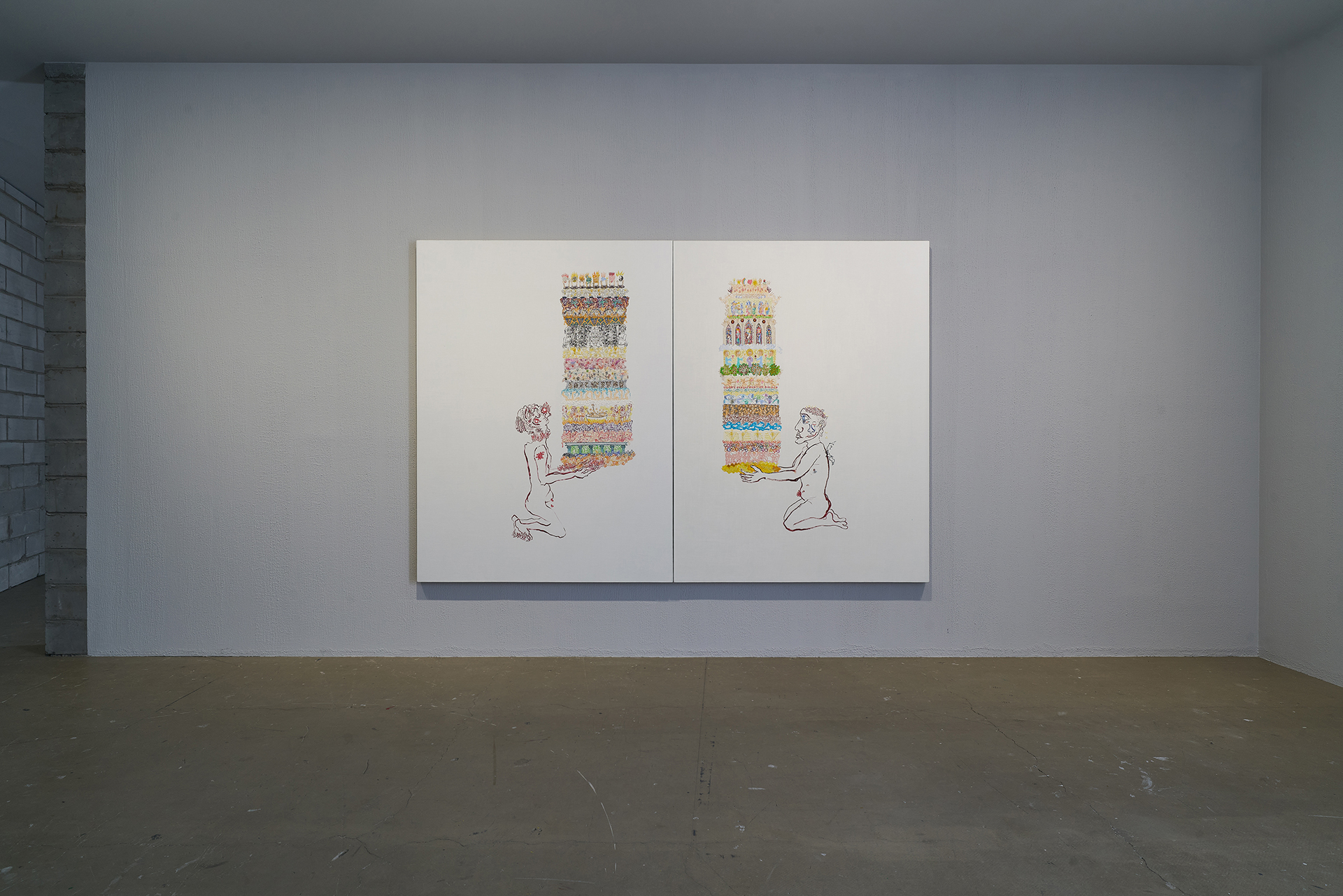
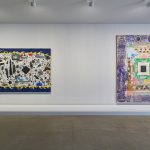
The new works in this exhibition also demonstrate formal breakthroughs and a series of challenges to the compositional format. Works such as Golden Volcano (2024) and New World No.2 (2023) feature two vertically aligned canvases. In Tower of Babel (2022) and New World No.1 (2022–2023), the pictorial whole is composed of multiple independent canvases; formally resembling a quadriptych, the latter presents a vision for a “new world” of clashes and possibilities. These endeavors to disrupt the integrity of a singular pictorial frame arise from Ouyang’s intrinsic need and embodied instinct to express: they follow the chance operations and irregularities of natural forms, thereby dismantling established habits of looking and inviting viewers into a more dynamic, more uncertain space of visuality. In dialogue with these works, Gate of Eternity (2021) is inspired by a spectral, dream-like vision. The diptych format evokes a physical gate, while alternating stripes of vibrant and dark colors form fissures, through which ghostly traces of the soul continue to make passage. Across the flat pictorial plane, sand, oil pastel, and found objects build up layered depth and rich registers for seeing and perceiving. The gate seems to be a portal that can be entered, leading to another dimension of time and space.
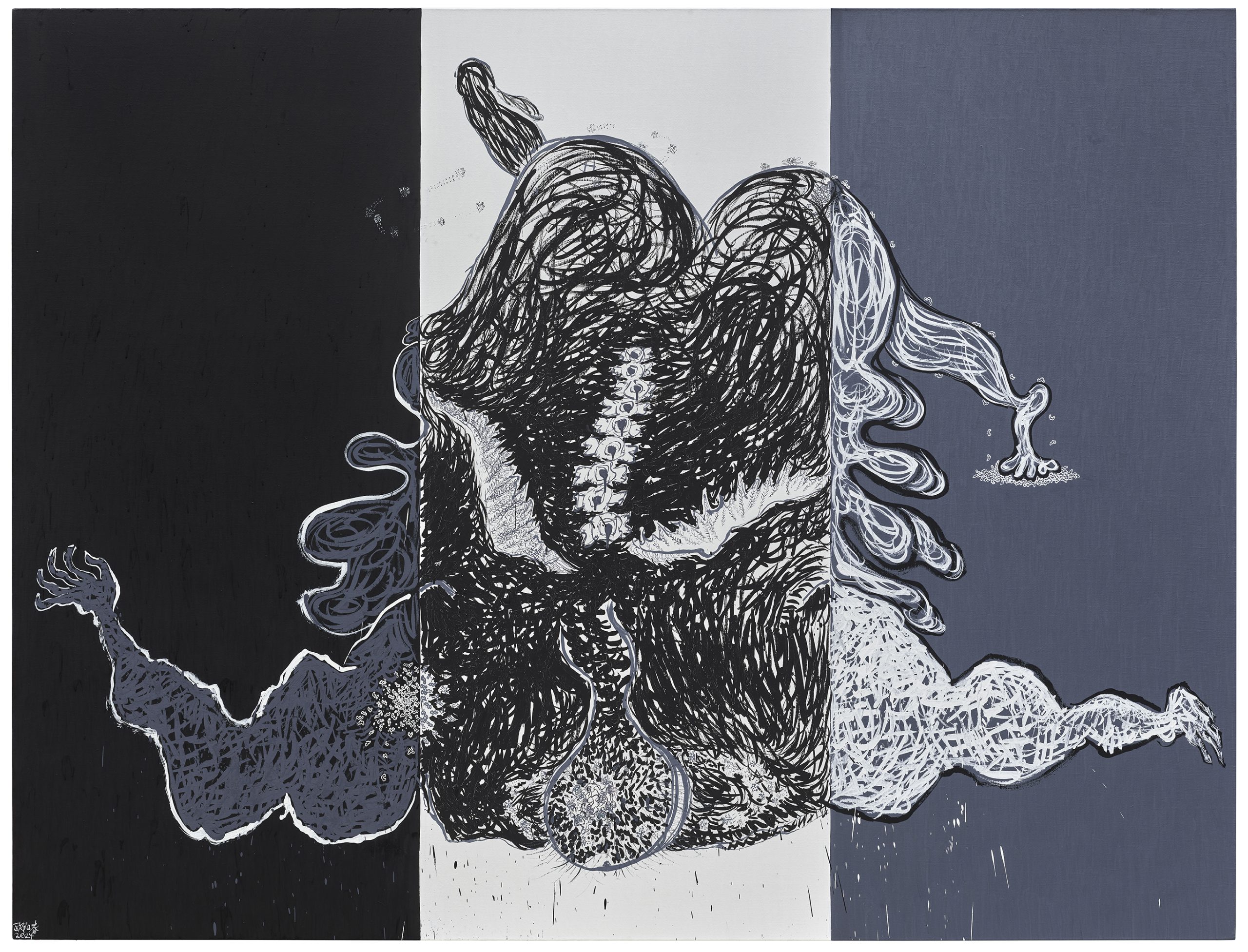
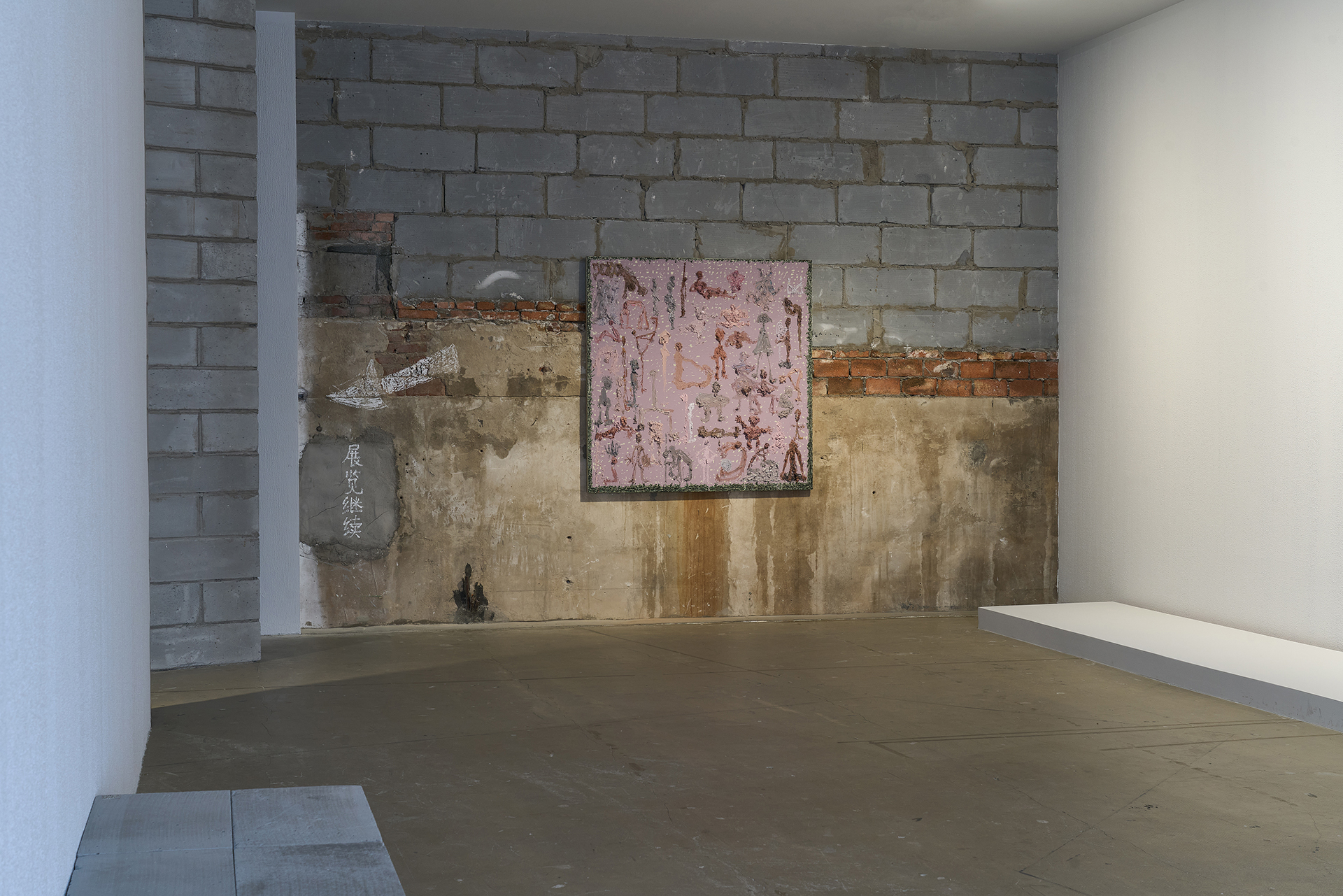
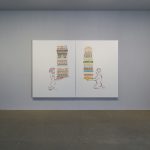
Across narrative forms and symbolic language, the show exhibits a wide variety held in tension. War of Gods: Dawn and War of Gods: Twilight (both 2024) depict, in epic scope, dawn and dusk suspended in unresolved conflict. Through its ironic and paradoxical title and content, Hell Wishes Heaven a Happy Birthday (2024) directly confronts a complex reality in which light and darkness, blessing and curse coexist. These works read as modern myths, reflecting the intense strife and moral disarray of our era as perceived by the artist. Meanwhile, Common Mortals No. 1 and No. 2 (both 2025) abruptly shifts the focus back to the humble and minute, using deceptively simple, unadorned brushwork to portray these mortal beings. In Ouyang’s philosophy, divinity does not reside loftily in heaven, but is precisely hidden within these ordinary existences as fleeting as dust. From the grand spectacle of the “war of gods” to the minor, “common mortals,” the exhibition completes a narrative cycle from epic to pastoral. Then comes Requiem for the Mortal World (2024)—a complex musical composition that is at once an elegy and a hymn, dedicated to this mortal coil.
If the introspective, restrained, literati-inflected sensibility of Ouyang’s 2023 solo exhibition “Road to Heaven” marks a departure, then “Nirvana” represents a return, driven by primal forces and an urge to express. Another culminating breakthrough in the artist’s creative life, the exhibition does not pursue harmony that pleases the eye. Instead, it openly embraces the struggle, instinct, and traces of labor embedded in the creative process. The sweeping, cumulative, and at times explosive applications of brushwork and material across canvases bear direct witness to a process of self-forging: the artist offers up his own being as the medium, tempering it in a spiritual crucible. Ouyang treats the canvas as an all-receiving “container,” one that equally holds his total commitment to life, critical meditations of civilization, and instinct-driven creative labor. And just like what When I Gaze into the Abyss, the Abyss Gazes Back into Me No.1 (2019) reveals, the relationship is reciprocal: the artist demands an answer from the abyss with the full force of his being, and the abyss replies with an equally vast expanse of creative possibilities.
Through seven years of practice, Ouyang Chun has proven that painting remains for him an indispensable act of life. It is not concerned with giving definitive answers but with the persistent gesture of asking questions, of opening himself up, and, within a state of chaotic flux, stubbornly constructing the zeitgeist of our present. “Nirvana” is not a destination reached, but an ongoing, intense quest for the soul, as excruciating as it is rapturous. Amid paint, sand, memory, and contemplation, destruction and creation are one and the same; the abyss and the stars coexist.
About the Artist
Deploying a variety of painterly techniques, Ouyang Chun’s works narrate episodes from the world he lives or he sees. Fascinated by truth and the sometimes-cruel absurdity that accompanies it, Ouyang Chun draws his primary inspiration from the contradictions and incongruities of contemporary China. Truth and fiction, the pursuit of spiritual purity mirrored in minute detail in his paintings, have rendered expressive through his brushes with his instinct and sentiment. The psychological depth of his painting language comes to full expression when the fascination in the paintings becomes certain metaphors drawing from his own experience and the social context. His paintings feature his understanding of his artistic language and his quest for a formulation adequate to himself.
Ouyang Chun was born in 1974 in Beijing, graduated from the Department of Art Education of Xi’an Academy of Fine Arts. Recent solo exhibitions include Road to Heaven, Building B06, 798 Art District, Beijing, China (2023); The Mortals, ShanghART, Shanghai, China (2019); Weird and Wonderful, Museum Folkwang, Essen, Germany (2016); Painting the King, Belvedere-Upper Belvedere & Augarten Contemporary, Vienna, Austria (2011). Recent group exhibitions include One and All: New Artistic Styles of Contemporary Painting, National Art Museum of China, Beijing, China (2024); New Contemporary Art of China Part I: Huang Yuxing and Ouyang Chun, Whale Art Museum, Singapore (2024); I Loved You, White Rabbit Gallery, Sydney, Australia (2022); A Higher Calling, WHITE SPACE, Beijing, China (2021). Ouyang Chun currently lives and works in Beijing, China.